



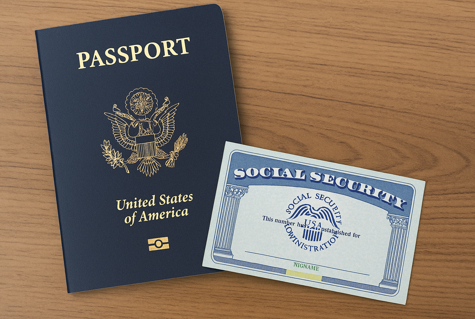
In a major policy shift, the U.S. Social Security Administration (SSA) has released new guidance following Executive Order 14160, signed by President Donald J. Trump on January 20, 2025, titled “Protecting the Meaning and Value of American Citizenship.”
Under this order, birth within the United States will no longer automatically qualify as proof of U.S. citizenship for obtaining a Social Security Number (SSN). Applicants will now need to show that at least one parent was a U.S. citizen or had lawful immigration status at the time of the child’s birth.
- Parental Proof Requirement:
Applicants must provide verifiable documentation that one or both parents were U.S. citizens or lawful permanent residents (LPRs) at the time of the applicant’s birth. - Accepted Documents for Citizenship:
- Certificate of Naturalization
- Certificate of Citizenship
- U.S. Passport issued after the executive order took effect
- U.S. Citizen ID card issued by the Department of Homeland Security
- Consular Report of Birth Abroad (FS-240 or FS-545)
- Verification from the Department of Homeland Security, State Department, or a court confirming citizenship
- Accepted Documents for Lawful Permanent Residents:
- Green Card (Form I-551)
- Machine Readable Immigrant Visa (MRIV) with Temporary I-551 notation
- Federal verification of lawful permanent resident status
- Impact on the Enumeration at Birth (EAB) Program:
The long-running EAB program, which automatically assigns SSNs to newborns at hospitals, will now require hospitals and state agencies to collect and transmit parental documentation verifying U.S. citizenship or lawful immigration status before an SSN can be issued.
Implementation and Legal Context
Although the executive order’s enforcement has been temporarily enjoined pending court review, the SSA has begun preparing to implement the policy once it takes full effect.
The SSA stated that internal systems, including manuals and automation protocols, will be revised to ensure compliance. Parents who cannot provide immediate documentation may be asked to submit further proof or contact SSA offices for verification.

Broader Implications
This policy represents one of the most sweeping changes to U.S. citizenship verification in decades. Supporters argue it reinforces the integrity of national identity systems, while critics fear it may burden mixed-status or immigrant families seeking Social Security benefits for their U.S.-born children.
Legal experts note that the new rule could lead to increased administrative delays for new SSN applicants and newborn registrations, particularly for families whose parental documentation is under review.
Until full legal clarification, U.S. citizens, green card holders, and immigrant families are advised to stay updated through SSA.gov and ensure they maintain accessible documentation of their citizenship or residency status.
Stay ahead with the latest updates!
Join The Podium Media on WhatsApp for real-time news alerts, breaking stories, and exclusive content delivered straight to your phone. Don’t miss a headline — subscribe now!
Chat with Us on WhatsApp