



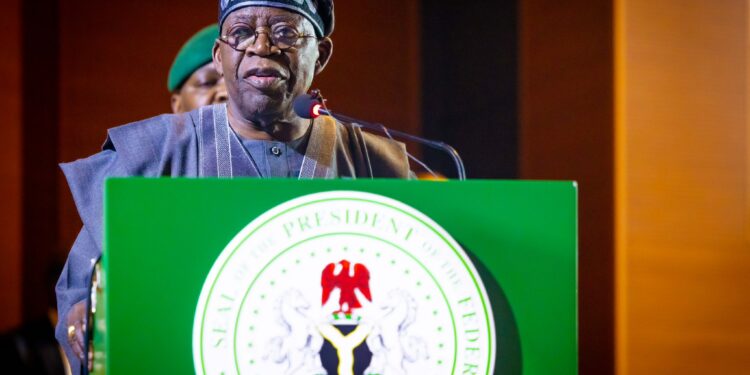
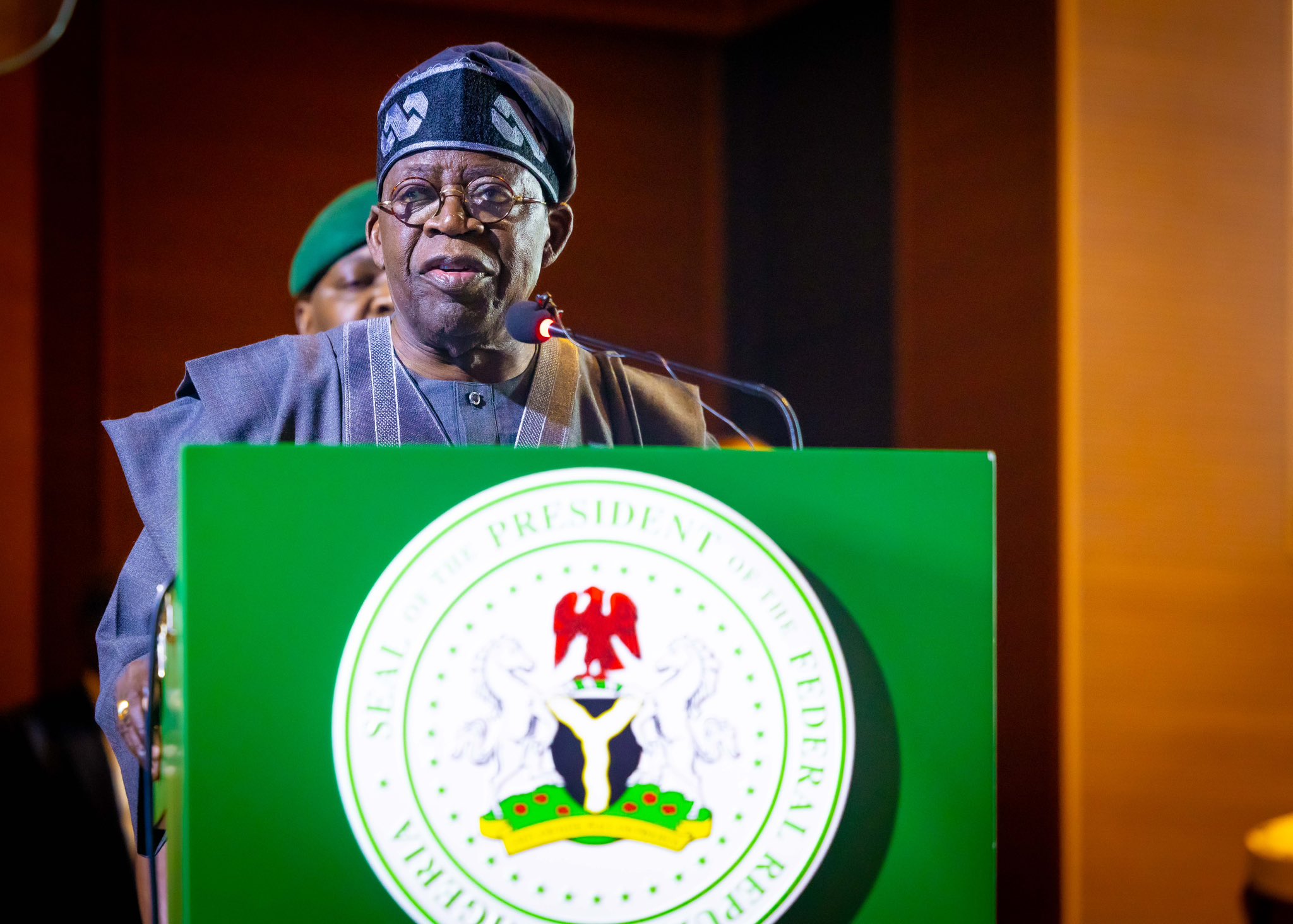
President Bola Ahmed Tinubu on Tuesday officially unveiled and launched the Nigeria Industrial Policy 2025, signalling a renewed push to reposition the country’s industrial base.
The unveiling took place at the Bola Ahmed Tinubu International Conference Centre in Abuja, where Vice President Kashim Shettima represented the President.
The formal launch comes weeks after a soft introduction of the policy in Lagos and underscores the administration’s commitment to deepen value addition, address structural bottlenecks, and accelerate industrial growth.

The development also comes amid renewed calls from leading industrialists, including Aliko Dangote, for urgent reforms in the power sector, which they describe as critical to the success of any industrial strategy.
What they are saying
President Tinubu described the Nigeria Industrial Policy 2025 as a strategic roadmap aimed at re-engineering Nigeria’s industrial ecosystem and unlocking value across key sectors of the economy.
He emphasised that the administration has put in place a clear implementation structure, noting that policies often fail at the execution stage rather than at conception.
- “We have realised that industrialisation is not a wish you think about; it is an action you perform. More than that, we must remind ourselves that this task demands coherence across energy, trade, infrastructure, finance, skills, and innovation. It requires partnership between the government and the private sector.”
- “We will measure success by the number of factories that open their gates at dawn, the jobs created for young men and women, the exports that leave our ports bearing the mark of Nigerian excellence, and the value retained within our domestic economy.”
- “It advances value chain development so that Nigeria moves steadily from exporting raw materials to producing finished goods. It integrates our micro, small, and medium enterprises into the heart of industrial growth, because prosperity must not be exclusive.”
- “It aligns infrastructure and energy with industrial ambition, for factories cannot run on policy alone. It strengthens skills, technology, and innovation to prepare our people for the industries of today and tomorrow,” he said.
Vice President Kashim Shettima also called for stronger private sector collaboration to deepen local value chains and accelerate job creation.
Speaking at the event, Aliko Dangote stressed the urgency of resolving Nigeria’s electricity challenges as a prerequisite for industrial growth.
- “Mr Vice President, I advise that you call a national forum where we resolve the issue of power.”
- “If there is no protection, there is no way any industry will thrive here.”
- “No power, no growth,” he said.
Dangote commended the government for stabilising the foreign exchange market but maintained that reliable electricity supply remains the single most critical requirement for sustainable industrial expansion.
The President of the Manufacturers Association of Nigeria, Otunba Francis Meshioye, added that manufacturers are focused on ensuring the effective implementation of the new policy framework.
Backstory
The Nigeria Industrial Policy 2025 was first soft-launched in January 2026 by the Minister of State for Industry at the Federal Ministry of Industry, Trade and Investment, Senator John Owan Enoh.
He stated at the time that the policy seeks to significantly increase manufacturing’s contribution to Nigeria’s Gross Domestic Product by 2030.
- The minister said the target is to raise manufacturing’s share of GDP to between 20% and 25% by 2030.
- He cited the temporary ban on raw shea nut exports as part of efforts to promote structured value addition and regulatory clarity.
- A small implementation committee has been set up to ensure the strategy translates into measurable job creation and productivity gains.
- He highlighted Nigeria’s strategic role under the African Continental Free Trade Area, warning against turning the country into a dumping ground for imported goods.
Enoh also assured stakeholders of synchronised coordination across ministries responsible for trade, investment, finance, energy, skills, and infrastructure, stressing that the policy is designed as a practical blueprint rather than a mere framework document.
What you should know
The formal unveiling follows earlier assurances by the Federal Government in August 2025 that a comprehensive industrial policy was being finalised to curb Nigeria’s heavy reliance on imported goods.
The initiative was led by the Ministry of Trade in collaboration with the Manufacturers Association of Nigeria.
- The policy is aimed at reversing Nigeria’s dependence on imports by strengthening domestic manufacturing capacity.
- It is designed to deepen value addition across key sectors and boost export-led growth.
- The government has indicated that the framework will significantly raise manufacturing’s contribution to the economy over the next five years.
The success of the Nigeria Industrial Policy 2025 will largely depend on effective implementation, policy coherence, and the resolution of structural constraints, particularly in the power sector, which industry leaders say remains the backbone of any meaningful industrial transformation.

Stay ahead with the latest updates!
Join The Podium Media on WhatsApp for real-time news alerts, breaking stories, and exclusive content delivered straight to your phone. Don’t miss a headline — subscribe now!
Chat with Us on WhatsApp



Перевозка негабаритных грузов требует профессионального подхода и надежной техники. Наша компания частных перевозчиков предоставляет услуги транспортировки крупногабаритных и тяжеловесных грузов любой сложности. Мы перевозим строительную и дорожную технику, промышленные установки, крупные конструкции, контейнеры и оборудование. Подбираем специализированный транспорт, разрабатываем безопасный маршрут и берем на себя оформление всех разрешительных документов. Наши специалисты контролируют процесс перевозки на каждом этапе, обеспечивая сохранность груза и соблюдение сроков. Мы работаем быстро, аккуратно и по прозрачным условиям. Свяжитесь с нами, чтобы получить консультацию и узнать стоимость перевозки негабаритного груза.