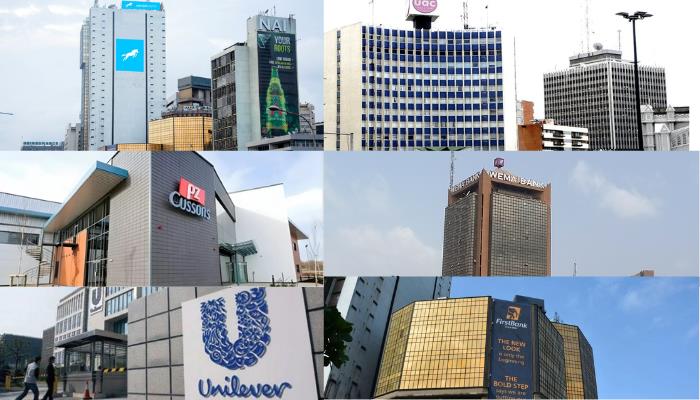
Some companies in Nigeria have been around so long, they’ve seen the country change more times than most of us can count.
They started during the colonial era, trading goods and building businesses in a world very different from the one we live in today.
And yet, they’re still here, strong, evolving, and adapting.

These aren’t just old companies. They are survivors. They’ve weathered economic crashes, political shifts, currency swings, and endless policy changes, things that have forced many others to fold. And through it all, they’ve learned how to bend without breaking.
In contrast, last year saw several major companies exit the country, citing challenges like inflation, a weak naira, and declining consumer purchasing power. The Manufacturers Association of Nigeria (MAN) reported that about 767 manufacturing companies shut down in 2023 alone, showing that even strong businesses are not immune to economic pressures.
This list of the oldest companies in Nigeria, excluding government-owned entities, doesn’t just represent history; they are a crash course in resilience. They offer a practical blueprint for modern businesses to survive and adapt in an economy that remains volatile.
Right now, with inflation biting, exchange rates swinging, and interest rates climbing, their continued presence in the market is more remarkable than ever.
Here is a list of companies founded before independence that remain operational today
10. Nigerian Breweries Plc – Founded 1946
Nigerian Breweries Plc (NB) was incorporated in November 1946 under the name Nigerian Brewery Limited. Its first major milestone came in June 1949, when the first bottle of Star Lager rolled off the bottling lines of its Lagos brewery, a moment that marked the birth of local mass-produced beer in Nigeria.
From those early days, the company steadily expanded its production footprint. A second brewery in Aba opened in 1957, followed by a brewery in Kaduna in 1963 and another in Ibadan in 1982. The company continued to grow, commissioning a brewery in Enugu in 1993. In 2003, NB completed the Ama Brewery in Enugu State, today among the largest and most modern breweries in Nigeria.
Over decades of growth, NB broadened its product range well beyond lager. In addition to Star Lager, it introduced Gulder in 1970, the malt drink Maltina in 1976, and the stout Legend Extra Stout in 1992. Subsequent years saw further diversification into non-alcoholic malt drinks, soft drinks, and a broader portfolio that includes dozens of brands to meet varying tastes and market needs.
Nigerian Breweries also expanded through acquisitions and mergers. In the early 2010s, the company absorbed two other brewing firms, adding their breweries and malting assets to its network. A merger with Consolidated Breweries Plc in 2015 added more production sites and broadened distribution reach across the country.
Aside its broad portfolio of beers, stouts, malt drinks and soft drinks, the company has also moved into spirits and wines, following the 2024 acquisition of a majority stake in Distell Wines and Spirits Nigeria Limited. In the same year, the company achieved remarkable growth in its full-year revenue, soaring by 80.8% year-over-year to reach N1.08 trillion, up from N599.6 billion reported in the prior year.
9. Wema Bank – Founded 1945
Wema Bank traces its origins to May 2, 1945, when it was established as Agbonmagbe Bank Limited by the late Chief Mathew Adekoya Okupe. The bank began life as a modest, locally owned institution focused on providing basic financial services, savings accounts, loans, and money transfers to traders, farmers and small businesses in communities underserved by colonial foreign banks.
Early branches were located in places like Ebute-Metta, Sagamu, Abeokuta and Ijebu-Igbo, a footprint modest by today’s standards but significant at the time.
In 1969, the bank underwent a change in ownership when the Western Nigeria Marketing Board converted a large deposit into equity and took control, renaming the institution Wema Bank. Over time, it expanded its services, embracing broader banking functions beyond deposit-taking and loans, including foreign exchange and computerized systems as banking evolved in Nigeria.
By 1987, Wema Bank had become a public limited company, and three years later, in 1990, it was listed on the Nigerian Stock Exchange. In February 2001, it obtained a Universal Banking License from the Central Bank of Nigeria (CBN), enabling it to offer a full array of banking and financial services across the country.
The bank’s recent decades have been defined by digital innovation and expansion. In 2017, Wema launched ALAT, widely recognized as Africa’s first fully digital bank, allowing customers to open accounts, make transfers, pay bills and access banking services entirely online without needing to visit a physical branch. ALAT quickly gained traction.
According to the Bank’s 2024 Annual Report, Wema Bank, in 2024, recorded an all-time-high performance, with Gross Earnings growing by 91.51% from N225.75 billion in FY 2023 to N432.34 billion in FY 2024
8. Shell Nigeria- Founded 1936
Shell Nigeria traces its roots to 1936, when the Shell D’Arcy was established as the first Shell company in Nigeria. It was granted an exploration licence in 1938 and, in 1956, made the first commercial oil discovery at Oloibiri in the Niger Delta. By February 1958, Nigeria exported its first shipment of oil, marking the beginning of its journey as a major oil-producing nation.
From that foundation, the company formally evolved into the Shell Petroleum Development Company of Nigeria (SPDC) in 1979, consolidating onshore and shallow-water oil operations under a joint-venture structure. The joint-venture partners included the Nigerian National Petroleum Corporation (NNPC), and other international firms.
Through SPDC, Shell built extensive infrastructure, thousands of kilometres of pipelines, numerous flow stations and gas plants, and hundreds of producing wells, becoming a cornerstone of Nigeria’s oil and gas output.
Over time, Shell Nigeria expanded beyond onshore oil. In 1993, it formed the Shell Nigeria Exploration and Production Company (SNEPCo), which pioneered deep-water oil and gas production, tapping offshore resources.
The group also diversified into natural gas distribution through the Shell Nigeria Gas (SNG) business, and into liquefied-natural-gas (LNG) via the Nigeria LNG (NLNG) venture, making Shell a major player not only in crude oil, but in gas and downstream energy supply across Nigeria.
In March 2025, following approvals by the Nigerian government, Shell completed the sale of its onshore subsidiary SPDC to a consortium called Renaissance Africa Energy Company (RAEC). This marked a strategic shift; Shell exited onshore oil production in the Niger Delta to focus on deep-water and integrated-gas operations. While SPDC now RAEC continues to operate the joint-venture assets, Shell retains its interest and continues upstream and gas operations through SNEPCo, SNG, and its stake in NLNG.
Shell Plc paid $5.34 billion in taxes to the Nigerian government in 2024, up from $3.8 billion in 2023.

7. Chellarams Plc – Founded 1923
Chellarams Plc is a diversified Nigerian conglomerate that trades, manufactures, and distributes industrial chemicals, consumer goods, food‑ingredients and supplies, packaging materials, machinery and related industrial raw materials across Nigeria.
The company began business in Nigeria in 1923, when the firm set up trading operations. It was formally incorporated on August 13, 1947, as a private limited liability company, and later converted into a public limited company before being admitted to the official list of the Nigerian Exchange (NGX) on 29 November 1974, with full listing completed by 1978.
At its start, Chellarams traded textiles and other imported goods, leveraging its international trading roots. Over time, the company expanded its operations into both consumer products and industrial raw materials. Today, its business spans manufacturing, distribution, marketing, power generation, logistics and distribution services, serving diverse sectors of the Nigerian economy.
Chellarams now comprises several subsidiary companies, among them Dynamic Industries Limited, Chelltek Industries Limited and United Technical & Allied Services Limited, each focused on manufacturing, industrial supply, and distribution services.
Its product and service offerings include industrial chemicals, packaging materials, machinery, consumer goods, frozen foods, and even logistics services such as temperature‑controlled warehousing and customs brokerage.
The company also has a dairy and food business arm under a joint venture with Germany’s DMK Group, operating through Chellarams DMK Limited to manage dairy‑product distribution and production in Nigeria.
6. Unilever Nigeria – Founded 1923
Unilever Nigeria has a century-long presence in the country, tracing its origins to 1923 when Lever Brothers (West Africa) Ltd began trading soap in Nigeria. Initially focused on household soaps, the company gradually expanded into food and laundry products, introducing Omo in 1960 and starting local production of the brand in 1964.
Over the decades, the company has evolved into one of Nigeria’s leading consumer goods diversified its product range to include personal care and food items, and in 2001, it adopted the name Unilever Nigeria Plc to align with its global identity.
The company’s product portfolio includes some of Nigeria’s widely used brands like Sunlight detergent, Closeup toothpaste. The company’s Knorr range of seasonings and stock cubes is equally popular, standing out as one of Unilever Nigeria’s most successful products.
5. Union Bank – Founded 1917
Union Bank of Nigeria Plc is one of the country’s oldest financial institutions, tracing its origins back to 1917 when it was established as Colonial Bank. The bank’s early operations focused on supporting trade and commerce during the colonial era, providing essential banking services across Nigeria.
In 1925, the bank became part of Barclays Bank DCO following an acquisition, and by 1969, after Nigeria gained independence, it was incorporated locally as Barclays Bank of Nigeria Limited. Over the next decade, changes in ownership and regulatory developments gradually transformed the bank into a fully Nigerian-owned entity, leading to its rebranding as Union Bank of Nigeria Plc.
By 1993, the federal government had divested its controlling stake, making the bank wholly owned by Nigerian private investors. During Nigeria’s banking consolidation in the 2000s, Union Bank strengthened its position through acquisitions, including Universal Trust Bank Plc and Broad Bank Ltd, and absorbed its former subsidiary, Union Merchant Bank Ltd.
Union Bank underwent a major change in ownership and structure in 2021. The bank’s majority shareholders agreed to divest their stakes to Titan Trust Bank, and by June 2022, Titan Trust became the controlling shareholder. This triggered a mandatory takeover of remaining shares, followed by a scheme that acquired all outstanding shares, leading to the bank’s delisting from the Nigerian Stock Exchange in November 2023.
Following the completion of regulatory approvals, the merger between Union Bank and Titan Trust Bank was finalised, with Union Bank emerging as the main operating entity. The bank also divested all non-core subsidiaries to align fully with its core banking business model.
The bank reported a pre-tax profit of N71.8 billion in the 2023 full year, marking a 138% growth from the N30.2 billion posted in FY 2022.
4. PZ Cussons – Founded 1899
PZ Cussons Nigeria Plc is a leading Nigerian manufacturer and distributor of consumer products, including detergents, toiletries, soaps, and home appliances. The company operates under the control of its parent, PZ Cussons Holdings, a British firm that retains a controlling stake in the Nigerian subsidiary.
The company traces its roots to a Sierra Leone-based trading partnership between George Paterson and George Zochonis, of Scottish and Greek heritage. This partnership established a West African trading post. The firm opened a trading post in Nigeria, building an extensive merchandising network that laid the groundwork for its future industrial activities.
In the 1950s, the company entered manufacturing with the production of soaps at its Aba factory under a subsidiary named Alagbon Industries. The group subsequently transferred non-soap assets to Patterson Zochonis Nigeria Limited in 1957, while Alagbon Industries evolved into Paterson Zochonis Industries Limited. The company went public on the Nigerian Stock Exchange in 1972.
PZ Cussons expanded its product line to include Thermocool appliances and later began assembling locally in 1973. During the 1970s, it launched Elephant and Jet detergents.
Today, PZ Cussons operates as a diversified consumer goods company with interests spanning beauty and personal care, baby products, bath products, oral care, health care, fragrances, and skin care, alongside its appliances division. Its portfolio includes prominent brands such as Ava, Canoe, Elephant, Florish, Joy, Morning Fresh, Nunu, Premier, Robb, Stella, Sweet 16, Haier Thermocool, Venus etc.
For the year ended May 31, 2025, the consumer goods giant posted a pre-tax profit of N16.66 billion, reversing its 2024 FX-driven loss of N122.489 billion.
3. John Holt – Founded 1897
John Holt’s Nigerian story began in 1897 when the company established its first formal venture in Lagos, marking its shift from a small West African trading outfit into a structured business with long-term ambitions.
By the time it entered Nigeria, John Holt had already grown from the early efforts of its founder, who had spent decades building trade links across the region. The Lagos presence allowed the company to expand its operations, deepen local sourcing, and strengthen export channels for goods such as palm oil, rubber, and cocoa.
Through the early 20th century, the business became a major force in produce distribution and export. Before World War II, John Holt ran vessels between Liverpool and West Africa and along Nigerian rivers, transporting goods and currency while offering storage at a time when formal banking was still limited.
The company’s operations became more formalised after independence. John Holt Limited was incorporated in Nigeria in 1961, anchoring its identity as a local business rather than a foreign trading operation. In 1974, it became a public liability company and joined the Nigerian Stock Exchange.
Today, John Holt operates across several sectors, offering technical products and leasing services, sales and maintenance of diesel generators and air-conditioners, fire safety equipment distribution, independent power plant development, industrial and agricultural equipment fabrication and assembly, boat construction through Almarine its boat-building unit, property management and development, shipping and logistics services, construction of roads, bridges and buildings, and the export and processing of Nigerian non-oil products.
The company recorded a pre-tax profit of N2.5 billion for the year ending September 30, 2024, reversing a N1 billion loss in 2023, driven by a 71.9% increase in revenue to N3.1 billion. In H1 2025, it reported a 56% revenue drop to N1.2 billion
2. First Bank – Founded 1894
The First Bank of Nigeria Limited, widely known as FirstBank, is Nigeria’s oldest banking institution with a history spanning over 130 years. The bank was founded by Sir Alfred Jones, a shipping magnate from Liverpool, England, and began operations in Lagos as the Bank of British West Africa (BBWA) with its head office in Liverpool. Its early operations focused on providing basic banking services to support trade and commerce in the region.
In 1912, the bank expanded by acquiring its first competitor, the Bank of Nigeria. The bank went through several name changes over the decades to reflect mergers and regulatory developments, becoming the Bank of West Africa in 1957, Standard Bank of West Africa Limited in 1966, and later Standard Bank of Nigeria Limited in 1969.
It adopted the name First Bank of Nigeria Limited in 1979 and later became First Bank of Nigeria Plc in 1991. A significant restructuring in 2012 created FirstBank of Nigeria Limited under the holding company FBN Holdings Plc, now First HoldCo Plc, separating its commercial banking operations from other group businesses.
Between 2011 and 2014, FirstBank expanded its presence in sub-Saharan Africa by acquiring Banque International de Credit in the DRC and entering markets in The Gambia, Sierra Leone, Ghana, Guinea, and Senegal
Today, FirstBank operates a vast branch network across Nigeria and maintains a significant global presence, serving a diverse customer base across all sectors.
The bank posted a pre-tax profit of N781.88 billion in 2024, up 124.77% from 2023 and reported a nine-month pre-tax profit of N566.54 billion for September 2025
1. UACNigeria– Founded 1879
The United Africa Company of Nigeria (UAC) stands as one of the country’s oldest surviving corporations, with a legacy the company says spans over 150 years.
The company began as a trading enterprise, formed from the merger of four firms operating along the River Niger, initially known as the Royal Niger Company in the 1880s. Its early focus was on trade and the movement of goods across Nigeria, navigating the commercial and political dynamics of the late 19th century.
In the 1890s, Royal Niger’s charter was revoked, and its territories transferred to the British government, after which the company was acquired by Lever Brothers.
In the 1920s, UAC was formally established through the merger of the African and Eastern Trade Corporation and the Niger Company, consolidating its operations in West Africa. The 1930s marked diversification with the creation of Nigerian Motors Ltd, a subsidiary focused on automotive ventures in Lagos. Expansion continued over the decades, with Unilever acquiring a 40% stake in the 1970s and the launch of Mr. Biggs in the 1980s, marking UAC’s entry into the fast-food sector.
The 1990s brought a rebranding to UAC of Nigeria Plc and growth through acquisitions, including CAP plc and Grand Cereals Ltd. The real estate segment was spun off and listed as UACN Property Development Company (UPDC), while Unilever divested its remaining stake, allowing UAC full operational independence.
Today, UAC operates as a diversified holding company with manufacturing facilities across Nigeria, maintaining a strong presence in foods, paints, and chemicals. The company delivered its strongest performance in several years, closing 2024 with a profit before tax of N25.5 billion. This is a 107% increase from the previous year.
Stay ahead with the latest updates!
Join The Podium Media on WhatsApp for real-time news alerts, breaking stories, and exclusive content delivered straight to your phone. Don’t miss a headline — subscribe now!
Chat with Us on WhatsApp