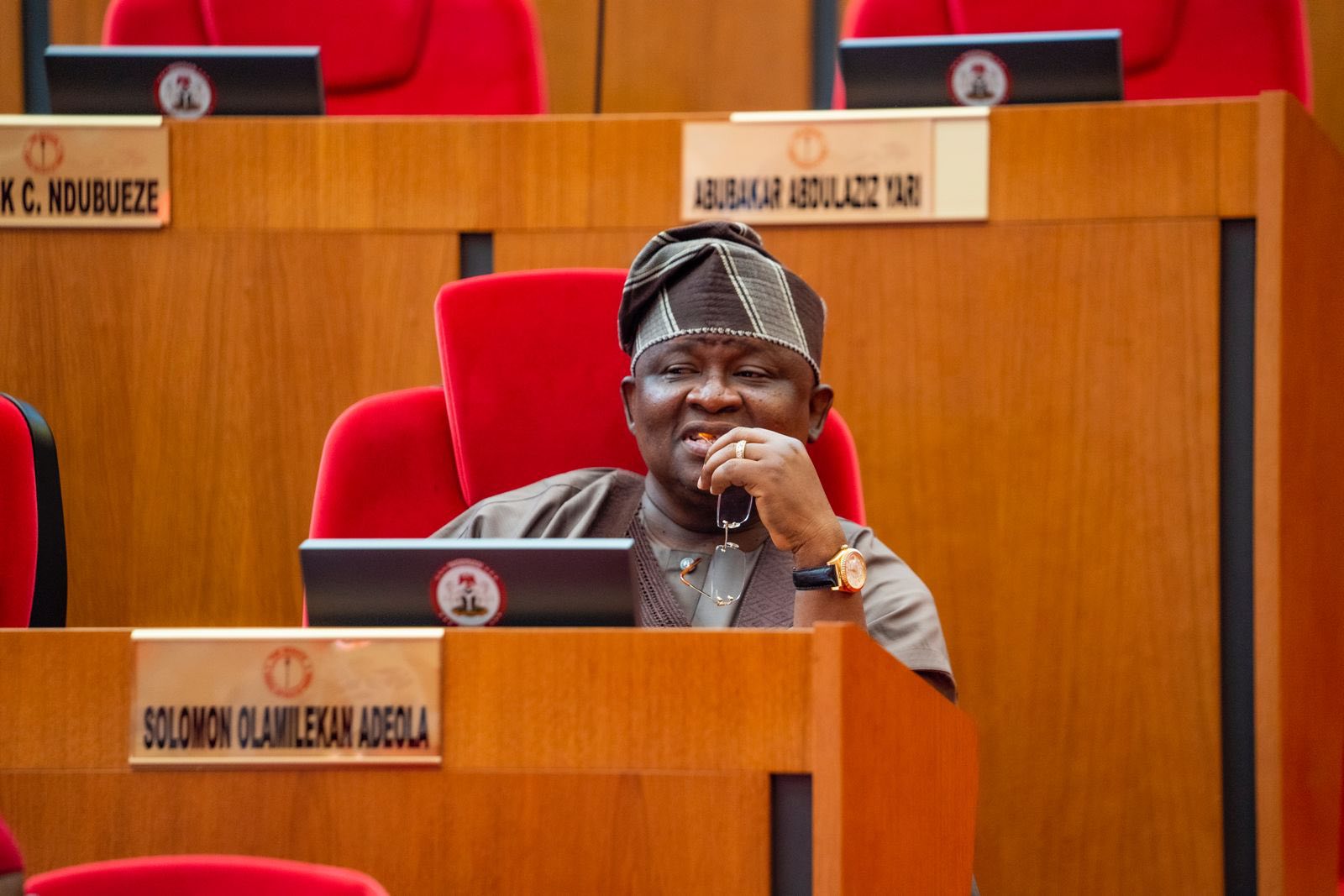
Nigeria is saving over N10 trillion every year following the removal of fuel subsidy by President Bola Tinubu.
Senator Solomon Adeola, Senate Appropriation Committee chair, disclosed this on Saturday in Ogun State.
The senator explained that the policy decision has significantly eased fiscal pressure on the country by eliminating what he described as a long-standing drain on public finances.

What they are saying
Senator Adeola, who represents Ogun West Senatorial District, said the fuel subsidy regime previously benefited only a few Nigerians at the expense of the wider population.
“I am a living testimony to what the president has done. Within his two years of assumption of office, he succeeded in removing the cankerworm in our economy that has affected our finances over the years.
“That is, the fuel subsidy; which benefited very few Nigerians at the detriment of the overall population of this nation.
“With that singular action, the president is saving the country over N10 trillion on annual basis.
“I used to be the chairman, senate committee on finance during the last senate, and I know on a yearly basis what we go to the bank to borrow to fund the subsidy is in the region of N6 trillion to N7 trillion,” he said.
Adeola said the President is working round the clock to ensure a secure and prosperous Nigeria that citizens can be proud of, adding that extensive infrastructural renewal is currently ongoing across the country.
Context and backstory
Nigeria officially removed fuel subsidies in May 2023 following President Tinubu’s inauguration, ending decades of government intervention in petrol pricing.
The policy was aimed at reducing budget deficits, curbing leakages, and freeing up resources for infrastructure and social spending.
However, the subsidy removal has also contributed to a sharp rise in fuel prices, increased transportation costs, and higher inflation, sparking public debate and criticism from labour unions and civil society groups.
Despite these challenges, Adeola argued that the administration is reinvesting the savings into large-scale infrastructure projects across the country, which he said would stimulate long-term economic growth.
He cited projects such as the Lagos-Calabar Coastal Highway and the Sokoto–Badagry Super Highway, noting that the latter would feature about 66 dams upon completion.
“The President is creating a new Nigeria. The Lagos-Calabar expressway will cut across 10 or 15 states, and that is a new Nigeria being born. Also, the Sokoto -Badagry way, a popular road, which we are also a beneficiary. Along that road alone, we have a total of 66 dams when that road is fully completed,” he said.
What you should know
In 2024, the presidency disclosed that $7.5 billion is being saved annually from funds previously allocated to fuel subsidy following its removal.

This was stated by Sunday Dare, Special Adviser on Media and Public Communications to President Tinubu.
In 2024, the Accelerated Stabilization and Advancement Plan (ASAP) presented by Finance Minister Wale Edun projects fuel subsidy spending at N5.4 trillion, up from the N3.6 trillion budgeted in 2023.
Stay ahead with the latest updates!
Join The Podium Media on WhatsApp for real-time news alerts, breaking stories, and exclusive content delivered straight to your phone. Don’t miss a headline — subscribe now!
Chat with Us on WhatsApp