
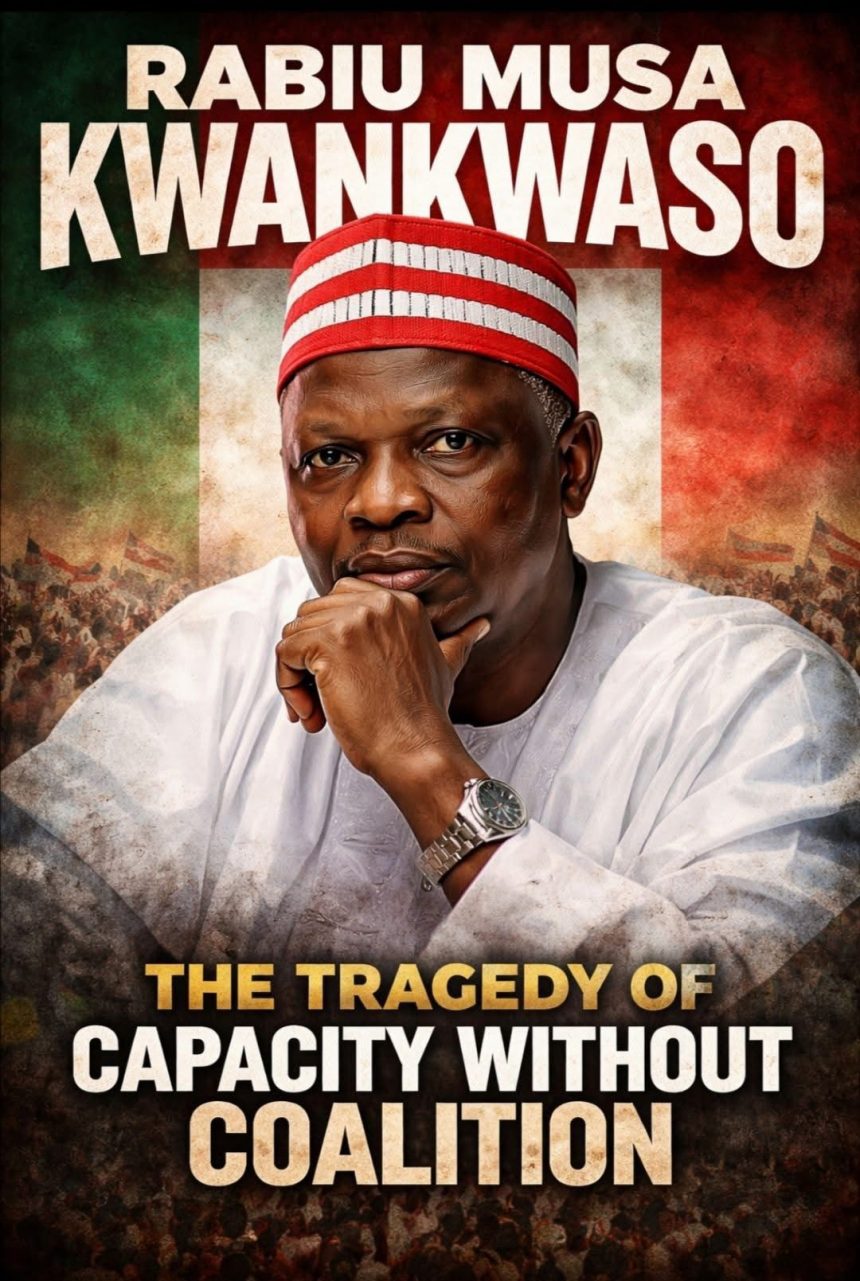
There are men whose tragedy is incompetence.
Rabiu Musa Kwankwaso’s tragedy is far more ironic: capacity without coalition, competence without calibration, achievement without accommodation.
Let it be stated clearly—and without cowardice—that Kwankwaso belongs in the top decile of Nigerian leaders when governance is the metric. On policy conception, program execution, institutional building, and data-driven governance, he is not a pedestrian figure.

He is not an accidental governor. He is not a rhetorical creation of social media. His second term as Kano governor remains one of the most empirically verifiable periods of subnational effectiveness in Nigeria’s Fourth Republic. The numbers are there. The projects are there. The institutional footprints are there.
Few Nigerians alive possess as much granular, program-level data on Kwankwaso’s effectiveness as I do—and that assessment is not nostalgia; it is forensic.
I voluntarily campaigned relentlessly for him in the 2014 APC presidential primaries, and ran facebook ads for him with my hard earned dollars, not out of sentiment but out of conviction. That campaign—driven by a small but committed cohort—helped propel him to second place behind Buhari, a feat that did not occur by accident. It occurred because informed actors saw capacity.
And yet, capacity alone has never won power in Nigeria.
This is where the paradox begins.
The Achilles’ Heel: Politicking as a Blind Spot
Kwankwaso’s great deficiency is not ideology.
It is not vision.
It is not courage.
It is politicking—the unglamorous, transactional, patience-demanding art of managing egos, interests, alliances, and inevitable betrayal.
Politics is not governance. Governance is rational; politics is emotional. Governance responds to data; politics responds to perception. Governance is about outcomes; politics is about ownership of outcomes.
Kwankwaso never truly internalized this distinction—and he has paid for it repeatedly.
Consider the most damning evidence:
He installed two governors in Kano—Dr. Abdullahi Ganduje and Dr. Abba Kabir Yusuf—yet failed to maintain a manageable mentor–mentee relationship with either.
This is not coincidence. It is pattern.
To install power and then lose influence is not evidence of betrayal alone; it is evidence of structural failure in relationship management. A mentor who governs by moral absolutism rather than negotiated loyalty will always end up isolated.
The APC Courtship: A Strategic Fumble
What makes this more tragic is that Kwankwaso was not ignored by power. He was actively courted.
The President himself—and the shakers and movers of the APC—recognized Kwankwaso’s electoral utility, his Northern reach, his technocratic credibility, and his symbolic capital. There were sit-downs, overtures, and sincere attempts at accommodation. The door was not merely open; it was held open.
Kwankwaso’s response was catastrophic.
Instead of strategic engagement, he offered disdain.
Instead of negotiation, he deployed insults.
Instead of calibrated criticism, he chose intentional misrepresentation and mischaracterization of objectively strong government programs and projects.
And instead of building bridges, he reached—again and again—for the ethnicity and tribal card, weaponizing identity where persuasion was required.

In a polity as fragile and plural as Nigeria, this is not just poor politics; it is self-sabotage disguised as principle.
The Defections: Fury Without Foundation
Now to the present rage.
Many NNPP members in the National Assembly—faced with political reality—have either defected to the APC or are in advanced stages of defection. The most painful possibility for Kwankwaso is Governor Abba Yusuf himself.
His fury is understandable.
But it is not defensible.
Nigeria’s 1999 Constitution (as amended) is unambiguous: freedom of association is a fundamental right. No mentor—no matter how historically significant—owns the political destiny of another adult actor. Loyalty that is enforced rather than negotiated is not loyalty; it is tenancy.
Kwankwaso’s failure is not that his protégés chose differently. His failure is that he created a political ecosystem in which their survival increasingly required choosing differently.

The Recurring Pattern
This is not the first time.
It will not be the last—unless introspection replaces indignation.
Kwankwaso consistently mistakes moral superiority for political leverage. He confuses being right with being effective. He treats politics as a courtroom where facts prevail, rather than as a marketplace where interests collide.
Nigeria does not reward the pure.
It rewards the strategically adaptive.
A Final Word
History may yet be kind to Rabiu Musa Kwankwaso—but history is not charity. It is verdict.
He will be remembered as a man who could govern, who did govern, and who failed to convert governance excellence into durable political power.
In the end, that is the cruelest irony of all:
A leader strong enough to build institutions,
yet insufficiently flexible to build coalitions.

Capacity made him formidable.
Politics defeated him.
And in Nigeria, politics always has the final say.
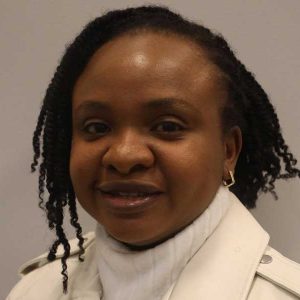
Dr. Bunmi Awoyemi is a Real Estate Developer and Builder
Stay ahead with the latest updates!
Join The Podium Media on WhatsApp for real-time news alerts, breaking stories, and exclusive content delivered straight to your phone. Don’t miss a headline — subscribe now!
Chat with Us on WhatsApp