



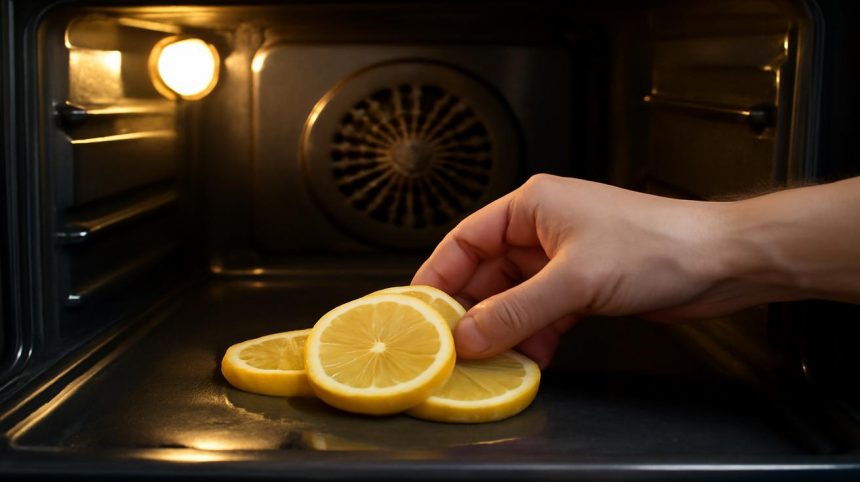
The first time I saw it, I thought my neighbor had lost her mind. There it was: a lone slice of lemon, bright and glistening, sitting on the middle rack of her cold oven like some kind of citrus sacrificial offering. The kitchen smelled faintly of lemon and something else—warm metal, maybe, or the ghost of dinners past. She shut the door, didn’t turn any knobs, and walked away as if this was the most normal thing in the world.
The Quiet Rise of the Lemon-in-the-Oven Ritual
If you spend any time scrolling through home-hack videos or chatting in neighborhood groups, you’ve probably seen it: people placing a slice of lemon—or sometimes a whole lemon, cut in half—inside a cold oven. No baking sheet. No tray. Just lemon on rack, door closed, and a confident caption promising miracles.
Some swear it clears bad odors. Others insist it absorbs grease, softens burnt-on crud, purifies the air, or even “resets” the oven’s energy. It has become one of those modern domestic rituals that spreads fast: it’s simple, cheap, visually pleasing, and just strange enough to feel like a secret.

But what’s actually happening when you leave citrus in a cold steel box? Is this habit a clever, low-tech household trick—or simply aromatic wishful thinking with good lighting for social media?
The Science Beneath the Slice
To understand why people are drawn to this habit, it helps to know what a lemon really is: a small yellow chemistry set. Inside that thin peel and pulpy interior live acids, fragrant oils, and plant compounds that interact with grease, metal, and air in surprisingly useful ways—sometimes.
The star of the juice is citric acid, a mild organic acid that helps loosen mineral deposits, break bonds between food grime and metal, and combat certain bacteria. In the peel, there’s limonene and other essential oils that evaporate into the air, carrying that clean, bright “fresh” smell that humans have now trained themselves to interpret as “sanitary.”
But here’s the catch: those benefits don’t truly come to life in a cold, still oven with a single slice of lemon sitting quietly on a rack. To coax out all the good stuff, you usually need one of two things: moisture and/or heat. And that’s where the story behind this habit gets interesting.
Why People Started Doing This in the First Place
Like many modern housekeeping trends, the lemon-in-the-oven ritual is a mashup of older traditions, half-remembered cleaning tips, and social media soundbites compressed into a one-step “hack.” Somewhere between your grandmother’s simmering pot of lemon water on the stovetop and the professional cleaner’s warm citrus-steam trick, the message got simplified into: “Just put lemon in your oven. It works.”
What People Think It Does
Scroll through comments and you’ll see a familiar list of promised benefits when you leave a lemon slice in a cold oven:
- Neutralizes bad odors
- Loosens baked-on grime and grease
- Repels insects and pests
- Sanitizes the interior of the oven
- “Energizes” or “refreshes” the kitchen space
Some of these have a grain of truth. Some are pure myth. And a few are true—but only under different conditions than the ones those neat little photos suggest.
What It’s Actually Good For (In a Cold Oven)
A lemon slice in a cold oven will do a couple of subtle, real things:
- It mildly scent-masks lingering odors. The essential oils in the lemon peel gradually evaporate, especially in a closed space. This doesn’t remove the base cause of the smell, but it can make the oven space smell more pleasant for a short while.
- It absorbs a bit of odor in the short term. The pulp and moisture can pick up some volatile odor molecules from the air, similar (but weaker) to how coffee grounds or baking soda work. It’s not powerful, but it isn’t nothing.
- It becomes a visual reminder. Maybe the most useful effect is psychological: seeing that slice each time you open the oven nudges you to clean more often, or at least wonder whether you should.
That’s about it. On its own, with no heat and no extra moisture, that lemon slice is not scrubbing your oven, it’s not disinfecting the interior, and it’s not magically dissolving grease from across the rack. The leap from “smells fresher” to “is cleaner” is where the myth bloomed.
When the Lemon Trick Actually Works
The real magic of lemons in ovens doesn’t happen cold. It happens warm. Somewhere along the way, a genuinely useful method got simplified and lost in translation.
The Warm Citrus Steam Method
Professional cleaners and thrifty home cooks have long known a variation of this trick. It goes more like this:
- Fill an oven-safe dish or pan with water.
- Add several lemon slices or the squeezed halves of one or two lemons.
- Place the dish in the oven.
- Turn the oven on low—around 120–150°C (250–300°F)—for 20–30 minutes.
- Turn the oven off, let it sit closed for a short while, then open it and wipe down the interior while it’s still warm and slightly steamy.
Now you’ve moved from talisman to tool. Here’s what actually happens in this warm version:
- Steam softens grime. Warm, humid air helps loosen dried food, splatters, and light grease so they detach more easily from the oven walls and racks.
- Citric acid helps break bonds. The slightly acidic steam and the lemon-water droplets you wipe with can help dissolve or loosen some of the build-up, especially light scale or recent messes.
- Odors are both masked and reduced. The lemon scent fills the enclosed space, and the moisture plus wiping actually removes some of the odor-causing residue.
In other words, the practical version isn’t “put a lemon slice in a cold oven and walk away.” It’s “use lemon and heat together as part of a simple cleaning ritual.” The modern shortcut stripped away the two key ingredients: water and warmth.

What a Lemon Slice Can and Can’t Do
There’s a quiet comfort in these small habits. Putting a lemon in the oven feels like placing intention into your kitchen: a promise of freshness, a whisper of order in the daily mess. But if you’re hoping for results, it helps to know its limits.
Breaking Down the Myth vs. Reality
| Claim | Cold Lemon Slice in Oven | Warm Lemon-Water Method |
|---|---|---|
| Removes strong odors | Mild scent masking only | Can noticeably reduce odor when followed by wiping |
| Cleans baked-on grime | Does not clean or loosen heavy build-up | Helps soften light grime so it’s easier to scrub |
| Sanitizes the oven | Minimal effect; not a reliable sanitizer | Slightly improved, but still not a full disinfection method |
| Repels insects | Very limited or no real effect | Some insects dislike citrus scent, but oven remains closed most of the time anyway |
| Makes oven smell fresher | Yes, gently and temporarily | Yes, more noticeably, especially after wiping |
The cold-slice habit is like setting a bowl of potpourri on a shelf and expecting it to mop the floor. It’s pleasant, but it doesn’t do the hard work.
Why This Tiny Ritual Still Matters
Even knowing its limits, the lemon-in-the-oven trend tells us something about how we live now. Homes today are full of complicated appliances and bottled solutions, yet we keep drifting back to simple, recognizable objects to make us feel grounded: a cut lemon, a pot of simmering herbs, a jar of baking soda in the fridge.
The slice of lemon on the oven rack is part cleaning hack, part small domestic ceremony. It says: I care about this space where meals are made and days begin. I want it to feel alive and tended, not just sanitized with something from a fluorescent aisle.

And there’s power in that feeling. Even if the lemon isn’t scrubbing your oven for you, it can change how you move through your kitchen. You’re more likely to wipe a spill sooner when you’ve already “blessed” the space with a little ritual. You might notice the burnt patch in the back wall and decide not to ignore it this time. The lemon becomes less a cleaning tool, more a companion to your attention.
How to Use Lemons in the Oven in a Way That Makes Sense
If you like the idea of that ritual—and enjoy that fresh, clean citrus smell—there are ways to harness lemon in your oven that actually help:
- For light cleaning sessions: Use the warm lemon-steam method once a month if you cook or roast often. It makes routine wiping faster and less harsh than relying only on chemical cleaners.
- For occasional odor refresh: After cooking something especially pungent, you can place a small bowl of lemon slices in water in the warm-but-off oven (after you’ve finished baking) and let the residual heat coax out their fragrance.
- As a short-term scent booster: If you insist on the single-slice trick, use it as a one-day refresh. Place the lemon in the cold oven in the morning and discard it by evening so it doesn’t dry out, mold, or attract fruit flies in warm climates.
- Paired with actual cleaning: Wipe the oven with a damp cloth dipped in diluted lemon juice or lemon-water mixture after using steam. This uses the acid where it matters: on the surface.
In other words: treat the lemon as part of a small, mindful cleaning ritual, not a magic spell you can forget about once the door closes.
When You Should Skip the Lemon Trick Entirely
Of course, not every oven or household is a good candidate for citrus experiments. There are times when this trend is more hassle than help.
Situations Where It’s Not a Good Idea
- If your oven has a strong self-clean mode: High-heat self-clean cycles are intense and designed for heavy build-up. Adding lemon beforehand won’t make a visible difference—and may just leave baked-on citrus residue or sticky spots if it dries.
- If your oven interior is damaged or badly rusted: Acid and moisture can sometimes encourage further corrosion on compromised surfaces. In those rare cases, keeping the interior as dry as possible is more sensible than introducing acidic steam.
- If you’re sensitive to citrus oils: Some people find strong citrus scents irritating to their airways or skin. In that case, a gentler, unscented method—like plain warm water steam or baking soda paste—might be more comfortable.
- If you tend to forget things in the oven: A single slice of lemon left for days will dry out, turn hard and brown, and eventually become just another thing to scrub off. If you know you’re the forgetful sort, pick a method that doesn’t leave perishable items behind.
And if your main problem is heavy, blackened build-up from years of roasting and spills, no citrus trick will replace good old-fashioned scrubbing or, in some cases, a professional-grade oven cleaner used with proper precautions.
Bringing Intention Back to Everyday Cleaning
There’s something gentle and almost poetic about using fruit to care for metal. One grew on a tree, bathed in sun and rain. The other came from ore and fire, shaped into a box that holds heat for our meals. When we place a slice of lemon in that cold, dark oven, we’re bringing a small piece of the outside world in—a color and scent that doesn’t belong to plastic bottles or spray nozzles.

The modern household is full of invisible chemistry: degreasers, disinfectants, synthetic fragrances. They work, and in many situations, they’re necessary. But the quiet pleasure of scrubbing a slightly warm oven door with a soft cloth soaked in lemon-water is different. It slows you down. It gives cleaning a beginning, middle, and end: cut the lemon, warm the water, wipe, dry, close the door, breathe in the last whispers of citrus.
So yes, the viral habit of putting a single slice of lemon in a cold oven is, on its own, more symbolic than effective. It won’t transform a neglected oven, it won’t disinfect your kitchen, and it won’t replace serious cleaning when it’s needed. But it speaks to a very human desire: to make maintenance feel less like a chore and more like care.
If you’re going to adopt this trend, let it be for what it truly offers. Use the citrus-steam trick when you actually plan to wipe the oven down. Enjoy the scent as an atmosphere, not a solution. And if you still like the sight of that bright yellow slice resting on the rack now and then, think of it as a friendly reminder: this space feeds you. Tending to it, with lemon or without, is a small act of respect for the everyday life that happens here.
FAQ
Does putting a lemon slice in a cold oven really clean it?
No. A lemon slice in a cold oven might lightly freshen the air inside, but it won’t remove baked-on grease or serious grime. Cleaning requires heat, moisture, and physical wiping or scrubbing.
Is the warm lemon-water method safe for all ovens?
For most standard electric and gas ovens, using a shallow, oven-safe dish with water and lemon at low temperatures is safe. Avoid overfilling the dish, and don’t use this method if your oven manual specifically warns against adding water inside for cleaning.
How often should I use lemon to refresh my oven?
If you cook frequently, using the warm lemon-water method once a month, combined with wiping spills as they happen, is usually enough to keep light odors in check. For occasional mild refresh, you can do it every few months.
Can I use bottled lemon juice instead of fresh slices?
Yes. Bottled lemon juice diluted in water can provide similar cleaning and softening benefits, though it won’t have quite the same fresh peel aroma. A few tablespoons in a bowl of water works fine for steam cleaning.
Will lemon damage the oven’s interior surface?
On a well-maintained, intact enamel or metal interior, diluted lemon and short steam sessions are generally safe. Problems are more likely if the interior coating is already chipped, rusted, or damaged, in which case any moisture or acid should be used sparingly.
Is this better than using commercial oven cleaners?
It depends on your goal. Lemon and steam are gentle, good for light maintenance and reducing mild odors. Commercial cleaners are much more powerful for heavy, baked-on build-up, but they are harsher and require more ventilation and caution.
Can I leave a lemon slice in my oven all week?
It’s not ideal. Over several days, the lemon will dry out, darken, and can eventually mold or attract insects if the kitchen is warm and the oven door is opened often. If you use a lemon slice this way, replace it daily or simply skip the cold-slice method and rely on occasional proper cleaning instead.
Source: https://www.hummingbirdpc.com.au
Stay ahead with the latest updates!
Join The Podium Media on WhatsApp for real-time news alerts, breaking stories, and exclusive content delivered straight to your phone. Don’t miss a headline — subscribe now!
Chat with Us on WhatsApp




We stumbled over here by a different web page and thought I should check things out.
I like what I see so i am just following you.
Look forward to going over your web page yet again.
my web page – Bail Bonds Riverside