
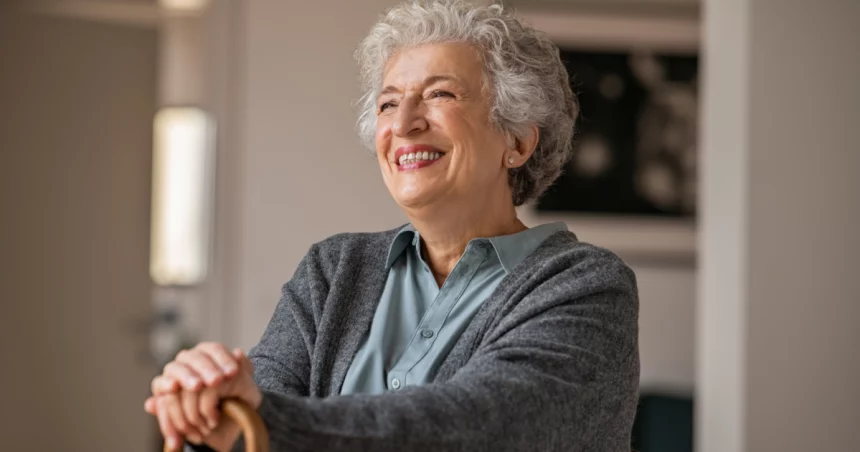
If you’ve spent any time around people over 60 who seem genuinely at ease with themselves, you might have noticed something strange. It’s usually not the ones with the biggest houses or the corner offices who radiate that quiet contentment. It’s the ones who, at some point, stopped performing for an audience that stopped watching years ago.
And psychology has a lot to say about why that is.
The performance most of us don’t realize we’re giving
Here’s the thing most of us don’t talk about: we spend a staggering portion of our lives curating ourselves for other people. We pick careers partly based on how they’ll sound at dinner parties. We buy things that signal a version of ourselves we want others to see. We say yes when we mean no, and we swallow opinions that might make us unpopular.

Psychologists have a clinical way of describing this. It’s called people-pleasing, and it goes far deeper than being “nice.” According to research, it’s a pattern rooted in fear — of rejection, of conflict, of not being enough. Over time, it becomes a form of self-abandonment, where you’re so focused on managing other people’s perceptions that you lose track of your own needs entirely.
What makes this relevant to aging is simple: many people carry these patterns for decades without questioning them. They perform and perform and perform, long past the point where anyone is paying close attention.
Why the audience thins out — and why that’s a gift
One of the most well-supported theories in the psychology of aging comes from Stanford psychologist Laura Carstensen. Her socioemotional selectivity theory explains something that might seem counterintuitive: as people age and their sense of remaining time shrinks, they don’t become sadder or more desperate. They become more selective.
Older adults naturally prune their social circles, dropping the acquaintances and obligation-based relationships that don’t bring real emotional value. They invest more deeply in the connections that actually matter. And research shows this isn’t a loss — it’s an upgrade. Carstensen’s work found that older adults who go through this selective narrowing actually report higher emotional well-being and fewer negative emotions than younger people.
In other words, the “audience” gets smaller. But the people who remain are the ones who see you clearly and love you anyway. That’s not a tragedy. That’s freedom.
The six things that actually predict contentment
If big houses and impressive careers don’t predict well-being after 60, what does?
Psychologist Carol Ryff spent decades developing a model of psychological well-being that moved beyond the simplistic idea that happiness just means feeling good. Her research identified six dimensions of genuine flourishing: self-acceptance, positive relationships with others, autonomy, environmental mastery, purpose in life, and personal growth.
Look at that list for a moment. Not one of those dimensions has anything to do with the size of your bank account or the title on your business card.
Self-acceptance — making peace with who you are, including the messy parts — is arguably the most important one for people over 60. And autonomy, which Ryff defines as the ability to resist social pressures and evaluate yourself by your own standards rather than other people’s, is essentially the psychological definition of “stop performing.”
The people who score high on these dimensions aren’t the ones who accumulated the most stuff. They’re the ones who figured out what actually matters to them and had the courage to organize their lives around it.
Why chasing status actually makes you less happy
There’s a reason the biggest house on the block doesn’t automatically come with the deepest sense of peace. A major meta-analysis published in the Journal of Personality and Social Psychology pulled together data from hundreds of studies and found a consistent negative relationship between materialism and personal well-being. The more people valued acquiring money and possessions as markers of success, the worse they tended to feel about themselves and their lives.
The researchers suggested this happens because chasing material goals crowds out the things that actually satisfy core psychological needs — things like genuine connection, personal autonomy, and feeling competent at something meaningful.
This isn’t to say money doesn’t matter. Of course it does. But there’s a difference between having enough to feel secure and building your entire identity around accumulation. The people who seem most content after 60 have usually figured out where that line is.

The comparison trap loosens its grip
Here’s another piece of research that might surprise you. A study published in Personality and Individual Differences found that older adults report significantly lower levels of social comparison than younger people. They simply spend less mental energy measuring themselves against others.
Think about what that means in practical terms. Less time scrolling through other people’s highlight reels. Less anxiety about whether your neighbor’s retirement looks better than yours. Less of that gnawing feeling that you should be doing more, achieving more, being more.
This decline in social comparison isn’t because older adults have given up. It’s because many of them have gained something far more valuable: an internal frame of reference. They’ve stopped asking “how am I doing compared to everyone else?” and started asking “how am I doing compared to what I actually care about?”
The positivity effect is real
Carstensen’s research team also discovered what they call the “positivity effect” — a genuine shift in how older adults process information. Compared to younger people, older adults tend to pay more attention to positive experiences and remember positive events more vividly than negative ones.
This isn’t denial or naivety. Research suggests it’s actually a form of sophisticated emotional regulation. When you recognize that your time is finite, you naturally become more intentional about where you direct your attention. You stop dwelling on every slight and start savoring the good stuff.
The people who seem most content after 60 have usually made this shift, whether they’re conscious of it or not. They’re not pretending life is perfect. They’ve just gotten very good at choosing what to focus on.
What “stop performing” actually looks like in practice
So what does it actually look like when someone stops performing for an audience that isn’t watching?
It looks like saying no to the dinner party you never wanted to attend, without guilt. It looks like wearing what you want, not what signals the right things. It looks like admitting you don’t know something instead of faking expertise. It looks like letting a friendship fade naturally when it no longer brings joy to either person, rather than keeping it alive out of obligation.
It looks like what researchers studying positive aging describe as a shift from extrinsic to intrinsic motivation — moving from doing things because of external rewards or approval to doing things because they genuinely matter to you.
This is the common thread among the most content people over 60. They haven’t won some cosmic lottery. They’ve simply stopped trying to earn the approval of people who aren’t granting it anyway. And in letting go of that exhausting performance, they found something much better.

The quiet rebellion of just being yourself
There’s a quiet rebellion that happens when you decide to stop managing other people’s impressions. It doesn’t make the news. Nobody throws you a parade for it. But according to research on resilient aging, the psychological benefits are enormous — including reduced risk of cognitive decline, better cardiovascular health, and a stronger sense of purpose.
It turns out that being yourself isn’t just nicer. It’s healthier.
The people who seem most content after 60 have usually arrived at a deceptively simple insight: the performance was never actually required. The approval they spent years chasing was never going to fill the hole they thought it would fill. And the audience they were performing for? Most of those people were too busy performing their own show to notice.
If you’re not yet 60, this is worth knowing now. And if you’re past it, you probably already know it in your bones.
The biggest gift of getting older isn’t wisdom in some abstract, greeting-card sense. It’s the bone-deep realization that you are allowed to just be who you are. No performance necessary. No audience required.
And that, psychology says, is where real contentment lives.
Credit: https://geediting.com
Stay ahead with the latest updates!
Join The Podium Media on WhatsApp for real-time news alerts, breaking stories, and exclusive content delivered straight to your phone. Don’t miss a headline — subscribe now!
Chat with Us on WhatsApp