



In 1966, a developmental psychologist named Diana Baumrind published a study that would change how we think about parenting. Working out of the University of California, Berkeley, she identified three distinct styles: authoritarian, authoritative, and permissive. Her research was groundbreaking. But here’s the thing that always strikes me about that timing.
The generation being raised while Baumrind was doing her research didn’t need a framework to understand what was happening to them. They were just living it.
If you grew up in the 1960s, emotional comfort wasn’t something anyone talked about. You didn’t process your feelings. You didn’t get validated. You got told to stop crying, go outside, and figure it out. And according to a growing body of psychological research, that particular brand of upbringing produced something surprisingly specific: a type of resilience that’s become increasingly rare.

This isn’t about romanticising the past. Plenty of damage was done by the silence and emotional distance of that era. But the research is worth paying attention to, because what psychologists are finding about the decline of that resilience tells us a lot about the world we live in now.
The accidental training ground
My dad grew up in the 1960s, working-class, outside Manchester. His father worked in a factory and was involved in the union. His mother worked in retail. Nobody in that household was sitting around discussing feelings over dinner. What they discussed was politics, work, and whether things were fair or not.
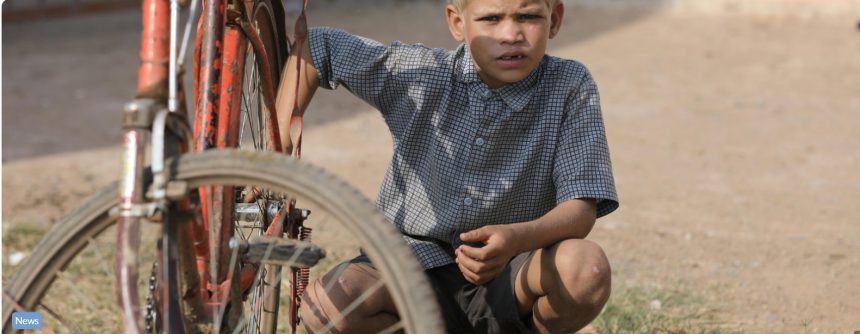
Dad didn’t talk much about his childhood in sentimental terms. But the stories he did tell had a common thread. He walked to school alone. He sorted out his own problems. If he got into a scrap with another kid, no parent was phoning anyone. He dealt with it, or he didn’t, and either way he showed up the next day.
That wasn’t unusual. It was just what childhood looked like.
What psychologists now recognise is that this kind of unsupervised, unstructured experience was quietly building something. Research psychologist Peter Gray, who has spent his career studying free play at Boston College, has argued that the contraction of children’s independent activity since the 1960s has made them markedly less resilient. Over several decades, as children’s freedom to play and explore without adult intervention declined, rates of anxiety, depression, and suicide among young people steadily climbed.
The uncomfortable conclusion? The very thing that felt like neglect was functioning as emotional training.
What “figure it out” actually taught
There’s a concept in psychology called distress tolerance. It’s exactly what it sounds like: the ability to feel awful and not need it to stop immediately. To sit with discomfort without being destroyed by it.
Children raised in the 1960s got daily practice in this without anyone calling it that. They waited for things. If they wanted to watch a programme, they had to be there when it aired. If they wanted something from a shop, they saved for it. If they were bored, tough. Nobody was handing them a screen.
As Gray explained in an interview with NPR, play is how children learn to direct their own activities, negotiate with peers, and deal with minor bullying. When adults constantly supervise and intervene, children never get the chance to develop those skills for themselves. The result, he argues, is that the first real emotional storms don’t arrive until eighteen instead of eight. And by then, the window for building certain coping mechanisms has narrowed considerably.
I think about my dad’s generation and the way they handled setbacks. Redundancies. Health scares. The slow erosion of the industries their towns were built on. They weren’t immune to pain. But they had this ballast, this underlying steadiness, that came from decades of small, unrescued difficulties stacking up into something solid.
The locus of control shift
Here’s where the data gets really striking.
Gray’s research highlights work by psychologist Jean Twenge, who analysed decades of data on something called the “locus of control.” This measures whether someone believes they have control over their own life (internal) or whether they feel controlled by outside forces (external).
Twenge found that between 1960 and 2002, average scores among young people shifted dramatically toward the external end of the scale. By 2002, the average young person was more externally oriented than eighty percent of young people in the 1960s. And that shift tracked almost perfectly with the rise in depression and anxiety.

In other words, the generation raised in the 1960s didn’t just feel tougher. They had a fundamentally different relationship with their own agency. They believed they could influence what happened to them. And that belief, according to the research, is one of the strongest buffers against mental illness.
My grandparents lived through the war, and their stories made history feel like something that happened to real people, not just textbook stuff. That perspective filtered down. You didn’t sit around feeling sorry for yourself because you’d grown up hearing about people who’d survived actual catastrophes through sheer will and stubbornness. It recalibrated what counted as a crisis.
The cost of comfort
None of this means we should go back to telling children to toughen up. The 1960s produced resilience, but it also produced a generation that often couldn’t talk about what was hurting them. Emotional suppression was the norm. Mental health was stigmatised. There were blind spots that did real harm.
I’ve mentioned this before but I think one of the most important things I’ve learned from reading psychology and history is that you can hold two truths at once. The 1960s got some things right by accident. It also got some things badly wrong on purpose.

But the overcorrection is worth thinking about. As Gray told the Harvard Graduate School of Education, play is how children develop the character traits needed to become independent adults. When we protect them from every bump, we’re not building confidence. We’re quietly communicating that they can’t handle things on their own.
The parenting culture of the 1960s didn’t intend to build emotional resilience. Parents were just busy. They were stretched thin. They were following a culture that expected children to handle a fair amount on their own. But in the gap between needing something and getting it, between facing a problem and finding help, something important was being forged.
Editors’ pick
Most people never notice the patterns running their lives
Why this matters now
I lost my dad a few years ago. And in the weeks and months that followed, I found myself thinking a lot about the kind of person he was. Steady. Unflappable in ways that sometimes frustrated me when I was younger but that I came to admire deeply as I got older.
He didn’t have a therapist. He didn’t journal. He didn’t meditate. He just had this core of something that held him together through redundancies, through my parents’ difficult years, through watching his own hometown change beyond recognition as the jobs disappeared.

Was some of that problematic? Probably. He could have talked more. He could have let people in more. But the underlying steadiness was real, and it came from somewhere. It came from a childhood where nobody rescued you from discomfort because nobody thought discomfort was something you needed rescuing from.
Psychologists aren’t suggesting we recreate the 1960s. What they’re suggesting is something more nuanced: that we’ve removed so much friction from modern life, especially from childhood, that we’ve accidentally eliminated the raw material resilience is built from.
The generation raised in that era didn’t choose to be tough. They were shaped by a world that didn’t consider their emotional comfort a priority. And paradoxically, that lack of comfort gave them something that no amount of well-meaning intervention can easily replicate.
The bottom line
Resilience isn’t a personality trait. It’s a skill, and like all skills, it needs to be practised. The 1960s provided that practice automatically, woven into the fabric of daily life. Today, we have to be more intentional about it.
That doesn’t mean being harsh with ourselves or our children. It means resisting the urge to smooth every rough edge. It means letting small problems run their course. It means understanding that the ability to sit with discomfort, to tolerate uncertainty, to believe you can handle what comes next, these things aren’t born. They’re built.
And they’re built, more often than not, in the moments when no one is coming to help.
As always, I hope you found some value in this post. Until next time.
Source: siliconcanals.com
Stay ahead with the latest updates!
Join The Podium Media on WhatsApp for real-time news alerts, breaking stories, and exclusive content delivered straight to your phone. Don’t miss a headline — subscribe now!
Chat with Us on WhatsApp