
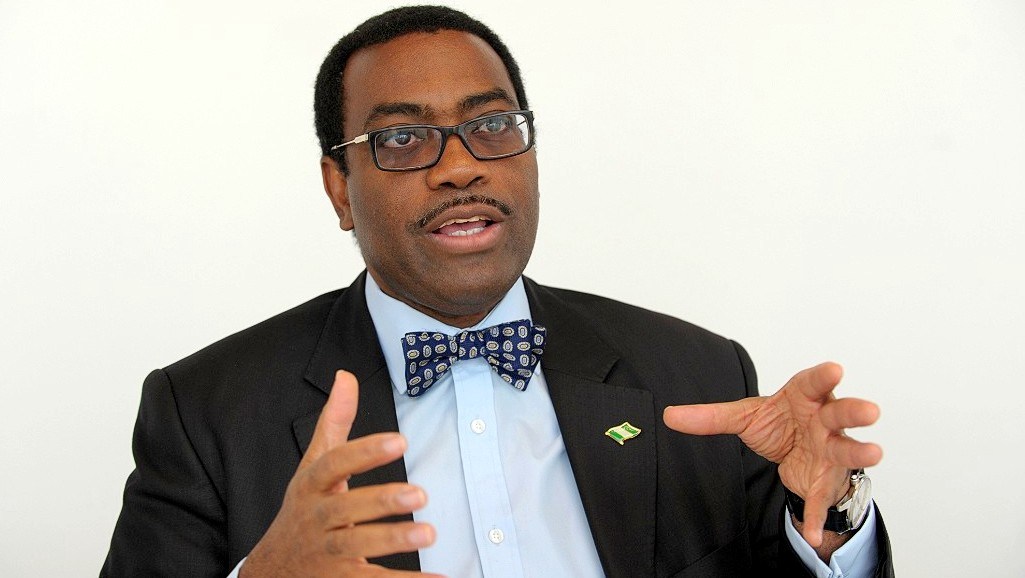
Akinwumi Adesina, president of the African Development Bank (AfDB), has delivered a compelling call for Africa to reposition itself in the face of shifting global development and geopolitical dynamics, urging a transition from aid dependency to investment-led growth and self-reliance.
Delivering the 14th convocation lecture at the National Open University of Nigeria (NOUN) recently in Abuja, Adesina warned that “the era of aid or free money is gone,” emphasising the need for African nations to take ownership of their development trajectory through innovation, investment, and strategic global engagement.
“Benevolence is not an asset class,” Adesina said. “Africa must wean itself from aid-dependency syndromes. No nation has ever developed based on aid.”

Adesina, who was also honoured with an honourary doctorate by NOUN, delivered the lecture titled “Advancing Africa’s Positioning within Global Development and Geopolitical Dynamics.”
Shifting global landscape, local implications
Adesina highlighted the rise of nationalism, global tariff wars, and declining multilateral aid as symptoms of a fractured international order, cautioning that these trends pose significant risks to African economies. He noted the dismantling of aid agencies and tighter immigration policies in Western nations as further evidence that Africa must chart its own course.
He pointed to the COVID-19 pandemic as a wake-up call, noting that Africa was left scrambling for vaccines and medical supplies while developed nations secured multiple booster shots for their populations.
“Africa must not outsource the health security of its 1.4 billion people to the generosity and benevolence of others. What if they are not generous?” he asked.
Investing in resilience: Health, youth, infrastructure
The AfDB, Adesina said, has responded with several bold initiatives, including a $3 billion program to strengthen Africa’s health infrastructure and a $3 billion pharmaceutical plan to ensure the continent can produce its own vaccines and medicines.
He also underscored the importance of equipping Africa’s youth with relevant skills to meet labour market demands. With over 75% of the population projected to be under 35 by 2050, Adesina argued that Africa must become a global hub for talent, not a source of migration crises.
To this end, the AfDB is investing $682 million in skills development, with another $809 million planned for 2024–2025. It is also establishing Youth Entrepreneurship Investment Banks to help young Africans transition from job seekers to job creators.
“Africa’s demographic growth must not become a global negative externality,” he said. “We must create the right environment for our own youth to thrive.”
Rewriting Africa’s narrative in global trade and finance
Turning to trade and investment, Adesina criticised the “Africa risk premium” that inflates borrowing costs on the continent, calling it a bias rooted in misperceptions.
“Africa has the lowest default risks in infrastructure investment globally at just 1.9%. Yet investors in Africa face 3–5 times the cost of capital than in other regions,” he noted, citing Moody’s Analytics.
To remedy this, the AfDB has proposed the establishment of an African Credit Rating Agency and an Africa Financing Stability Mechanism to help refinance $10 billion in annual debt service over the next decade.
Adesina also expressed alarm over recent U.S. tariff hikes that now affect 47 African countries, warning that they could cripple export earnings and devalue currencies across the continent.
“Africa represents only 1.2% of total U.S. imports and 0.76% of its trade surplus. We should not be dragged into a tariff war—we need more trade with the U.S., not less,” he said.

Climate financing and the carbon grab
On climate change, Adesina lamented that Africa, despite contributing only 3% of global emissions, suffers disproportionately from climate impacts and receives a mere 3% of global climate finance.
He warned of an ongoing “carbon grab” in which rich countries acquire African land cheaply for carbon credits, undermining the continent’s sovereignty and economic potential.
“Africa is witnessing the largest carbon grab in history. This is a lose-lose proposition for the continent,” he said.
He announced that the African Union has approved a new initiative to include green environmental capital in GDP calculations, a move he said will “tilt financial resources massively toward the continent.”

A new Marshall Plan and vision of sovereignty
Citing insecurity from the Sahel to Nigeria’s northern states, Adesina proposed Security-Indexed Investment Bonds to rebuild conflict-ravaged regions, a homegrown “Marshall Plan” for Africa.
In closing, he reflected on his ten-year tenure as AfDB president, during which the bank’s capital grew from $93 billion to $318 billion, and it was ranked the most transparent financial institution globally.
“Africa must chart its future, relying not on the benevolence of others, but on its own determination for self-reliance,” he said. “Only then will Africa be great again.”
Stay ahead with the latest updates!
Join The Podium Media on WhatsApp for real-time news alerts, breaking stories, and exclusive content delivered straight to your phone. Don’t miss a headline — subscribe now!
Chat with Us on WhatsApp