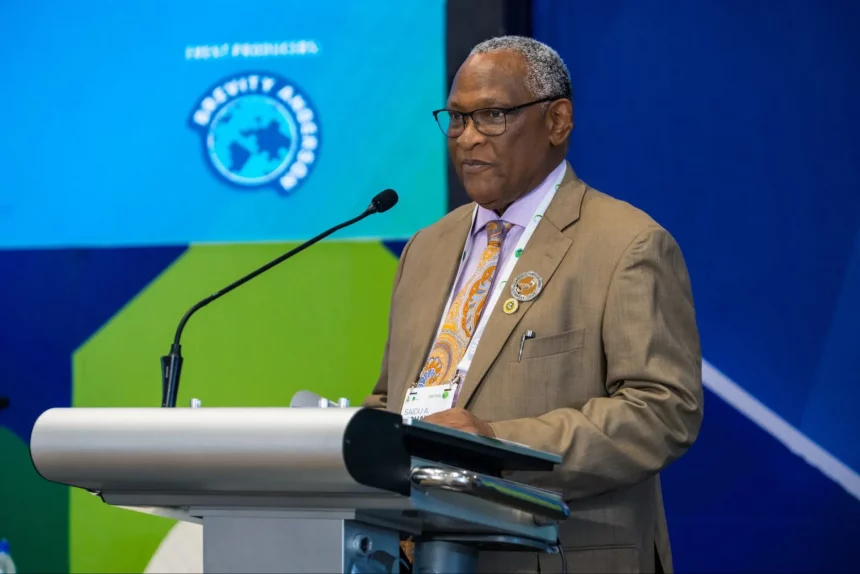
The Nigerian Midstream and Downstream Petroleum Regulatory Authority (NMDPRA) says Nigeria saved over N6 trillion from reduced petroleum product imports in the first nine months of 2025 following the full deregulation of the downstream sector.
Saidu Mohammed, NMDPRA chief executive officer (CEO), spoke at the 2026 Nigerian International Energy Summit (NIES) on Wednesday in Abuja.
According to Mohammed, the reforms introduced by President Bola Tinubu, including foreign exchange harmonisation, naira-based crude and product trading, and increased use of domestic refining capacity, made this possible.

The NMDPRA boss added that the reforms have triggered what he described as an “early but irreversible renaissance” in Nigeria’s downstream petroleum sector.
He said for decades, the downstream value chain was plagued by infrastructure deficits, weak market structures, supply inefficiencies, low investment, and poor safety and environmental standards.
However, Mohammed said the implementation of the Petroleum Industry Act (PIA) 2021 has transformed the sector into a fully liberalised market, eliminating persistent petrol scarcity and supply uncertainty.
“In just a few years of implementing the new legal framework, Nigeria’s downstream sector has evolved into a fully liberalised market,” he said.
“The sector is no longer defined by scarcity and supply uncertainty. Supply stability is now the norm, pricing is increasingly driven by market fundamentals, and the environment required to encourage investment is taking shape.”
The NMDPRA chief said Nigeria’s dependence on imported petroleum products is declining as domestic refining capacity expands, logistics improve, and private-sector participation deepens.
He cited the Dangote Petroleum Refinery as a major contributor to local supply, noting that the facility is meeting a significant share, and in some cases all, of Nigeria’s domestic petroleum product demand.
“The optimal operationalisation and future upscaling of the Dangote Refinery are essential to achieving Nigeria’s aspiration of becoming a regional and continental energy hub,” Mohammed said.
The NMDPRA boss also said Nigeria’s total refining capacity is expected to exceed one million barrels per day in the medium term as licensed private refineries advance toward completion alongside the rehabilitation of Nigeria National Petroleum Company (NNPC) Limited-owned plants.
He added that effective, predictable regulation remains critical to sustaining investor confidence, noting that NMDPRA is focused on transparent, rule-based oversight that balances consumer protection with commercial viability.
According to Mohammed, market confidence is the true currency of reform.
“Investors invest where contracts are respected. Operators expand where rules are stable. Consumers trust systems that are fair and predictable,” he said.
Mohammed said the authority would continue collaborating with industry stakeholders to ensure a competitive, transparent, and investment-friendly midstream and downstream petroleum sector.

Stay ahead with the latest updates!
Join The Podium Media on WhatsApp for real-time news alerts, breaking stories, and exclusive content delivered straight to your phone. Don’t miss a headline — subscribe now!
Chat with Us on WhatsApp