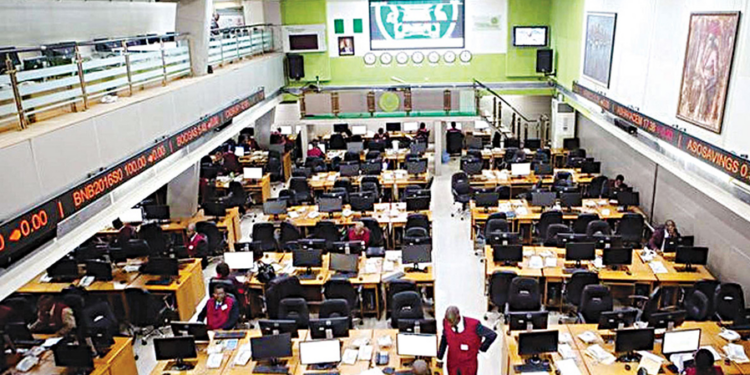
…Insurance firms account for 70.1% of total compliance cost
Nigeria’s 34 listed companies paid a cumulative N540.37 million in penalties for late submission of financial statements during the 2024/2025 compliance cycle, with the insurance sector accounting for the largest share of sanctions.
This is according to the latest X-Compliance Report published by NGX Regulation Limited on February 20, 2026.
The report highlights governance and disclosure lapses across sectors and also identifies early filers that met deadlines ahead of schedule, offering insight into compliance trends in Nigeria’s capital market.

A segment of the report shows that the penalties were imposed for defaults in filing both audited annual financial statements (AFS) and interim unaudited financial statements (UFS), in line with the Exchange’s Rules for Filing of Accounts and Treatment of Default Filing.
The data underscores persistent reporting delays in certain sectors and rising regulatory enforcement.
What the data reveal
Sector analysis of the report shows that 13 insurance companies collectively accounted for approximately N378.7 million, representing about 70.1% of total penalties imposed during the period under review.
Three defaulting oil and gas entities led by Oando Plc paid N110.2 million in penalties, accounting for 20.4% of the total and ranking second by sector exposure.
- N353.74 million was imposed for the late filing of audited annual financial statements.
- N186.63 million related to delayed interim (quarterly) filings.
- Banking and financial services firms (seven in number) recorded N96.3 million in penalties.
- Other sectors (11 companies) accounted for N45.2 million.
Audited financial statements carry stricter regulatory deadlines and attract heavier fines once companies exceed the cure period stipulated in the Rulebook, resulting in significantly higher sanctions compared to quarterly filings.
- Among insurers, the highest penalties were recorded by Mutual Benefits Assurance Plc (N67.44 million), African Alliance Insurance Plc (N48.6 million), Universal Insurance Plc (N47.1 million), and Regency Alliance Insurance Plc (N28 million).
Others are International Energy Insurance Plc (N26.2 million), Sovereign Trust Insurance Plc (N24.8 million), Prestige Assurance Plc (N12.1 million) and Cornerstone Insurance Plc (N10.2 million).
Market analysts note that the heavy concentration of sanctions within the insurance sector reflects persistent reporting delays and governance weaknesses in parts of the industry.
More insights
The Oil and Gas sector ranked second in total penalties, driven largely by sanctions imposed on Oando and Conoil Plc. Oando alone paid N95 million in multiple filing penalties, nearly three times Conoil’s N27.4 million sanctions.
- Oando paid N7.9 million for the default filing of audited accounts for the year ended December 31, 2024, filed on June 4, 2025, while Conoil paid N6.5 million for a similar breach filed on June 18, 2025.
- TotalEnergies Marketing Nigeria Plc paid N600,000 for the same breach but filed earlier on April 6, 2025.
- Oando was fined N41 million for the late filing of its 2023 audited results submitted on November 1, 2024, while Conoil paid N9.6 million for filing its 2023 results on July 1, 2024.
- For late Q1 2025 unaudited statements, Oando paid N5.5 million and Conoil N5 million, with additional penalties for delayed 2024 interim filings.
Oando and Conoil rank among the most delinquent filers outside the insurance segment, reflecting repeated breaches across financial years.
Meanwhile, banks and financial services firms such as Fidelity Bank Plc, Jaiz Bank Plc and First HoldCo Plc recorded comparatively lower aggregate sanctions, with most penalties linked to interim filing delays rather than multi-year audited defaults.
Expert views
Market analysts say strict enforcement of disclosure rules is critical to sustaining investor confidence and ensuring market discipline.
They argue that listed companies are fully aware of post-listing obligations and associated penalties.
Mr. Aruna Kebira, Managing Director and Chief Executive Officer of Globalview Capital Limited, said the Investment and Securities Act gives the NGX the legal authority to regulate listed issuers and enforce compliance with post-listing requirements.

- “Before listing on NGX, issuers are informed in advance of quarterly and annual reporting obligations and the penalties attached to non-compliance; fines serve as deterrence rather than revenue targets.
- “The Exchange issues reminders and warnings before sanctions are imposed, including placing persistent defaulters on a delisting watch list where necessary,” the stockbroker stated.
Chief Blakey Ijezie, a chartered accountant, said some companies delay results because they have weak financial performance and fear the market reaction once disclosures are made.
- “Companies that delay financial statements are buying time because they may not have good results to celebrate. They fear releasing the results due to the impact it may have on the share price,” said the founder of Okwudili Ijezie & CO.
The analysts added that while penalties may appear punitive, they are applied uniformly to preserve fairness and protect market integrity.
What you should know
The X-Compliance Report, updated weekly, is a transparency initiative of NGX Regulation’ Limited (NGX RegCo) designed to maintain market integrity and protect investors by providing compliance-related information on all listed companies.
The penalties were triggered due to the failure of the 34 companies to comply with the post-listing rules requiring timely financial disclosures. Under the rules, companies are required to adhere to high disclosure standards prescribed in the Rulebook of The Exchange, 2015, and other NGX Rules, from time to time.
Financial information, which is periodic disclosures, as well as ongoing material information disclosures, is by obligation released to NGX in a timely and immediate manner to enable the Exchange efficiently perform its function of maintaining an orderly market.
Listed companies must file audited annual financial statements within 90 days of year-end and quarterly unaudited statements within 30 days after each quarter.

- Where a company fails to meet deadlines, a deficiency notice is issued and a cure period granted.
- If non-compliance persists, monetary penalties accrue daily in line with the Rulebook.
- Trading in the company’s securities may be suspended in cases of prolonged default.
Defaults in the latest cycle included late submission of 2023 and 2024 audited statements, delays in 2024 and 2025 quarterly filings, and repeat or multi-year non-rendition of accounts.
Stay ahead with the latest updates!
Join The Podium Media on WhatsApp for real-time news alerts, breaking stories, and exclusive content delivered straight to your phone. Don’t miss a headline — subscribe now!
Chat with Us on WhatsApp