

Nigeria clarified that its objection is not directed at Mr Sall personally or at Senegal.
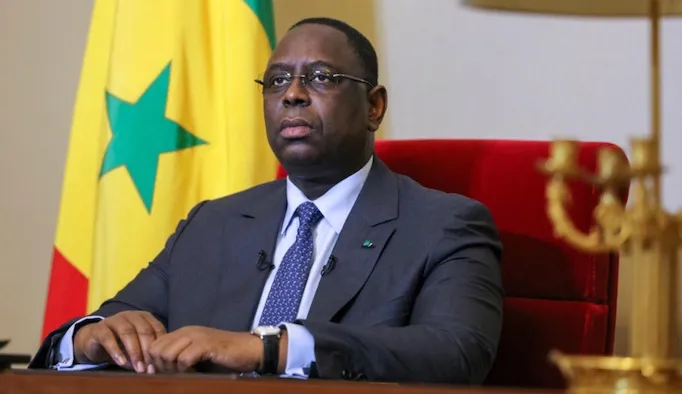
Nigeria formally objected to former Senegalese President Macky Sall’s bid to become the United Nations Secretary-General, opposing a move to have him adopted as the African Union’s candidate. Nigeria faulted a push in the African Union to adopt Mr Sall, saying the process is procedurally flawed and inconsistent with established diplomatic norms.
In a Note Verbale addressed to the African Union Commission, Nigeria’s Embassy in Ethiopia and Permanent Mission to the AU and the United Nations Economic Commission for Africa (UNECA) said the nomination was handled in a manner that violated the rules and principles that govern such decisions.
“The nomination of the former President of the Republic of Senegal, His Excellency Macky Sall, as the African Union’s consensus candidate for the position of the United Nations Secretary-General was procedurally incorrect,” the mission stated.

Nigeria clarified that its objection is not directed at Mr Sall personally or at Senegal.
“The Federal Republic of Nigeria’s reservation on the decision is a matter of procedure and principle, not an opposition to the individual candidate or his state of origin,” the note read.
Mr Sall, the former president of Senegal, was first nominated by Burundi, whose President Évariste Ndayishimiye took over the rotating AU chairmanship on 14 February. Analysts said the submission blurred the line between a national initiative and a continental endorsement.
AU procedures require candidacies to be submitted to and reviewed by the Committee of Permanent Representatives and the Ministerial Committee before they reach the Executive Council for a decision by consensus or a two-thirds majority. This ensures a collective review, based on consultations among member states.
In this case, Mr Sall’s name was not on the list of African candidacies presented to the Executive Council at the February AU summit and was not formally discussed by heads of state. Burundi’s submission of the draft decision to the UN and AU member states appears to have been a late attempt to secure formal continental endorsement.
In this case, the draft decision set a 24-hour deadline and a threshold of one-third of eligible member states – that is, countries which are up to date with their AU contributions and not under suspension. According to a Senegalese high official, this amounted to 49 eligible states.
In total, 20 countries broke the silence, including Algeria, South Africa, Liberia, Nigeria and Rwanda, Djiby Sow of the Institute of Security Studies reported.
The AU said 20 of its 55 member states either objected or requested an extension of the 24-hour deadline. Fourteen raised formal objections, while six, including Egypt, requested an extension of the 24-hour deadline. Senegal distanced itself from the process, saying it had not been associated with Burundi’s initiative. After the deadline, Egypt and Liberia withdrew their positions, without affecting the outcome.
Senegal, Mr Sall’s own country, rejected his candidacy as his political legacy continues to be contested.
The objections focused primarily on procedural grounds. Several states felt the silence procedure was inappropriate for a substantive decision, citing limited scope for discussion and the short timeframe. The one-third threshold also departs from established practice, which allows just one or more objections to suffice.
Rotation principle at stake
At the heart of Nigeria’s objection is the long-standing principle of continental rotation in the appointment of the UN Secretary-General — a convention that Abuja says the AU has effectively abandoned with this nomination.
Nigeria argued that it is currently the turn of South America and the Caribbean regions to produce the next UN Secretary-General, and that Africa itself recognises the Caribbean as its sixth region. By proceeding with Mr Sall’s candidacy, Nigeria warned, the AU risks undermining its own long-term standing and strategic interests within the multilateral system.
“The Federal Republic of Nigeria sees no rationale in violating the time-honoured principle of continental rotation in the appointment of the United Nations Secretary-General,” the note stated, adding that “by jettisoning this established practice, the African Union is putting its position and interest in jeopardy now and in the future.”

Nigeria also said it was caught off guard by the speed of the decision and the limited window given to member states to evaluate the candidacy.
Abuja expressed concern that Mr Sall’s nomination was presented without being subjected to the scrutiny of the African Union’s Ministerial Candidature Committee — the body responsible for vetting such high-profile endorsements.
“The decision to present His Excellency Macky Sall as the African Union’s consensus candidate came to the Federal Republic of Nigeria as a surprise, as the candidate is being fielded for such a coveted position and member states are given such a short time to consider the decision,” the note said.
Nigeria further stressed that AU member states are bound by their commitment to the rule-based international order, multilateral procedures, and established diplomatic norms, obligations it said were not honoured in arriving at this decision.

The United Nations Secretary-General position will become vacant at the end of António Guterres’ current term this year.
The selection of his successor has drawn intense interest from across the globe, with the African Union’s backing considered a significant geopolitical asset for any candidate. Mr Sall’s failure to secure the AU backing may affect his chances of getting the top job.
The job traditionally rotates among regions, but when Mr Guterres, who is from Portugal, was elected in 2016, it was supposed to be Eastern Europe’s turn. Next on the list is Latin America. However, some diplomats expect candidates from other regions.
Countries have been asked to nominate candidates by April 1 so they can take part in interactive dialogues in the week of April 20, which will be broadcast online.
Candidates will be able to present their vision statements, and UN member states will be able to ask questions.
In his vision statement, Mr Sall said the world was going through a deep crisis in which the UN faced growing mistrust and an unprecedented risk of weakening. He said the organisation needed to be reformed, streamlined, and modernised to address 21st-century challenges.

Mr Sall has a high-level political and diplomatic profile. An experienced former head of state, he served as AU chair in 2022, where he was a key advocate for greater African representation in global governance and helped secure the AU’s G20 seat. He served as French President Emmanuel Macron’s Special Envoy for the Paris Pact for People and the Planet after leaving office.
At the same time, his domestic record is contested. His final 2019-2024 term was marked by significant political tensions and judicial controversies. Following his departure, questions were raised about his management of public finances.
Other candidates for the top UN job
Rafael Grossi – Argentina: A veteran Argentine diplomat, Mr Grossi is director-general of the International Atomic Energy Agency, a role he has held since 2019.
Argentina formally nominated him on 26 November 2025. In his vision statement for the post, Mr Grossi said the United Nations was still relevant but needed “a purposeful, performance-driven renewal.”
He said the UN80 reform initiative must be followed by “a wider process of rightsizing, which is sustainable and reconciles mission with available resources.”
Michelle Bachelet – Chile: The former Chilean president was formally nominated for the post by Chile, Brazil and Mexico on 2 February, although Chile withdrew its backing on 24 March after a change in leadership and a sharp shift to the right.
Ms Bachelet, Chile’s first female head of state who twice served as president of the South American nation, said she would press ahead with support from Brazil and Mexico.
Ms Bachelet was the UN High Commissioner for Human Rights from 2018-22 and the Executive Director of UN Women from 2010-13.
In her statement for the post, she said she was confident her experience had prepared her “to confront a moment in which the international system faces challenges unprecedented in scale, urgency, and complexity”, and pledged a focus on “rebuilding trust in the United Nations.”
Rebeca Grynspan – Costa Rica: A UN spokesperson said in early March that Costa Rica had nominated Ms Grynspan, its former vice president.
Ms Grynspan, a politician and economist, currently serves as Secretary-General of the UN Conference on Trade and Development. In her vision statement, she said trust in the UN was waning, and courage was needed to change it to restore belief in its capacity to deliver peace and development.
Stay ahead with the latest updates!
Join The Podium Media on WhatsApp for real-time news alerts, breaking stories, and exclusive content delivered straight to your phone. Don’t miss a headline — subscribe now!
Chat with Us on WhatsApp