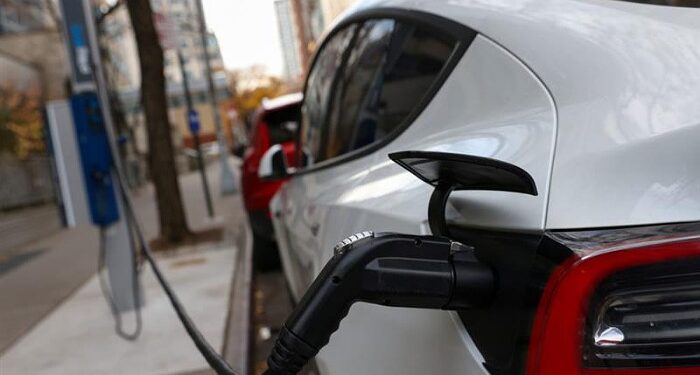
Nigeria’s vast deposits of rare-earth elements such as monazite and neodymium, alongside growing lithium exploration and early advances in electric-vehicle (EV) assembly, are strengthening prospects that the country could emerge as a global player in the electric-car value chain, industry stakeholders have said.
According to data from the International Energy Agency (IEA), global EV sales surpassed 14 million units in 2023, representing about 18% of total car sales worldwide.
With projections indicating that annual sales could exceed 20 million units before 2030, demand for lithium-ion batteries and rare earth magnets is accelerating sharply.

The global EV market is estimated to be worth over $800 billion, underpinned by the rapid transition to cleaner energy and net-zero commitments by major economies.
As countries race to secure critical minerals and strengthen domestic supply chains, Nigeria is increasingly positioning itself as a potential supplier of key inputs and possibly a manufacturing hub within Africa.
What they are saying
Industry stakeholders say Nigeria’s potential lies in combining its mineral endowment with domestic demand and regional trade advantages. They argue that strategic policy alignment and investment could help the country integrate into the global EV value chain.
Automotive analyst Tope Adebayo said Nigeria possesses the mineral resources, large domestic market and strategic regional positioning required to become a global EV player.
- “West Africa imports most of its vehicles. If Nigeria can produce competitively priced electric vehicles, it can serve both local and regional markets under the African Continental Free Trade Area,” he said.
The Minister of Solid Minerals Development, Dele Alake, said Nigeria is shifting from exporting raw ore to encouraging local processing.
- “We cannot remain exporters of raw minerals in a world that is transitioning to clean energy,” the Minister said.
- “Our goal is to develop processing capacity and link that to manufacturing, including electric vehicles,” he added.
Founder and chief executive of SAGLEV, Sam Faleye, cautioned that while Nigeria is endowed with rare earth elements, developing them for battery manufacturing remains a long process.
- “The journey is a very long process that involves a lot of stages. Besides, the government has not yet taken the development of those elements at a high level, which would involve partnering with already existing manufacturers like the Chinese,” he said.
- “Batteries for electric vehicles are not one size fits all; they are individually designed. So, a Nigerian designed electric vehicle would require that specifically designed Nigerian battery.”
He added that developing battery manufacturing capacity would require significant policy changes to create the right investment environment.
Why it matters
The global push toward electric mobility is intensifying demand for critical minerals, creating a strategic opportunity for resource-rich countries. Neodymium-iron-boron magnets, derived from rare earth elements such as neodymium, are widely used in EV motors because of their strength and efficiency.
- Industry data from McKinsey & Company show that demand for rare earth magnets is expected to triple globally by 2035, largely driven by EV production.
- Geological surveys indicate that Nigeria hosts commercially viable lithium deposits in states such as Nasarawa, Kogi and Kaduna, as well as rare earth minerals including monazite.
- Under the National Automotive Industry Development Plan (NAIDP), the National Automotive Design and Development Council estimates that Nigeria has an installed vehicle assembly capacity of over 400,000 units annually, although actual production remains significantly lower.
Recent years have also seen local firms and research institutions unveil pilot EV projects, including electric buses and compact cars assembled domestically, signalling early but limited progress toward electrification.
What you should know
Nigeria’s ability to compete in the global EV market will depend on its success in moving beyond raw mineral exports to processing and manufacturing.
While installed assembly capacity exists, output remains far below potential, and battery manufacturing infrastructure is still at a formative stage.
- Global EV sales surpassed 14 million units in 2023 and are projected to exceed 20 million annually before 2030, according to the IEA.
- The global EV market is valued at over $800 billion, with strong growth prospects driven by climate policies and energy transition goals.
- Nigeria’s population of about 240 million presents a sizeable domestic market that could support local EV production if pricing and infrastructure challenges are addressed.
Stay ahead with the latest updates!
Join The Podium Media on WhatsApp for real-time news alerts, breaking stories, and exclusive content delivered straight to your phone. Don’t miss a headline — subscribe now!
Chat with Us on WhatsApp