

Trump claims Iranians to let 20 oil tankers through strait of Hormuz
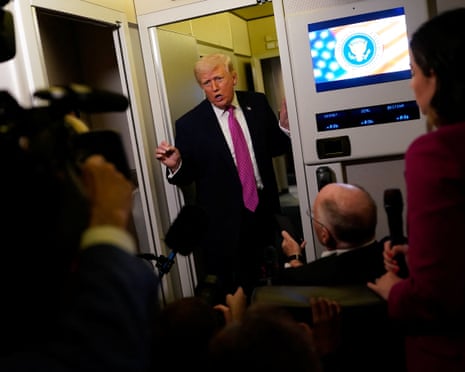
Donald Trump has also claimed that Iran had agreed to allow 20 ships carrying oil through the Strait of Hormuz starting Monday morning and continuing over the next few days as a “present”.
“They gave us 10 [ships through the strait],” he said. “Now they’re giving 20…”
Trump added that Mohammad Bagher Ghalibaf, Iran’s parliamentary speaker, had authorised the additional tankers.

“He’s the one who authorised the ships to me,” Trump told the paper. “Remember I said they’re giving me a present? And everyone said: ‘What’s the present? Bullshit.’ When they heard about that they kept their mouth shut and the negotiations are going very well.”
Yesterday Ghalibaf said that Iranian forces were “waiting for the arrival of American troops on the ground to set them on fire and punish their regional partners for ever”.
He also accused the US of secretly preparing a ground assault while publicly seeking talks.
Interim summary
In case you’re just tuning in to today’s live coverage of the US-Israel war on Iran, here’s a recap of the latest developments. It’s 9.30am in Tehran, 9am in Tel Aviv and Beirut and 2am in Washington DC.
- Donald Trump has said his “preference would be to take the oil” in Iran and that US forces could seize the regime’s export hub on Kharg Island, the Financial Times is reporting. But as about 2,500 US Marines reportedly arrived in the Middle East, Trump also told the paper: “To be honest with you, my favourite thing is to take the oil in Iran, but some stupid people back in the US say: ‘why are you doing that?’” He also said on Sunday: “Maybe we take Kharg Island, maybe we don’t. We have a lot of options.” At the same time, Trump stressed that indirect US-Iran talks via Pakistani “emissaries” were progressing well, the report said.
- Trump said the US and Iran had been meeting “directly and indirectly” and that Iran’s new leaders have been “very reasonable”. Trump’s remarks on Sunday came after Pakistan – which is acting as an intermediary between Tehran and Washington – said it was preparing to host “meaningful talks” in the coming days aimed at ending the month-long Iran war.
- Oil prices rallied and stocks tumbled again on Monday as the Middle East crisis escalated with the entry of Yemen’s Houthis into the war and concerns the US will send in ground troops. The price of brent crude had now gone over $116 a barrel, while stock markets have slumped in Asia as investors dig in for a protracted Gulf conflict that could bring a spike in inflation and the risk of recession to much of the globe.
- Indonesia condemned the death of an Indonesian peacekeeper with the UN mission in Lebanon (Unifil) on Monday, after a projectile exploded at one of its positions near the southern Lebanese village of Adchit al-Qusayr on Sunday. The UN peacekeeping mission in Lebanon said earlier that another peacekeeper was critically injured.
- The Israeli air force intercepted two unmanned aerial vehicles launched from Yemen, the IDF posted online.
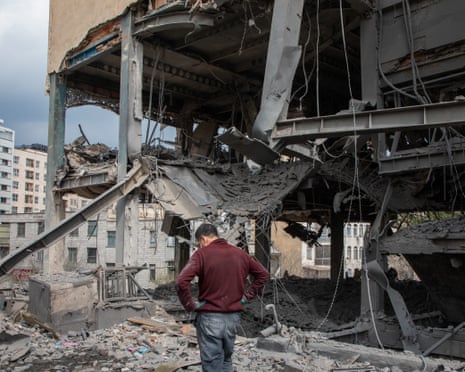
- The Israeli military said early on Monday it was attacking the Iranian regime’s infrastructure “throughout Tehran”. It said later it was responding to missiles fired from Iran.
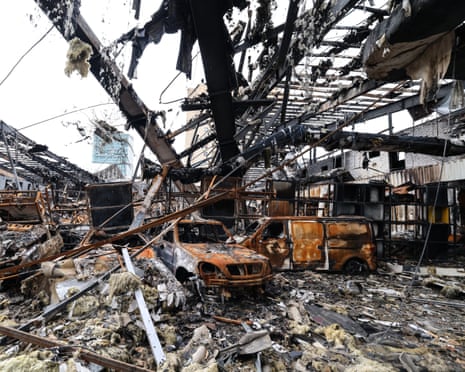
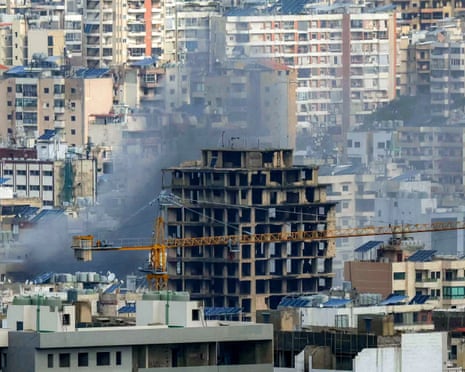
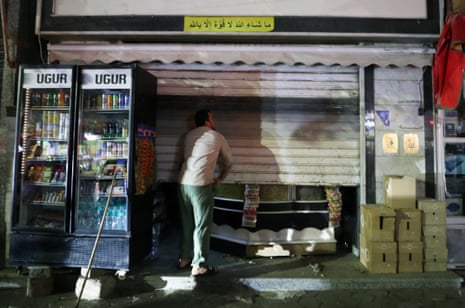
- Benjamin Netanyahu earlier announced an expansion of Israel’s invasion of southern Lebanon as his forces target Hezbollah and expand the “existing security buffer zone”. We are determined to fundamentally change the situation in the north,” the Israeli PM said in a video statement.
- Earlier, Iranian parliament speaker Mohammad Bagher Ghalibaf said Iranian forces were “waiting” for US ground troops to arrive so they could “rain fire upon them”. It came after reports that the Pentagon is preparing for weeks of possible “ground operations” in Iran, and as thousands of US soldiers and marines arrive in the region.
- Donald Trump is weighing a military operation to extract nearly 1,000 pounds (454kg) of uranium from Iran, the Wall Street Journal is reporting, citing unnamed US officials. The mission would likely put American forces inside the country for days or longer, the report says.
- Power has reportedly been restored across parts of Iran after Israeli strikes hit “electricity infrastructure”, Iran’s energy minister said.
- The International Atomic Energy Agency confirmed that Iran’s heavy-water production plant at Khondab – which Israel attacked on 27 March – had “sustained severe damage and is no longer operational”. In a post on X, the agency added that the Khondab heavy water research reactor “contains no declared nuclear material”.
- A fire at an industrial site in southern Israel has been been brought under control, hours after being declared a “hazardous materials incident” in the area.
- Iranian supreme leader Mojtaba Khamenei thanked the Iraqi people and religious leadership for their support of Iran “in the face of aggression”, Iranian state media reported, without saying how this message was conveyed.
- On Palm Sunday, the Pope said God rejected the prayers of leaders who started wars and had “hands full of blood”, in an apparent rebuke to Trump’s administration.
The entry of Yemen’s Houthi forces into the US-Israel war on Iran represents a dangerous spread of the conflict and brings the threat of more damage to the global economy.
But who exactly are the militant group that have previously caused huge disruption to global trade through attacks on Red Sea shipping?
My colleague Jonathan Yerushalmy explains that they emerged from a years-long civil war in Yemen as the country’s most powerful political force and are part of Iran’s “axis of resistance” in the region.
Trump considering mission to extract uranium from Iran – report
Donald Trump is weighing a military operation to extract nearly 1,000 pounds (454kg) of uranium from Iran, the Wall Street Journal is reporting, citing unnamed US officials.
The mission would likely put American forces inside the country for days or longer, the report says.
It quotes the officials as saying the US president hadn’t made a decision on whether to go ahead, and that he was considering the danger to US troops.
But the president remains generally open to the idea, according to the officials, because it could help accomplish his central goal of preventing Iran from ever making a nuclear weapon.
The report could not be independently verified.
White House press secretary Karoline Leavitt said any Pentagon preparations “does not mean the president has made a decision”, the WSJ report said. The Pentagon did not comment and a spokesperson for US Central Command declined to comment.
Trump told reporters on Sunday night that Iran must do what the US demands or “they’re not going to have a country”, the report said. Referring to Iran’s uranium, he said: “They’re going to give us the nuclear dust.”

Understanding what is happening in the Middle East is more important than ever
It’s the Guardian’s job to keep a close focus on events in the region for our global audience.
With reporters sharing live updates around the clock, we’re well-placed to provide comprehensive, fact-checked reporting and to help our audience understand every major development. But we can’t do it without your support.
We rely on the generosity of our readers, whose backing helps to keep our correspondents on the ground and our reporting free from commercial or political influence.
We appreciate that not everyone can afford to pay for news, but if you can, can we count on your support? Here are three good reasons to make the choice to fund us today:
1. Our quality, investigative journalism is a scrutinising force.
2. We are independent and have no billionaire owner dictating what we do – your money directly powers our reporting.
3. It doesn’t cost much, and takes less time than it took to read this message.
Choosing to back us on a monthly basis makes the most impact, meaning we can continue to cover the story from every angle: the conflict, the plight of those affected and what it all means for the future of the region – and the world.
What is the real significance of Yemen’s Houthis making their long-awaited entry into the Iran war?

As Patrick Wintour explains, it depends on whether the Tehran-backed proxy group is intending to send a few missiles and drones from a distance towards Israel or will instead capitalise on its proximity to the narrow Bab al-Mandab strait to effectively close off the Red Sea to shipping, just as Iran has in effect shut the strait of Hormuz.
The Guardian’s diplomatic editor continues:
The combined effect of both waterways being shut to commercial traffic from countries that neither the Iranians nor Houthis favour would be devastating.
Napoleon Bonaparte’s remark that “the policy of a state lies in its geography” has never seemed more apt.
Oil prices surge and stocks sink again as war widens
Oil prices rallied and stocks tumbled again on Monday as the Middle East crisis escalated with the entry of Yemen’s Houthis into the war and concerns the US will send in ground troops.
The surge in oil prices and the prospect of an extended conflict put more pressure on equities amid fears about a surge in inflation that could hit the world economy.
Tokyo sank more than 4% and Seoul more than 3%, while Hong Kong, Shanghai, Sydney, Singapore, Wellington, Taipei, Jakarta and Manila were also sharply down, reports Agence France-Presse.
The losses followed a bad day on Wall Street, where all three main indexes tumbled after the US and Israel struck Iranian nuclear sites.
“The market is now reacting to higher crude pricing and towards the fallout in the economic consequences,” wrote Pepperstone’s Chris Weston.
Source: The Guardian
Stay ahead with the latest updates!
Join The Podium Media on WhatsApp for real-time news alerts, breaking stories, and exclusive content delivered straight to your phone. Don’t miss a headline — subscribe now!
Chat with Us on WhatsApp