
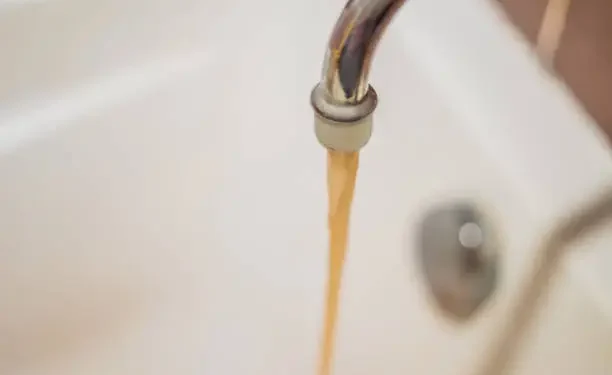
Residents across Lekki continue to rely on discoloured, sometimes foul-smelling borehole water, a longstanding challenge that highlights the widening infrastructure gap in one of Lagos’ fastest-growing urban corridors.
Despite years of complaints, the problem persists with no immediate relief in sight, forcing households and businesses to adapt at significant personal and financial cost.
Across multiple neighbourhoods: Chevron Drive, Ajah, Ikate, and Lekki Phase 1, borehole water is increasingly reserved for non-essential uses such as flushing toilets and cleaning.

For drinking, bathing, and cooking, families depend heavily on bottled water, tanker deliveries, or small household treatment units.
The daily routine now includes planning around water safety, managing storage capacity, and absorbing rising costs.
The area’s soft alluvial soil, high water table, and limited sewer infrastructure make its groundwater especially vulnerable to contamination, placing pressure on both residents and the broader urban system.
Decades of underinvestment and environmental vulnerabilities
Lekki’s water crisis is rooted in decades of insufficient public investment in piped water systems. While Lagos State has long recognized the need for large-scale water distribution, rapid population growth and unregulated urban expansion have far outpaced government capacity.
Many parts of Lekki Phase 1 and surrounding estates were developed without central water provisions, leaving private boreholes as the default source.
The area’s environmental characteristics amplify the problem. Lekki sits on soft, marshy soil with a shallow water table, conditions that allow contaminants from septic systems, tidal flows, and surrounding water bodies to seep into groundwater.
- Unlike much of the Lagos mainland, where more compact soils limit movement, Lekki’s geology enables faster transfer of pollutants, leading to brownish water with high sediment levels and occasional odours.
- As water demand increases due to population growth, experts warn that continued borehole drilling could accelerate structural problems.
- Over-extraction leads to soil compaction, raising the risk of gradual land sinking—an emerging concern for a region known for high-rise development and dense estates.
Daily realities for residents and businesses
Interviews with residents highlight how widespread the issue has become. Kayode Opeyemi, who lives and works in Ajah, told Nairametrics that his office borehole water remains brownish even after treatment.
“We only use it for flushing and mopping. The entire office depends on dispensers and bottled water for drinking and cooking,” he explained.
At home, Opeyemi and his neighbours rely primarily on tanker deliveries. A typical 2,000-litre tank, costing between N3,500 and N5,000, lasts four to six weeks depending on consumption. Similar patterns were reported across several parts of the Lekki-Ajah axis.
For higher-end developments, estate-wide purification systems serve as marketing advantages.
One property manager around Chevron Drive disclosed that the estate’s reverse osmosis system allows residents to safely use water for laundry and cooking. However, the cost is substantial: a 5,000-litre system costs about N16 million, while a 1,000-litre-per-hour system is priced at roughly N6 million.
Frequent filter replacements, required due to high sediment levels, further drive up maintenance costs. Residents pay a monthly service fee of N50,000, covering water treatment and other amenities.
Public health experts stress systemic risks
Dr. Doyin Odubanjo, Executive Secretary of the Nigerian Academy of Science, told Nairametrics that many boreholes in Lagos contain microbial and chemical contaminants, making untreated water unsafe.

He advises households to install appropriate purification systems or, at a minimum, boil water before consumption. However, he emphasized that individual or estate-level solutions are not sustainable.
“Centralized water treatment is the only way to ensure consistent quality and protect public health,” he said, arguing that household-level purification simply transfers responsibility from government to individuals, often at a higher cost and lower efficiency.
Lagos State’s efforts to expand water access
The Lagos State Government, in October 2024, outlined measures to bridge the gap between its current water output and the estimated daily demand of 240 million gallons. With support from partners like USAID, five mini and micro waterworks are undergoing refurbishment.
Commissioner for Environment and Water Resources, Tokunbo Wahab, told Nairametrics that major projects such as Adiyan Phase II, expected to deliver 70 million gallons per day, and the 45-million-gallon-per-day Iju Waterworks are central to long-term plans. Wahab noted that while improvements are expected, water services will not be free, though subsidies may help protect low-income households.

Infrastructure gaps limit private sector participation
Independent researcher Tonami Playman argues that Lagos cannot meaningfully improve water access without rebuilding its ageing distribution network.
Even with new production capacity, he warns that the absence of modern pipelines will prevent water from reaching homes and businesses.
Playman also stresses the need for a comprehensive sewer system, noting that wastewater infrastructure and potable water supply must advance together.
He added that private investment is unlikely to fill the gap because water utilities are capital-intensive and generally unprofitable at consumer-friendly tariffs.
- According to Playman, the heavy reliance on private boreholes in Lekki increases the risk of land subsidence. Global precedents from Venice and Tokyo to Shanghai and parts of India show that uncontrolled groundwater extraction can lead to significant, often irreversible, sinking.
- Some cities stabilised their land by restricting borehole drilling and sourcing water from distant rivers, while others invested heavily in groundwater recharge systems.
- Lekki’s soft marshland makes it particularly vulnerable, he warns, and delaying systemic intervention could escalate environmental risks and future infrastructure costs.
Stay ahead with the latest updates!
Join The Podium Media on WhatsApp for real-time news alerts, breaking stories, and exclusive content delivered straight to your phone. Don’t miss a headline — subscribe now!
Chat with Us on WhatsApp