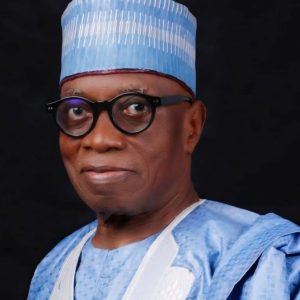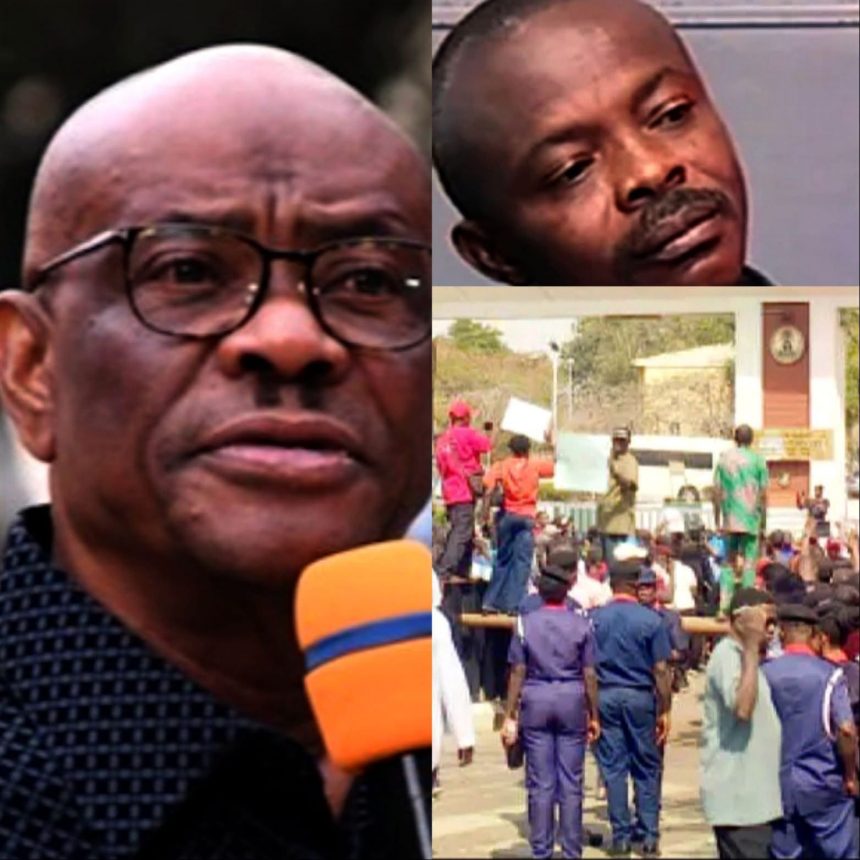
Joe Ajaero stands today at a dangerous crossroads of power and impunity, insisting that FCTA workers defy a clear court order suspending their strike and contemptuously daring the constitutional order. That is not the posture of a labour leader in a fragile democracy; it is the language of someone slowly normalising self help as a political strategy.
HOW THIS FCTA CRISIS BEGAN
The current FCTA crisis did not materialise out of thin air. Workers in Abuja have been on edge for months over unresolved welfare issues: unpaid wage awards, promotion arrears, poor working conditions, and non remittance of key statutory deductions such as pensions and the National Housing Fund. Their unions complain of stalled career progression, exam related grievances, alleged intimidation, and a sense that basic entitlements are treated as afterthoughts. When dialogue dragged and promises were repeatedly postponed, the workers moved to industrial action, locking up gates and paralysing operations in the capital.

WIKE’S REFORMS AND THE FAILED RECONCILIATION
Into this combustible mix stepped Nyesom Wike, the FCT Minister, a man whose political style is anything but shy. He has pushed a series of aggressive reforms in Abuja, from crackdowns on illegal developments to tighter control of spending, while publicly insisting that the era of reckless handling of FCTA contracts is over.
On the narrow question of the FCTA strike, Wike maintains that the administration had met a reasonable number of workers’ demands and remained in talks when the shutdown was escalated. He points to the signing of hefty January salary bills despite tight federal allocations as evidence that salaries and basic obligations are being treated with urgency, not neglect. At the same time, he has been blunt: some demands he calls “frivolous”, others he says are beyond what workers are legitimately entitled to, and he has warned that anyone who blocks government offices or flouts the law will face sanctions.
This is where the reconciliatory effort buckled. Workers, nursing long standing grievances, see a minister talking reform while they wait for arrears; the minister sees a strike increasingly driven by politics and opportunism rather than a clear record of unmet obligations. A responsible settlement now requires two truths to be held at once: that Wike must treat FCT staff as his greatest assets, not as an inconvenience to be muscled aside, and that those same staff must accept that no reforming administration can function if the capital city is held hostage whenever disagreement arises.
Wike deserves credit for confronting entrenched interests and for moving decisively on some fiscal and administrative issues in the FCT, including regular salary approvals and public commitments to re order spending priorities. But he must also understand that a reformed capital is meaningless if the human beings who run it feel expendable; he will need to match his infrastructure and governance bravado with a more visible, sustained seriousness about staff welfare, structured timelines for clearing arrears, and transparent, good faith negotiations with unions.
Here is why toughness also comes in. The FCTA should go back to court and seek judgment against every FCTA staff member that flouted a constitutionally issued court order, and it should do the same in respect of Ajaero himself.
AJAERO’S PATTERN OF DEFIANCE
Against this backdrop, the intervention of the NLC, under the leadership of its president, Joe Ajaero, has taken the dispute to a darker place. The National Industrial Court, which is hearing the FCTA dispute, issued an order directing workers to suspend the strike and return to work while the substantive issues are heard. Instead of helping his affiliates comply while intensifying negotiations, Ajaero’s NLC issued a circular instructing unions to “sustain and intensify” the strike in open defiance of that order.
This is not an isolated misjudgment. In recent years, the NLC under his watch has treated court orders not as binding directives but as background noise to be drowned out by street muscle. During a nationwide strike, the NLC also illegally sabotaged the national grid, plunging the country into darkness; the government described this as a seditious act, yet, in remarkable magnanimity, did not drag Ajaero before a court of law. That episode, rather than moderating him, has emboldened a mind that appears ready to do anything it takes, including endangering national infrastructure, to score political points.
A pattern emerges: a grievance, often legitimate; an understandable anger at state overreach or administrative failure; and then, instead of a disciplined, law anchored escalation, a call to disregard court orders as if they were political suggestions rather than binding instruments. That is how institutions erode, not in one spectacular collapse, but in repeated, theatrically justified refusals to accept that even your cause must bow to law. It is the institutional equivalent of a slow‑motion coup against democracy.
THE “FOREIGN DESTABILISER” AND THE LABOUR HOUSE RAID
There is also the matter of the alleged “foreign destabiliser” operating under the cover of a bookshop in the Labour House in Abuja. Security operatives did in fact raid an office inside the NLC headquarters, entering the floor that housed a bookshop and carting away books and materials, an operation that immediately triggered a national outcry from the NLC. The union described the action as an illegal assault intended to search for “seditious materials” and framed it as further proof that the state was bent on crushing organised labour.
The police, for their part, maintained that they were in pursuit of a prime criminal suspect, a foreign national allegedly implicated in serious offences, who was said to be using a rented shop on the second floor of the Labour House as cover. In their telling, the target was a private bookshop operated by this foreigner, not the NLC institution itself.

That episode matters here for two reasons. First, it shows that the state has not always acted with finesse or transparency in dealing with spaces associated with labour activism; the optics of a dramatic raid on premises within Labour House were inevitably going to fuel suspicion. Second, it underscores how easily Ajaero’s NLC allows itself to operate on the edge of shadowy alliances and theatre, letting a private tenant’s alleged activities and a poorly communicated police operation blur into an apocalyptic narrative of regime change and persecution.
There is, to date, no widely known, publicly ventilated judicial conclusion that neatly ties up the story of this alleged foreign destabiliser. What remains is a residue of ambiguity and mistrust feeding Ajaero’s maximalist style in which every dispute is existential, every court order contestable, every confrontation an opportunity to flex muscle rather than to test rights within the boundaries of law.
Yet, if push comes to shove and the government chooses to mirror Ajaero’s irresponsible high handedness, he may soon discover that the “muscles” he is so eager to flex are, in practical terms, nothing more than a feeble rubber band, stretched to breaking point.
LAW, DEMOCRACY, AND THE LIMITS OF SELF HELP

Ajaero is entitled to his politics. He may loathe the Tinubu administration’s economic choices, its subsidy removals, or its political alliances; none of that is a crime. But to lead a major labour centre is to be custodian of a particular moral compact: that the power you wield over streets, airports, hospitals, and ministries will be exercised within constitutional boundaries, not in defiance of them. When a labour leader repeatedly urges disobedience to court orders, and even presides over illegal shutdowns of critical national infrastructure, he is no longer simply negotiating wages; he is testing whether the judiciary and the rule of law still matter in the country’s political grammar.
If governments pick and choose which judgments to obey, civil society rightly cries foul, and labour has often been at the forefront of that objection. If, however, labour itself now normalises contempt for court orders, “and adds to it a willingness to weaponise critical infrastructure, what is left of the standard it uses to hold power accountable? Imagine every professional association, student union, religious body, and security agency adopting the same ethos: obey the law only when it aligns with your agenda. The result is not activism; it is an undeclared civil war of institutions.
It is therefore not excessive to say that this is the time for all lovers of democracy, including many within organised labour who know better, to call their president to order. Ajaero must understand that his role is not to be a parallel sovereign, determining which court orders are worthy of compliance. The right to strike is constitutional; the obligation to respect valid court orders is no less so.
A WAY OUT
What Abuja needs now is not more chest thumping. The FCTA workers have legitimate grievances around arrears, welfare, and workplace conditions that must be comprehensively itemised, prioritised, and scheduled for resolution in a way that is publicly monitored. Wike, with his reputation for political will and his control over the capital’s purse and planning machinery, can convene a transparent process that converts promises into timelines, timelines into budgets, and budgets into verifiable payments and reforms. That is how he proves that FCT staff are indeed his greatest assets: not by threats, but by predictable fairness.
For the NLC, and for Joe Ajaero personally, the path forward is more demanding. It requires stepping back from the intoxication of brinkmanship and embracing something more difficult: institutional humility before the law. He can and should challenge judgments he considers unjust, appeal orders he believes misread the facts, and mobilise public opinion in support of his members. But he cannot continue to model disobedience to court orders, sabotage critical infrastructure, or treat the courts as mere suggestions without doing grave damage to the very democratic fabric that once made labour a moral force in Nigeria.

In the end, the FCTA dispute will either be remembered as another episode of performative confrontation, or as the moment when Abuja’s leaders and workers chose a different script. Let the gates be opened not through force or contempt, but through a hard, honest bargain at the negotiating table. Let Wike match reform with empathy and measurable commitments. And let Joe Ajaero learn, quickly, that in a democracy, even the most powerful unionist does not get to decide which laws are convenient enough to obey.
Stay ahead with the latest updates!
Join The Podium Media on WhatsApp for real-time news alerts, breaking stories, and exclusive content delivered straight to your phone. Don’t miss a headline — subscribe now!
Chat with Us on WhatsApp