



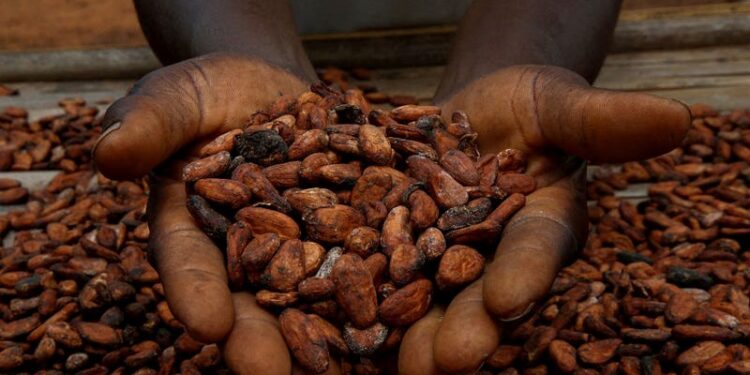
Cocoa farmers in Côte d’Ivoire are projecting a strong mid-crop harvest between March and August, despite a sharp decline in global cocoa prices that has hit producers across West Africa.
The outlook was disclosed by CNBC Africa, citing interviews Reuters had with farmers and cooperatives across key cocoa-growing regions in the country.
Farmers attributed the expected increase in yield to above-average rainfall recorded across most producing areas, as the country transitions from its dry season into the rainy season, which typically begins in April.

The consistent rainfall has supported cocoa pod development, with clearer indications of crop size and quality expected by late April.
What they are saying
The overall sentiment among farmers is one of cautious optimism, as improved weather conditions are driving better crop performance compared to last year, even as global prices weaken.
Farmers across regions noted that harvesting has been ongoing with steady output, reflecting healthier tree development and favourable growing conditions.
A cocoa farmer near Soubre, Salame Kone, highlighted the consistency in production this season.
- “This year, there has been no break in harvesting. Cocoa continues to come out of the farm,” he said.
Similarly, farmers in regions such as Daloa pointed to improved yields driven by adequate rainfall and sustained heat conditions. One farmer explained that continued rainfall in April would further boost output.
- “It continues to be very hot. The trees are yielding well, and if it rains enough in April, the mid-crop will be abundant,” said Marcel Kanga.
Farmers in other regions, including Divo and Abengourou, also reported strong tree development marked by the emergence of new leaves, an indicator of a healthy crop, while even areas with slightly below-average rainfall expressed confidence in sufficient moisture levels to sustain growth.
More insights
The optimism among Ivorian farmers comes at a time when cocoa producers in Nigeria are grappling with a severe price slump that has left many in financial distress.
On March 22, Nairametrics reported that cocoa farmers in Ondo, Osun, and Ekiti states raised concerns over a sharp drop in cocoa prices, which has eroded incomes and pushed many into debt.
Prices have reportedly fallen by over 70% from their 2024 highs, leaving farmers struggling to sell their produce.
- “As of January 2025, cocoa was sold for N14,500 per kilogram, but now it has dropped to between N2,500 and N2,000 per kilogram. As of now, it is difficult for an average farmer to cope with the standard of living based on the sharp decline in price,” said Abiodun Joseph, a cocoa farmer in Ondo State.
What you should know
The decline in cocoa prices reflects broader global market dynamics. Cocoa prices surged to historic highs in 2025 but have since dropped significantly, falling by about 62% within nine months to around $4,197 per metric ton by February 2026.
The downturn has been driven by improved production in Côte d’Ivoire and expansion in countries like Ecuador, alongside weakening demand in major chocolate-consuming regions such as Europe, North America, and Asia.
Analysts note that the volatility highlights structural challenges facing cocoa producers in West Africa, including dependence on raw exports and limited control over global pricing.

Until demand stabilises and supply balances out, farmers, particularly in Nigeria, remain vulnerable to income shocks, even as countries like Côte d’Ivoire benefit from stronger harvests.
Stay ahead with the latest updates!
Join The Podium Media on WhatsApp for real-time news alerts, breaking stories, and exclusive content delivered straight to your phone. Don’t miss a headline — subscribe now!
Chat with Us on WhatsApp