Italy has launched a programme to suspend debts of African nations and convert them into investments.
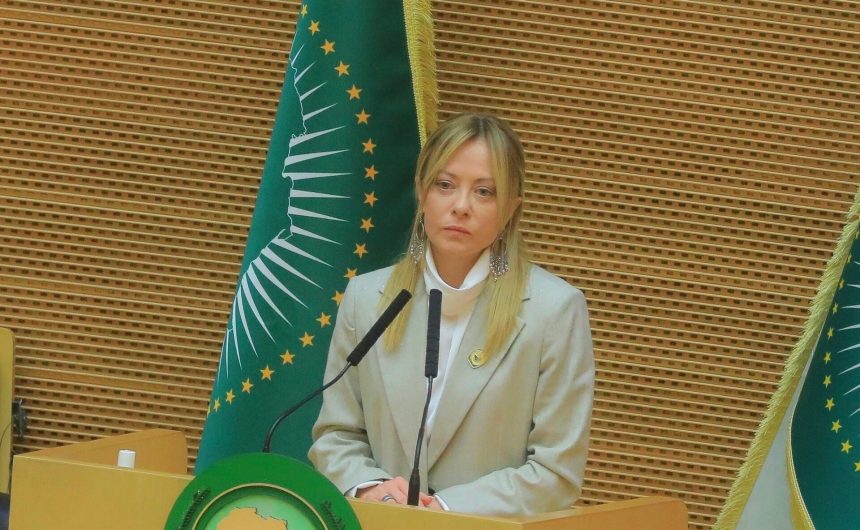
Giorgia Meloni, the country’s prime minister, spoke on Saturday at the 39th African Union (AU) summit in Addis Ababa, Ethiopia.
The prime minister’s announcement forms part of the ‘Mattei Plan’ — a set of economic and diplomatic projects to strengthen Italy’s presence in Africa through combining investment, cooperation and anti-migration efforts.

Speaking during the opening session, Meloni said she believed debt cancellation is crucial for building a “truly free Africa capable of determining its own destiny”.
“We wanted to chart a course on this issue as well. Therefore, Italy has decided to launch a vast program to convert the debt of African nations, which includes, among its main points, the complete transformation of the debt of the most fragile and vulnerable countries into investments, and the strengthening of the contribution to the World Bank’s IDA funds,” she said.
Towing the line of the summit’s theme on water sustainability, the Italian prime minister added that the concessions would also be in forms of climate reliefs.
“Similarly, we have introduced specific debt suspension clauses into our bilateral loans, allowing African nations affected by extreme weather events to free up fiscal space to help their populations and rebuild essential infrastructure,” she said.
“These are choices based on justice and responsibility, which are crucial for freeing up resources that are vital for development and for ensuring peace and prosperity, including in those areas of the continent that are currently more affected than others by instability, insecurity, and serious humanitarian crises, such as neighbouring Sudan and eastern Democratic Republic of the Congo.”
African nations have continued to press for debt relief and reparations from wealthier countries, arguing that historical exploitation and unequal economic structures have compounded their current fiscal vulnerabilities.
However, experts argue that an over-reliance on debt cancellation risks reinforcing dependency, insisting that sustainable growth will ultimately depend on stronger domestic investment, revenue mobilisation, and institutional reforms.
Stay ahead with the latest updates!
Join The Podium Media on WhatsApp for real-time news alerts, breaking stories, and exclusive content delivered straight to your phone. Don’t miss a headline — subscribe now!
Chat with Us on WhatsApp