


There is a chill in the air. Not the kind that comes from harmattan winds sweeping across the Sahel or the Atlantic breeze rolling into Lagos. It is the kind of chill humanity has felt before—on the eve of great storms in history. This chill is different. It is the chill of uncertainty. The chill of history whispering warnings. The chill that makes the world pause and ask a terrifying question: Is World War III coming?
Everywhere you look today, every news channel you tune to—whether CNN or BBC or Sky News or, here at home, ARISE TV and Channels Television—the signs of a troubled planet are flashing like red warning lights on the dashboard of civilisation. Wars are raging. Alliances are shifting. Leaders are sabre rattling. Economies are trembling. Humanity, once again, appears to be walking too close to the edge of the abyss. And the word that hangs heavily over everything is war. Not just any war. World war. World War III.
History teaches us that great wars do not arrive suddenly. They do not knock politely on the door of humanity and announce their arrival. They creep in quietly, disguised as regional conflicts, diplomatic quarrels, ideological rivalries and bravado. From the world history many of us studied in school, the first great catastrophe of the twentieth century, World War I, began with a single spark—the assassination of Archduke Franz Ferdinand in Sarajevo in 1914. Every history teacher or student remembers: “The Sarajevo Incident!” Few people imagined that one gunshot would eventually drag the entire world into four years of mechanised slaughter.
Twenty-five years later, humanity repeated the same tragic mistake. World War II erupted in 1939 when Adolf Hitler invaded Poland, setting off a chain reaction of alliances, retaliations and mobilisations that plunged the world into its deadliest conflict ever. By the time the guns fell silent in 1945, more than 70 million people were dead. Cities were reduced to rubble. And humanity had invented the most terrifying weapon ever conceived: the atomic bomb.
When the United States dropped atomic bombs on the Japanese cities of Hiroshima and Nagasaki in August 1945, the world crossed a frightening threshold. War was no longer merely destructive. It had become existential. In other words, humanity had discovered the terrifying power to end its own story. For the first time in history, civilisation possessed the weaponry not just to defeat an enemy but to erase itself.
That is why the question today carries so much dread: Is the world drifting toward World War III?
Look around. The war between Russia and Ukraine continues to rage with no clear end in sight. What began as a regional conflict has evolved into a geopolitical confrontation involving the military, financial and strategic interests of the Western alliance led by the North Atlantic Treaty Organization. Every new missile fired, every new weapon supplied and every new threat issued pushes the temperature of global a few degrees higher.

Meanwhile, in the Middle East, the long and bitter confrontation between Israel and Hamas continues to inflame passions across the region, threatening to pull other actors such as Iran and Hezbollah into a wider confrontation.
In Asia, tensions between China and Taiwan simmer dangerously beneath the surface. The South China Sea has become a chessboard of naval manoeuvres, strategic posturing and geopolitical suspicion.
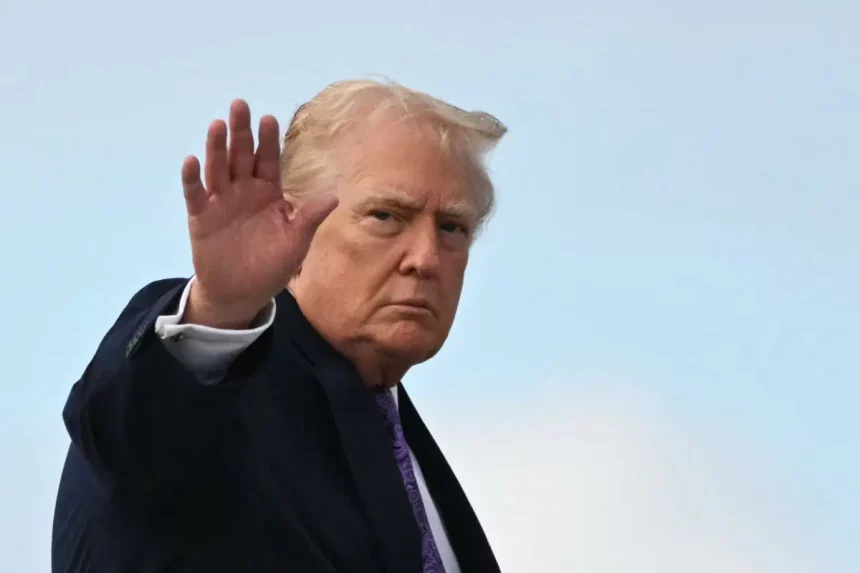
And then there is the unpredictable theatre of global politics starring one of the most controversial figures of our age: Donald Trump. Love him or hate him, ignore him or fear him, Trump has become one of the central characters in the drama of our time. His return to the centre stage of global politics has stirred intense debate about the future direction of American power and its implications for world stability. Trump believes in strength. Trump believes in dominance. Trump believes in putting America first. To his supporters, he is a fearless nationalist determined to restore American greatness in a dangerous world. To his critics, he is an unpredictable disruptor whose rhetoric and instincts could shake the fragile architecture of global diplomacy.
Whichever side one stands on, one thing is certain: in an era already filled with geopolitical tension, strong personalities can become powerful accelerants. And the world today is full of combustible material. Superpowers mistrust one another. Cyber warfare is becoming a new battlefield. Look up and it’s a case of drones, drones, everywhere in the sky, on a deadly mission or being brought down. Artificial intelligence is beginning to reshape military strategy. Nuclear arsenals still exist, waiting silently in underground silos and submarine chambers across the planet. The Doomsday Clock maintained by the Bulletin of the Atomic Scientists keeps ticking ominously close to midnight, closer than at almost any time in modern history.
But here lies the paradox. Even as fear spreads across the globe, there is also a powerful argument that World War III may never happen. Why? Because the cost would be too catastrophic. Unlike the leaders of 1914 or 1939, today’s world leaders understand the consequences of total war in a nuclear age. A direct military confrontation between major nuclear powers such as the United States, Russia and China could trigger a chain reaction capable of destroying modern civilisation itself. It would not be a war of trenches or tanks; it would be a war of annihilation.
That terrifying reality has created what strategists call mutually assured destruction (MAD)—a grim balance of fear that paradoxically acts as a deterrent. The logic is simple: if everyone loses, no one wins.
Still, history warns us that wars are not always rational. Pride can ignite them. Miscommunication can trigger them. Accidents can unleash them. Sometimes all it takes is one miscalculation—one missile fired in error, one retaliatory strike, one leader deciding that backing down is politically impossible. And suddenly the unthinkable becomes unstoppable.
So the world waits, watching and listening, holding its breath. Even here in Nigeria, thousands of kilometres away from the great power rivalries, the consequences would not spare us. In a globalised world, a world war would shake food supplies, oil markets, technology networks and financial systems. No nation, however distant, would remain untouched by the tremors of a global conflict. We can see the blockade at the Straits of Homuz and its drastic effects here in Nigeria and the whole world.
From the corridors of power in Washington to the Kremlin in Moscow, from Beijing to Brussels, from Tel Aviv to Tehran, humanity is living through a strange moment of collective anxiety. The weapons are more powerful than ever. The alliances are more complicated than ever. The technology is more dangerous than ever. Yet the hope for peace remains as stubborn as ever. Perhaps that is the greatest paradox of the human story. We are capable of unimaginable cruelty, but we are also capable of wisdom. The same humanity that invented nuclear weapons also created diplomacy, international law and global institutions designed to prevent catastrophe. The same world that wages wars also produces peacemakers.
And so the question remains hanging in the air like a thundercloud over civilisation: Is World War III coming?
No one knows. Not the generals. Not the intelligence agencies. Not even the most powerful leaders on Earth. But one thing is certain. If humanity ever stumbles into another world war, it will not be remembered as the war that changed the world. It may be remembered as the war that ended it. And that is why the entire planet—every nation, every race, every human being—shares a responsibility to step back from the edge, to remember the lessons of history and to choose dialogue over destruction. Because the next world war will not merely redraw borders. It could redraw the future of life on Earth. And that is why the most important war humanity must win today is the war against its own appetite for destruction.
* So, what do you think? You can send your views on my email, (mikeawoyinfa@gmail.com) Facebook or my Glo line above.
Stay ahead with the latest updates!
Join The Podium Media on WhatsApp for real-time news alerts, breaking stories, and exclusive content delivered straight to your phone. Don’t miss a headline — subscribe now!
Chat with Us on WhatsApp