


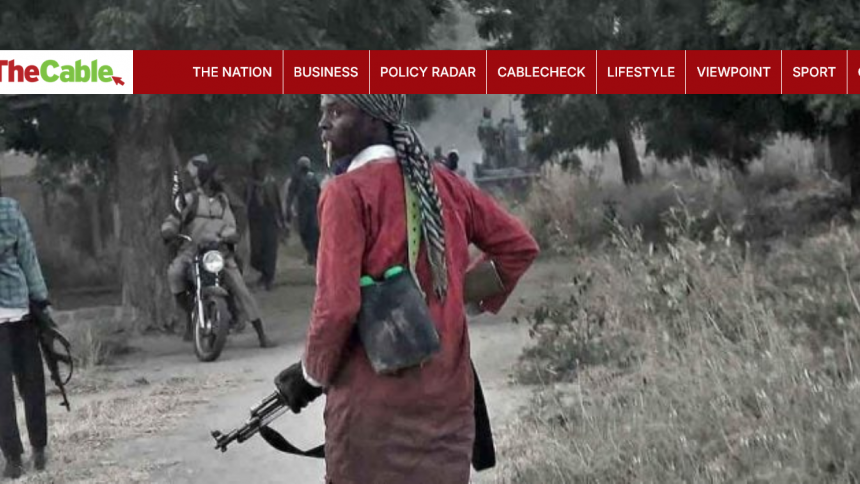
In early March, jihadist groups, including Islamic State West Africa Province (ISWAP) and Boko Haram, launched several coordinated attacks on military bases in northeastern Nigeria. Several security personnel were killed, including commanding officers.
The Nigerian military described the attacks as an organised attempt by insurgents to overwhelm troop positions. The military said it lost an unspecified number of soldiers but did not provide exact figures.
The Nigerian Air Force said it responded with air strikes during one of the attacks, killing more than 50 suspected terrorists.

Security experts, who spoke to TheCable, said the attacks show that the insurgent groups are highly coordinated and reveal gaps in Nigeria’s fight against terrorism.
Since 2009, Nigeria has struggled to control jihadist violence in the north-east. The conflict, which started with Boko Haram, has now spread to other parts of the country and split into several factions, including ISWAP, which is linked to the Islamic State (ISIS).
The ongoing violence has stretched the military, which is also dealing with other security challenges across the country.
‘BURNING OF THE CAMPS’
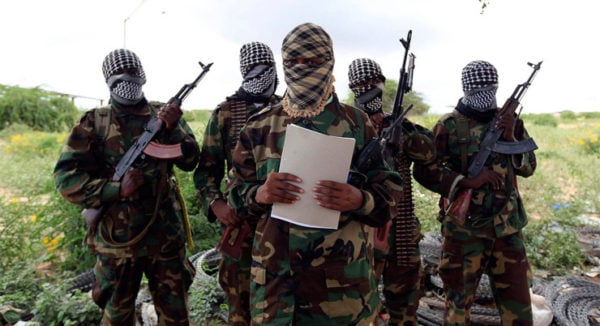
Malik Samuel, a senior researcher at the pan-African think tank Good Governance Africa, said the attacks persist because the long-standing objective of terrorist groups operating in the region is to establish an Islamic state based on their interpretation of sharia law. To achieve this, he explained, they would need to dismantle Nigeria’s democratic system of government.
“The best way to do that is to target the agents of the state — the military, the police, and other security agencies,” Samuel said.
He said that attacks by ISWAP intensified last year when the group launched what it called the “burning of the camps” or “camp Holocaust”, a strategic campaign designed to weaken the operational capacity of security forces.
“Last year was the most successful period ISWAP has had since its formation and its split from Boko Haram in 2016. It systematically attacked and overran one military base after another, not only in Nigeria. We saw the same pattern in the Niger Republic and Cameroon,” he said.
Samuel added that one factor behind ISWAP’s growing operational success is the transfer of knowledge from ISIS, as well as the arrival of foreign fighters from the Middle East, North Africa, and the Sahel.
“These fighters are arriving with extensive experience in jihad and combat. They bring a range of expertise, not only battlefield experience but also technological and medical knowledge. Over the past two years, we have seen ISWAP increasingly deploy drones in attacks on security forces, alongside other forms of technology,” Samuel said.
A report by the BBC says terrorist groups in West Africa, including ISWAP and Boko Haram, are increasingly using drones in their attacks, raising concerns that they may now be able to wage a “war from the skies”.
Citing data from the Armed Conflict Location & Event Data Project (ACLED), the report said two affiliates of the Islamic State carried out about 20 drone strikes, most of them in Nigeria.
In 2025, TheCable reported that Ahmed Jaha, a member of the house of representatives, said Boko Haram insurgents had been using drones to attack residents in Borno state.

Experts like Dengiyefa Angalapu, a research analyst at the Centre for Democracy and Development (CDD), blame gaps in the Nigerian intelligence system for the current attacks. He questioned how attackers were able to move in large numbers on motorbikes without being detected by any military surveillance system.
Angalapu also believes that the current attacks could be a way for the terror groups to try to obtain as much ammunition as possible.
“They are restocking. Let’s not forget that if you follow reports and news about these insurgent groups, there was heavy fighting between the Boko Haram factions — the JAS (Boko Haram) faction and the ISWAP faction. This means they lost a lot of ammunition and many fighters,” he said.
“So, this could be a situation where they are trying to acquire more guns and ammunition. One of the easiest ways for them to do this is by attacking military installations and taking the sophisticated weapons that the military has in its stock.”

Angalpu argues that the US placing Nigeria on its list of countries of particular concern may have boosted terrorists’ morale to attack troops recently.
“Unfortunately, the narrative focused heavily on the idea of a Christian genocide, creating the impression that the US was stepping in to save Nigerian Christians. This kind of framing can serve as motivation for groups like Boko Haram and ISWAP, which already position themselves in opposition to Christianity and Western influence. In that sense, it gives them what they may see as a clear opponent,” Angalapu said.
“Whether or not these groups truly represent Islam, their ideology is centred on establishing an Islamic state. When a foreign country says it wants to protect Christians from what it describes as genocide carried out by Islamic jihadists, it can reinforce the perception that the conflict is religiously driven. Such framing may strengthen claims by insurgent groups that their fight is religiously motivated, adding another complex dimension to the conflict.”
CONTROL OVER TERRITORIES
The Nigerian military has continued to repel attacks from jihadist groups, but Samuel says the violence is likely to persist because groups like ISWAP are trying to maintain control over territories around Lake Chad, where they generate “millions of dollars” in revenue.
“So even if the motivation is not only to create an Islamic state or topple the Nigerian government, the prospect of making and generating this money provides a strong incentive for them to continue their campaign,” Samuel said.

“One thing about violent extremist groups, including criminal organisations, is that if you cut them off from their resources, it becomes very difficult for them to survive.
“Resources are therefore very important to how these groups operate. That is why there is often a link between organised crime and violent extremism. If ISWAP is denied access to the revenues it generates in the Lake Chad Basin, it could collapse in a very short time because it needs money to support the families of fighters when they go on attacks.”
Stay ahead with the latest updates!
Join The Podium Media on WhatsApp for real-time news alerts, breaking stories, and exclusive content delivered straight to your phone. Don’t miss a headline — subscribe now!
Chat with Us on WhatsApp