


I owe my grandfather an apology. For decades, I thought he was wasting time. He’d sit on that wooden porch in the early evening, no book, no radio, no project in his hands, just watching the light change across the yard like it was the most interesting thing in the world. I was twenty-five and impatient and thought he was bored, or lonely, or maybe losing his edge. I’m sixty-five now. I have my own porch. And last Tuesday I sat out there for nearly two hours with nothing but the sound of Lottie breathing at my feet and the neighbor’s sprinkler clicking through its cycle, and something in me finally understood what he’d been doing all those years. He wasn’t doing nothing. He was doing the hardest thing there is: being still without reaching for something to fill the stillness.
It took me sixty-five years and a retirement that nearly broke me to arrive at this understanding. When I left my job at sixty-two after thirty-five years in insurance, the silence in my house felt like an accusation. Every quiet minute reminded me that I was no longer needed somewhere, no longer expected, no longer producing anything that justified taking up space. I filled every gap I could find. Woodworking projects. Spanish lessons. Guitar practice. A hiking group. A writing group. Volunteering at the literacy center. I wasn’t just staying busy. I was running from the quiet the way you’d run from something chasing you.
The terror of an empty hour

Here’s what I’ve come to understand about my generation, and probably every generation that came before us: we were raised to equate stillness with laziness. My father worked double shifts at a factory. My mother ran a household of seven on money that would make your eyes water. Sitting down during daylight hours without a task in your hands was an almost moral failure. You earned your rest by collapsing into it at the end of the day, not by choosing it at two in the afternoon.
So when my grandfather sat on that porch, I filtered it through the only framework I had. A man sitting still must be a man with nothing left to do. And a man with nothing left to do must be suffering. I carried that assumption for forty years, through a career where every empty minute on my calendar felt like a problem to solve, through evenings where I’d flip between television channels not because I wanted to watch anything but because the silence between shows made me anxious.
Research on the brain’s default mode network has given us language for what happens when we stop filling every moment with input. When the brain isn’t occupied with a specific task, it doesn’t shut down. It activates a network of regions associated with self-reflection, memory consolidation, and what neuroscientists describe as a kind of core consciousness. The wandering mind isn’t a broken mind. It’s a mind doing essential maintenance work that can only happen when you stop feeding it a constant stream of stimulation.
My grandfather didn’t know anything about default mode networks. He knew about porches and evening air and the particular quality of light that comes through Ohio maples in late summer. But he’d stumbled onto something that neuroscience is only now confirming: the unfilled moment is where you actually meet yourself.

What retirement taught me about distraction
The first six months after I retired were genuinely dark. I’ve written before about arriving at retirement with no idea who I actually was underneath the professional role. But what I haven’t talked about much is the specific panic that comes when you realize how much of your life was structured around avoiding exactly this kind of reckoning.
Thirty-five years of meetings and reports and performance reviews had given me something I didn’t appreciate until it was gone: a continuous reason to not think about whether I was at peace. The job wasn’t fulfilling, exactly, but it was loud. Loud enough to drown out questions I wasn’t ready to sit with. Questions about what I actually wanted. About who I was when no one needed anything from me. About whether the life I’d built looked the way it looked because I’d chosen it or because I’d been too busy to notice it choosing me.
When older Americans were asked for advice on aging, the responses consistently pointed toward prioritizing health, staying connected, and finding purpose. But what struck me when I read through those findings was the implicit assumption underneath: that aging well requires doing something. Staying active. Remaining engaged. Keeping busy. All good advice, and I don’t argue with any of it. But nobody on that list said, “Learn to sit with yourself and not flinch.”
That’s the piece that’s missing from almost every conversation about aging, and it’s the piece my grandfather had figured out without any advice columns or psychology research.
The difference between emptiness and spaciousness
There’s a distinction I couldn’t have articulated even five years ago. Emptiness is what I felt those first months after retiring: the house too quiet, the hours too long, the empty driveway a daily reminder that nobody was coming. Spaciousness is something else entirely. Spaciousness is what happens when you stop experiencing silence as a void that needs filling and start experiencing it as room to breathe.
I started meditating about three years ago, through a class at the community center that I attended mostly because Margaret suggested it and I’d run out of excuses. The instructor, a woman about my daughter Emma’s age, said something in the first session that lodged in my brain like a splinter: “You’re not trying to empty your mind. You’re trying to stop arguing with whatever’s already in it.”
That reframing changed something for me. For sixty-some years, I’d treated my own internal landscape like a problem to manage. Thoughts I didn’t want, I’d distract myself from. Feelings I couldn’t name, I’d work through by literally working. Grief, anxiety, regret: I’d hammer them flat with productivity. And it worked, in the sense that a tourniquet works. It kept me functional. But functional isn’t the same as at peace.

Research on the impacts of chronic stress on mental health has shown that sustained stress operates differently from acute stress, reshaping the brain’s response patterns in ways that can persist long after the original stressor is gone. Decades of filling every quiet moment with noise and obligation had trained my nervous system to treat stillness itself as a threat. My body didn’t know how to be in a room without something to react to.
Learning to sit on a porch and do nothing was, for me, a kind of deprogramming.
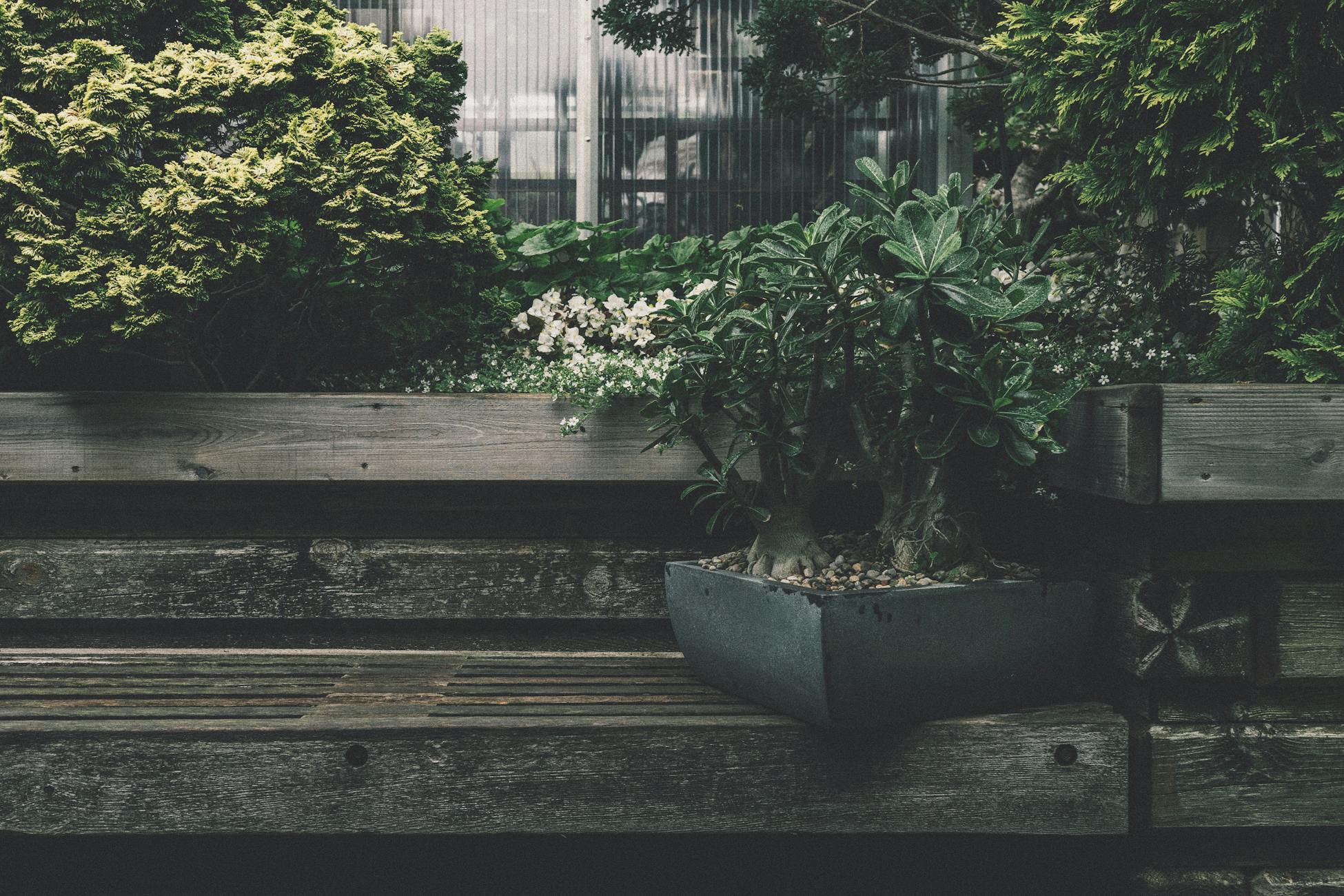
What my grandfather knew
I’ve been thinking about this a lot recently, partly because my oldest grandson turned fourteen this year and he already can’t sit through a meal without reaching for his phone. I watch him and I see a version of myself at that age, just with better technology for avoiding the quiet. The mechanism is the same. The fear underneath it is the same: that if you stop moving, stop consuming, stop reacting, you’ll discover there’s nothing there.

But that fear is a liar. What’s actually there, underneath all the noise, is everything you’ve been carrying without examining. Old grief that never got its full weight. Gratitude you forgot to feel because you were already rushing toward the next task. The slow, accumulating awareness that you are a person who has lived, and that living leaves marks, and those marks deserve to be looked at in good light.
My grandfather was a man of very few words. Immigrant stock, factory hands, the kind of Ohio working-class background where small talk was the only language for love. He didn’t have the vocabulary for what he was doing on that porch. If you’d asked him, he probably would have said he was “just sitting.” But I think what he’d actually achieved, through years of hard labor and raising children and burying friends and watching the world change around him, was the ability to be present without performing presence.
I came across a video recently by Justin Brown that explores the science behind why doing nothing is actually good for you, and it put words to something I’ve been feeling but couldn’t quite articulate. It’s worth watching if this idea resonates with you the way it did with me.

That’s a skill. A hard-won one. And our culture doesn’t recognize it as such because it looks, from the outside, like a man doing absolutely nothing.
Learning to sit
I’m still learning. Most evenings now, after I finish journaling and before Margaret and I settle in for the night, I go out to the porch with Lottie. Sometimes for twenty minutes, sometimes for an hour. I don’t bring my phone. I don’t bring a book. I just sit there and let the day settle around me like dust after a truck passes on a dirt road.

Some nights my mind races. Some nights I think about my father and how I wish I’d understood his silences before the dementia took his words permanently. Some nights I think about Sarah and Michael and Emma, scattered across the country now, living lives I’m mostly watching from a distance. Some nights I don’t think about much at all, and those are the nights that feel closest to what I saw on my grandfather’s face all those years ago.
The mental health needs of older adults are frequently overlooked, partly because we’ve built a cultural narrative that equates aging well with staying perpetually active. And activity matters. I’m not arguing for withdrawal or isolation. The hiking group, the writing group, the Wednesday coffee dates with Margaret: those things keep me tethered to the world, and I need them.
But I also need the porch. I need the minutes that don’t produce anything. I need the silence that isn’t loneliness and the stillness that isn’t boredom. I need the particular kind of peace that only comes when you’ve spent sixty-five years filling every gap with noise and you finally, finally let the gap be a gap.
My grandfather never explained any of this to me. He just sat there, evening after evening, watching the light change. And now, from my own porch, with my own dog and my own particular collection of years behind me, I finally understand that he was showing me something I wouldn’t be ready to receive for another four decades.
The porch was never about having nothing to do. It was about having done enough to sit with who you’d become. And that takes longer than you’d think.
Source: geediting.com
Stay ahead with the latest updates!
Join The Podium Media on WhatsApp for real-time news alerts, breaking stories, and exclusive content delivered straight to your phone. Don’t miss a headline — subscribe now!
Chat with Us on WhatsApp