

It’s Lonely at the Top. This is the title of a book I once read, written by Dominic Hudson. It is a thought-provoking exploration of success, leadership, and the profound solitude that often accompanies standing out. With a narrative that questions what it means to create and connect, Hudson delves into how even the extraordinary can feel isolated while striving to transcend mediocrity. Well, that’s not the topic for the moment, lest I deviate totally.
The topic before me here now is “If I were President Tinubu…” Does it make sense? Yes. If I were the President of today’s Nigeria, would I perform better or match the standard of the incumbent President Bola Ahmed Tinubu? I save my answer for the last, but first, let us understand the country we are talking about and the challenges of the moment.
Richard Nixon – Richard Milhous Nixon, the 37th President of the United States, serving from 1969 until his resignation in 1974, backed up Hudson that “The presidency was not a job for a team player, rather, for a soloist, and the buck stops with him. That is the President of the strongest nation speaking. He ruled when the nation was at the peak of its buoyancy and bureaucracy. I guess he knew what he was saying. He wasn’t talking off key and he wasn’t talking about today’s Nigeria, considered one of the toughest countries to rule, ranking 15th on the Fragile States Index 2024. The ranking reflects Nigeria’s challenges, including economic instability, insecurity, and corruption. The current administration faces significant hurdles, such as rising inflation, unemployment, and banditry, which impact the quality of life for Nigerians.

If I were President Tinubu, who inherited a nation at a crossroads—stabilized on paper but strained in reality, I would have been scared stiff to fling those initial bold strokes of removing the fuel subsidy, unifying the foreign exchange rates, and pushing for local government autonomy, without which I would not have been able to unlock fiscal space, which made it possible for the sub-states to receive higher allocations and non-oil revenues breaking records. Yet, the immediate burden of these reforms, characterized by high inflation (peaking above 30% in 2024), food insecurity affecting millions, and persistent insecurity, necessitated a shift from painful restructuring to tangible relief.
First, let’s carry out a SWOT analysis of the President Bola Ahmed Tinubu-led administration. Before President Tinubu would mount the saddle, Nigeria was regarded as one of the toughest countries to rule, countries faced with significant challenges, including economic instability, conflict, and human rights concerns. The challenge is daunting, and the stakes could not have been higher. Following the tumultuous economic reforms initiated in 2023–2024, the Tinubu administration has pivoted toward “consolidating gains” and driving a “more robust phase of economic growth”.
In terms of strengths, President Tinubu, widely acknowledged as a “political grandmaster,” has maintained a strong, well-entrenched political structure across Nigeria. He embraced decisive Economic Reforms between 2023–2025 with the early removal of the fuel subsidy and unification of foreign exchange rates, despite initial hardships. He succeeded in attracting foreign direct investment (FDI), with a reported surge in FDI in late 2025 and rising foreign reserves to over $45 billion, strengthening the naira. He initiated an institutional reform that saw to the successful implementation of local government autonomy and improvement in tax collection (FIRS/Customs), resulting in increased revenues and strengthened fiscal discipline.
In terms weaknesses, the high cost of living and social hardship almost made a mincemeat of those reforms. The immediate aftermath caused severe inflationary pressures (peaking in 2024), resulting in high food and energy prices that significantly eroded purchasing power of average citizens. Perception of governance style at that initial stage nose-dived, due to the measures considered more as punitive. While the President might have meant well, some perceived lags in the tangible impact of social protection programmes resulted in a trust deficit.
In terms of opportunities, the projected economic rebound (2026+) was a cheering one at the macro-economic level. The IMF saw continued growth, with a potential 4.2% expansion in 2026. If the promised “growth-oriented” economy translates to lower inflation (target below 15%) and job creation, public sentiment would no doubt make a positive shift. There has been continued investment in key projects, including the Lagos-Calabar Coastal Highway and refinery upgrades, which experts say could boost logistics and local production. The Tinubu administration’s focus on diversifying the economy through agriculture and technology, particularly in 2025–2026, would also offer a path away from total dependence on volatile oil revenue. And when we look at the president’s active diplomacy, including the historic UK visit in March 2026 plus securing a $747m deal for port refurbishment, we will see a deepened international partnership for infrastructure.
In terms of threats, there had been the inherited, yet persistent Insecurity. Banditry, kidnapping, and terrorism remain a major threat to stability and agricultural productivity, requiring sustained military efforts. Just that. And globally, the country remains vulnerable to global oil price fluctuations and rising debt obligations (total IDA debt of over $18 billion in late 2025), which could hinder domestic spending.
In terms of policies, President Tinubu initiated the following under 30 months: the Nigerian Education Loan Fund (NELFUND) a body established to manage student loans. The Nigerian Consumer Credit Corporation (CREDICORP), a Development Finance Institution (DFI) established to democratise access to consumer credit for the Nigerian working population. Ensure autonomy for the Local government administration in Nigeria as intended through the provision of Section 7 of the 1999 Constitution (as amended). The Naira-for-Crude, a policy initiated in October 2024, mandating the sale of crude oil to local refineries, including the Dangote Refinery, in Nigerian Naira rather than in U.S. dollars. This was aimed at boosting local fuel production, relieving pressure on foreign exchange (FX) reserves, and thus strengthening the naira.The policy sought to stabilize fuel prices and improve energy security, with over 48 million barrels supplied by early 2025. Establishment of a National Credit Guarantee Company (NCGC) meant to revolutionize credit access for Nigerian businesses, particularly Micro, Small, and Medium Enterprises (MSMEs), thereby catalyzing productivity, job creation, and broadening economic growth. The President signed four major tax reform bills into law on June 26, 2025, to overhaul Nigeria’s tax system, effective January 1, 2026. The laws aim to boost revenue, simplify tax compliance, and ease the burden on small businesses and low-income earners.
And were there any quick wins as a result of the key fiscal reforms? Yes, of course. The policies brought down the budget deficit from 50% in 2023 to 25% in 2025. Key Revenue Increased by late 2025. For the first eight months in 2025, non-oil revenues hit ₦20.59 trillion, a 40.5% increase from the ₦14.6 trillion recorded during the same period in 2024. With that, the monthly FAAC allocation record soared, surpassing ₦2 trillion In July 2025 for the first time in history. The Nigeria Customs Service (NCS) recorded ₦1.3 trillion in Q1 2025, more than double the ₦600 billion collected in the same period in 2023. Non-oil revenues now constitute roughly 75% of total tax revenue, reflecting a shift away from sole reliance on oil, with non-oil revenue increasing from ₦151 billion to ₦1.06 trillion over a two-year period. There was a massive increase in revenue from the solid minerals sector, which rose from ₦6 billion in 2023 to over ₦38 billion in 2024. Oil production surpassed its OPEC quota for three consecutive months in 2025, reaching an average of 1.71 million barrels per day.
Very recently, the Nigerian Federal Government declared an end to the era of printing money (ways and means financing) to augment the monthly revenue distributed to states and local governments through the Federation Account Allocation Committee (FAAC). This policy shift marks a move toward fiscal discipline and a departure from previous practices where currency was printed without adequate productive backing. The administration thus halted, unbacked Ways and Means advances from the Central Bank, treating them as federal debt to be repaid, and this has bolstered fiscal stability. The debt service-to-revenue ratio dropped from nearly 97% in 2023 to around 64% by October 2024. The effect, according to the President, is that state governments no longer borrow from banks to pay workers’ salaries, citing improved financial stability. Due to increased revenue from subsidy removal, states have moved past insolvency and can meet obligations without running to banks, marking a positive shift in economic conditions. Something to cheer for, you’d say.
As of mid-2025/early 2026, the Tinubu administration has achieved milestones deemed impossible by many, turning the corner on several fronts. It ended the costly fuel subsidy, saving approximately ₦4 trillion annually, and floated the Naira to achieve a market-driven rate. This led to a doubling of FAAC allocations to states and reducing the debt-service-to-revenue ratio from near 100% to under 50%. The President Commenced major projects like the 700km Lagos-Calabar Coastal Highway and the Sokoto-Badagry Superhighway. He successfully launched the Nigerian Education Loan Fund (NELFUND), benefiting over 600,000 students, and initiated the consumer credit corporation (CREDICORP). He neutralized high-profile bandit kingpins and insurgents, improving security in previously heavily attacked zones. He procured mechanized farming equipment worth billions and initiated the distribution of grains to curb food inflation.
The leadership of President Tinubu is thus an unusual one. He is widely acclaimed as an astute, “consummate politician” who understands the country deeply, knows where to press, and has successfully managed a diverse, often volatile, political landscape. He is courageous with decision making, unafraid to take painful but necessary steps—like subsidy removal—that previous leaders avoided for decades. He is a “reformer” who focuses on long-term structural foundations over short-term popularity, planning for a trillion-dollar economy by 2030. A relentless leader who, according to supporters, thrives in the face of opposition and is committed to his Renewed Hope Agenda.
Early this year, President Tinubu navigated the most severe phase of his economic reforms. His “Renewed Hope” agenda is now focused on ensuring these reforms result in lower inflation, increased employment, and infrastructure development. The success of his administration depends entirely on translating macroeconomic gains—such as higher GDP and stronger foreign reserves—into reduced cost of living and enhanced security for the average Nigerian.
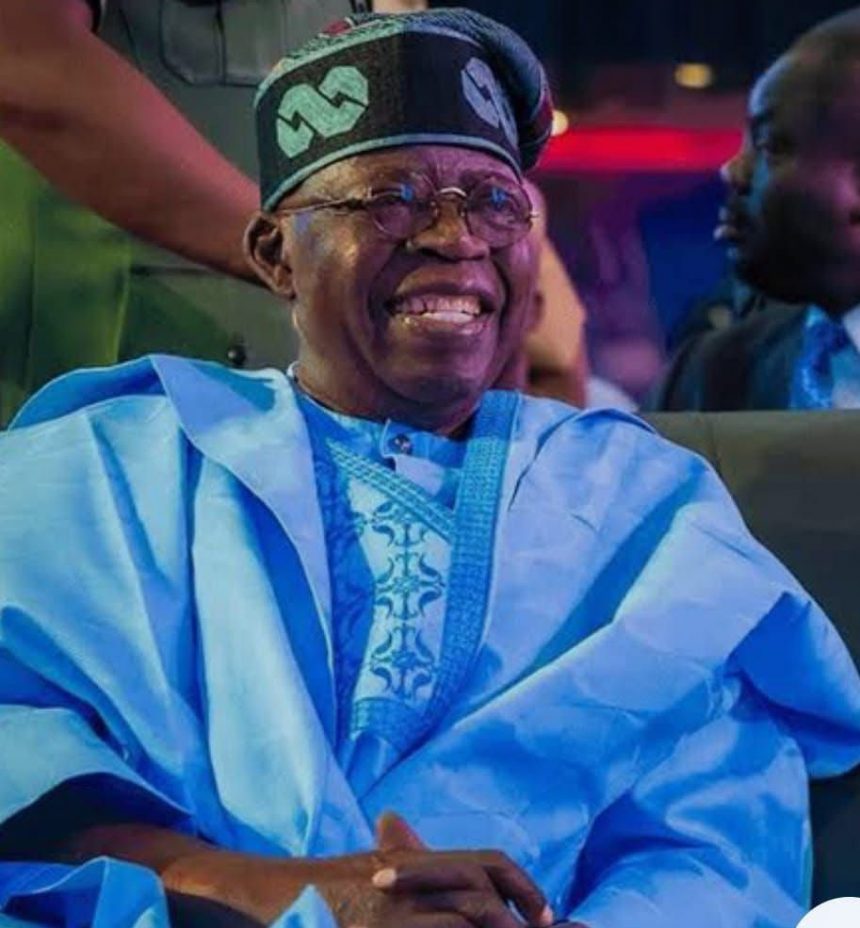
Now, my final answer to the question: If I were President Bola Ahmed Tinubu who clocks 74 on Planet Earth on Sunday 29 March, would I have performed any better? I doubt it. Would I have matched his zeal? I can’t. The challenges are enormous, complex and systemic. The president possesses the ability to translate technical economic gains into tangible relief—a task that requires both the strategic “City Boy” precision of President Bola Ahmed Tinubu and a heightened sense of immediate empathy.

Happy 74th Birthday to our wonder-working President Bola Ahmed Tinubu, GCFR. May the Renewed Hope be renewed again.
-Dipe, a publicist, writes from Ekiti State.
Stay ahead with the latest updates!
Join The Podium Media on WhatsApp for real-time news alerts, breaking stories, and exclusive content delivered straight to your phone. Don’t miss a headline — subscribe now!
Chat with Us on WhatsApp