
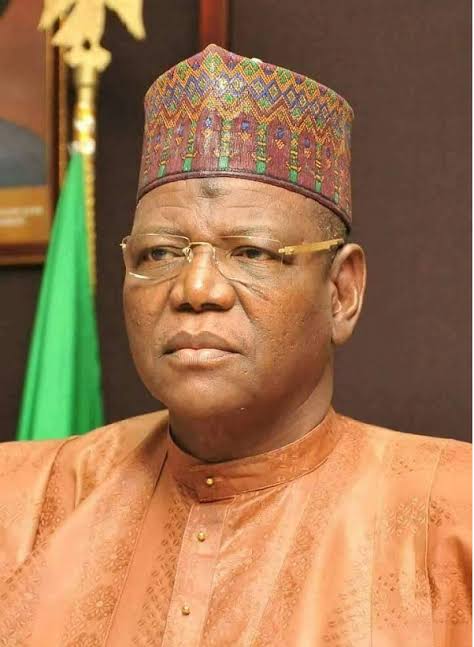
Former Jigawa State governor, Sule Lamido, is in trouble as he faces a fresh arraignment over an alleged N1.3 billion corruption case filed by the Economic and Financial Crimes Commission (EFCC).

Justice Peter Odo Lifu of the Federal High Court of Nigeria in Abuja has fixed April 1 for the arraignment.
Lamido will appear in court alongside his two sons, Aminu Lamido and Mustapha Lamido, who are also accused of taking part in the alleged fraud through fictitious contract awards.

The arraignment was initially scheduled for Friday but was postponed because the defendants were not present in court. Their lawyer, Joe Agi (SAN), apologised for their absence and explained that they only received information about the hearing on Thursday evening. He said Lamido and his sons live in Kano and could not travel to Abuja on short notice. He promised that they would appear in court on the new date.
However, EFCC counsel Chile Okoroma (SAN) said he was surprised the defendants did not attend court, stating that they had already been served with the hearing notice.
Okoroma also revealed that the EFCC had written to the Chief Judge of the Federal High Court, John Tsoho, requesting that the former trial judge, Ijeoma Ojukwu, who has been transferred to Calabar, be brought back to Abuja to continue the case.
Justice Lifu said the request was an administrative matter for the Chief Judge to decide and adjourned the case to April 1 for arraignment.
The EFCC first charged Lamido, his sons and their companies — Bamaina Holdings Ltd and Speeds International Ltd — in 2015 on 27 counts of money laundering involving about N1.3 billion allegedly diverted from Jigawa State funds.
The commission said Lamido abused his office as governor between 2007 and 2015, laundering money received as kickbacks from state government contracts.
After calling more than 16 witnesses, the EFCC closed its case. The defendants then filed a no-case submission, arguing that the prosecution had not provided enough evidence. In November 2022, Justice Ojukwu dismissed the application and ordered them to open their defence.
The defendants appealed the decision, and in July 2023 the Court of Appeal of Nigeria ruled that the Federal High Court in Abuja did not have jurisdiction, stating that the trial should have taken place in Jigawa State where the alleged offences occurred.
The EFCC later challenged the ruling at the Supreme Court of Nigeria.
On January 16, 2026, the Supreme Court set aside the Appeal Court judgment and ruled that Lamido and his sons have a case to answer, ordering that the trial should continue at the Federal High Court.
Stay ahead with the latest updates!
Join The Podium Media on WhatsApp for real-time news alerts, breaking stories, and exclusive content delivered straight to your phone. Don’t miss a headline — subscribe now!
Chat with Us on WhatsApp