
Before Starlink, there was TAT-8
TL;DR: Sharks are often blamed for damaging undersea cables, but the real forces reshaping the Atlantic’s fiber backbone are engineers, grapnels, and diesel-electric ships retrieving decades-old glass cable from the seabed. Crews recovering the first transatlantic fiber-optic system, TAT-8, are bringing up repeaters, steel “fish-bite” armor, and copper power conductors, all of which are now being dismantled and processed through modern recycling facilities.
TAT-8 was the eighth Trans-Atlantic Telephone system and the first to replace copper transmission with single-mode optical fiber between the United States, the United Kingdom, and France. The system used 1.3-micrometer single-mode fiber and optoelectronic repeaters operating at roughly 280 Mbit/s.
Repeaters were spaced every few dozen kilometers, enclosed in long, pressure-rated housings tested for depths approaching 8,000 meters, allowing the optical signal to be regenerated across nearly 6,000 kilometers of seabed.

This architecture – pairs of glass fibers carrying light pulses and periodically amplified inside sealed steel housings along a relatively thin cable – established the template for nearly all long-haul submarine communication systems that followed.
The design was shaped as much by regulatory and competitive pressures as by engineering theory. In the 1970s, satellite communication links were viewed as highly promising, and US regulators warned AT&T that submarine cable technology would need a major performance improvement to remain competitive for intercontinental communications.
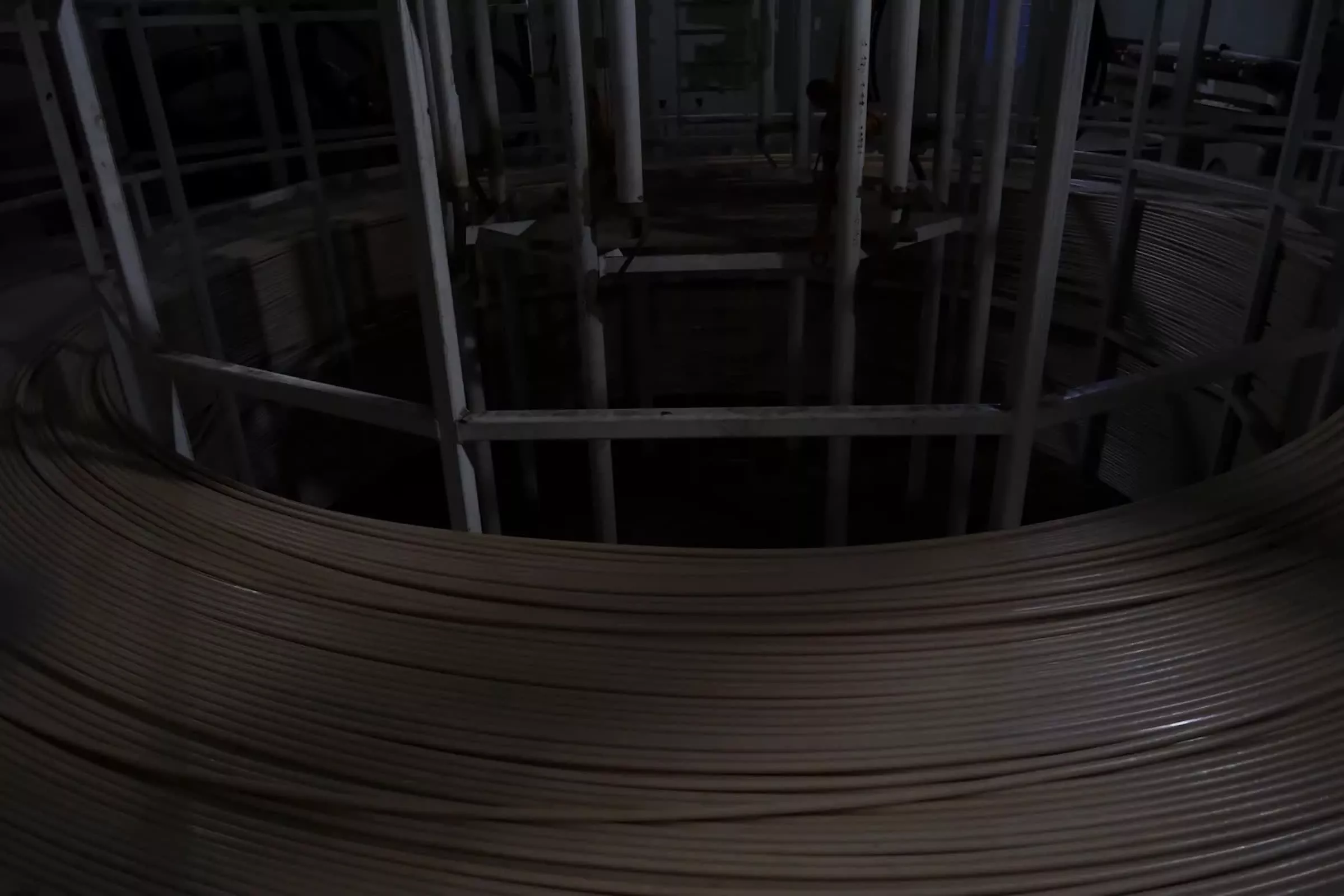
Copper could not scale indefinitely; signal attenuation and repeater spacing imposed hard limits on transmission capacity. Bell Labs and its British partners therefore committed to developing a nearly 6,000-kilometer fiber-optic system linking the US, the UK, and France, first testing the technology through an experimental link known as Optican-1 between two Canary Islands.
Optican-1 was successful, but it experienced shunt faults – insulation failures that disrupted the power supply to repeaters – prompting engineers to investigate not only the cable design but also the deep-sea environment surrounding it.
This technical investigation is where sharks entered the story, and ultimately why modern deep-ocean fiber cables often include a thin steel layer marketed as “fish bite protection.”
Engineers discovered shark teeth embedded in a damaged test cable and initially speculated that sharks might be attracted to the electromagnetic fields surrounding power-fed fibers. This idea became part of TAT-8’s public narrative and even appeared in early AT&T press materials.
Subsequent controlled experiments conducted in aquariums and at sea, using dogfish and lemon sharks exposed to cables emitting various electrical signatures, found no consistent evidence that electrical fields attracted sharks or influenced their biting behavior.
The more likely explanation is simpler: a suspended cable in mid-water is just another object in a three-dimensional environment, and curious animals may occasionally sample it at random. Nevertheless, the incident led designers to add a steel reinforcement layer between the polyethylene insulation and the fiber core. This modification improved resistance not only to hypothetical shark interactions but also to abrasion and incidental mechanical damage on the ocean floor.
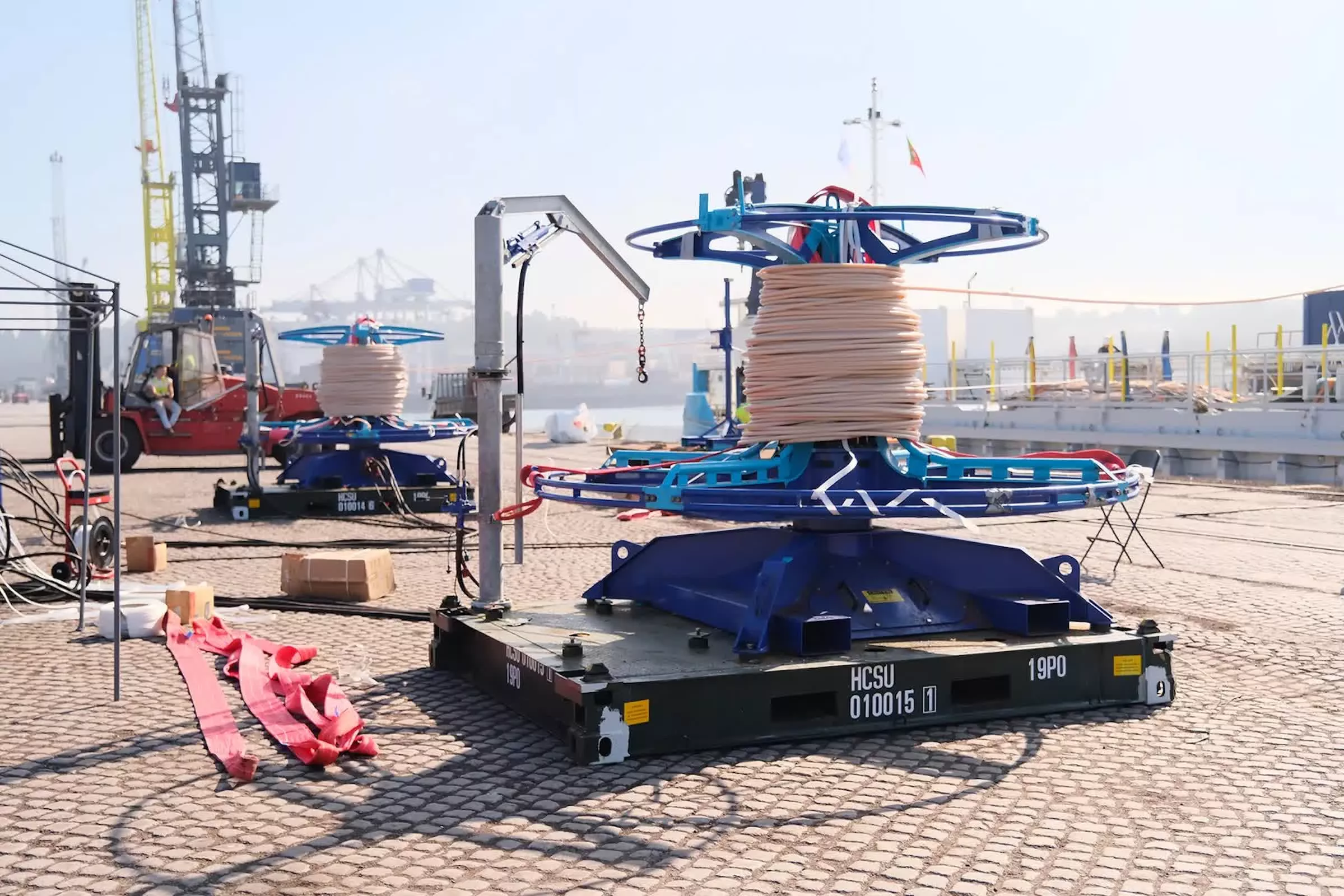
The physical infrastructure that made TAT-8 possible is now being dismantled by a new class of specialist vessels. Subsea Environmental Services’ Maasvliet is a dedicated cable-recovery ship powered by diesel-electric propulsion and equipped with integrated cable-handling systems designed to lift obsolete fiber cables from the seabed and deliver sorted material streams for recycling.
The recovery process combines applied physics with navigation techniques rooted in nineteenth-century surveying practices and twentieth-century record-keeping. Operators rely on detailed route-positioning logs that document every splice, repeater station, burial segment, and repair along a cable’s path, sometimes down to precise coordinates and cable type.
To retrieve TAT-8, crews deploy a flat grapnel known as a “flatfish” from the ship’s bow, gradually pay out rope and steel wire until the hook reaches the seabed, and then tow it slowly – at roughly one knot – along the mapped route. Changes in line tension or winch behavior may indicate a successful catch. Only after the grapnel is winched back and the cable brought to the surface can crews confirm whether the correct system segment has been recovered.
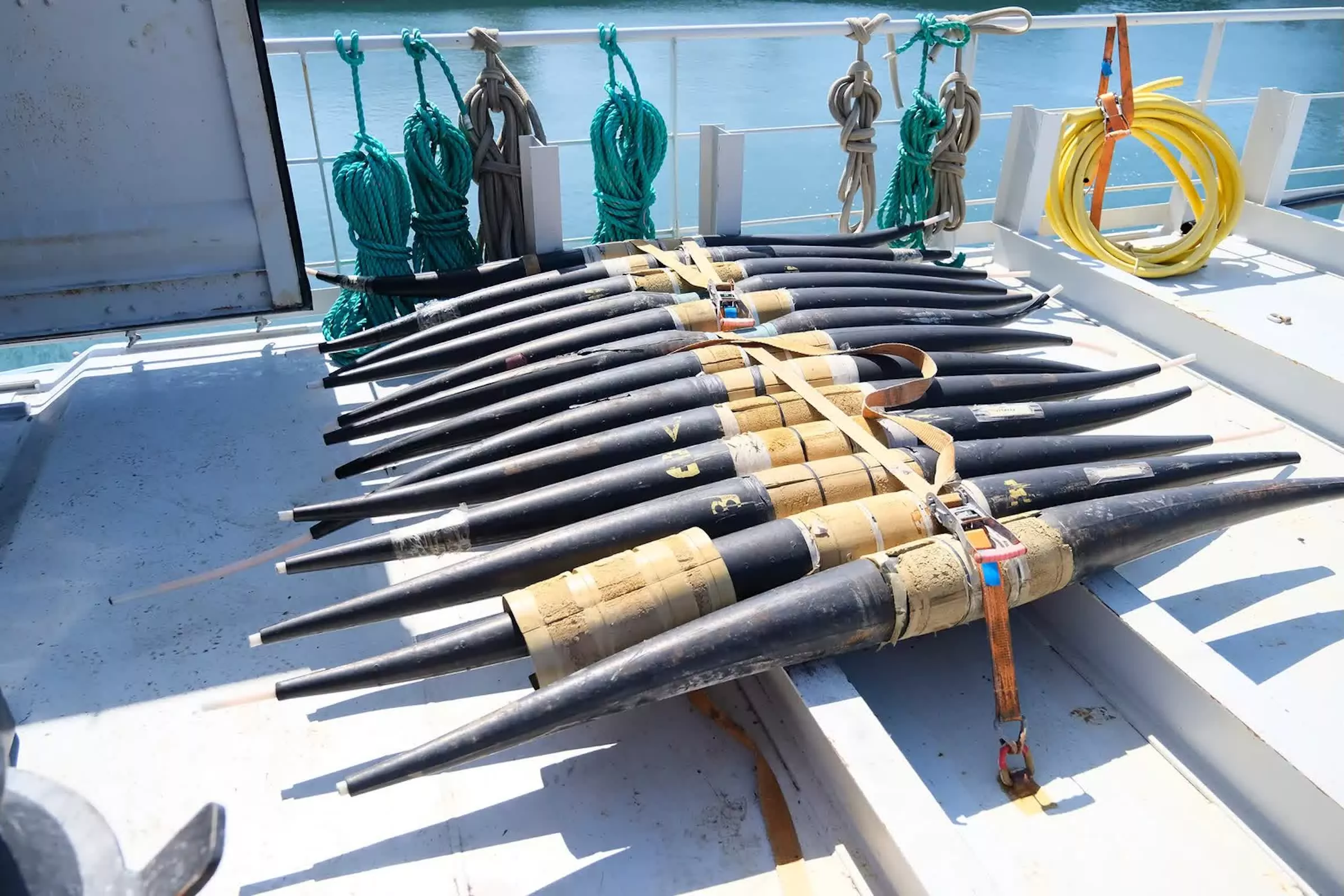
Once on deck, the technical artifacts of late-1980s optical engineering are exposed to air for the first time in decades. TAT-8’s optical repeaters – more than one hundred in total – are roughly two meters long when including the tapered, rubberized connectors that join them to the cable.
Each repeater housing is a pressure-resistant cylinder containing optoelectronic circuitry designed to operate for decades at depth with extremely low failure rates. The units are powered by a constant direct-current feed transmitted from shore through copper conductors integrated into the cable structure.

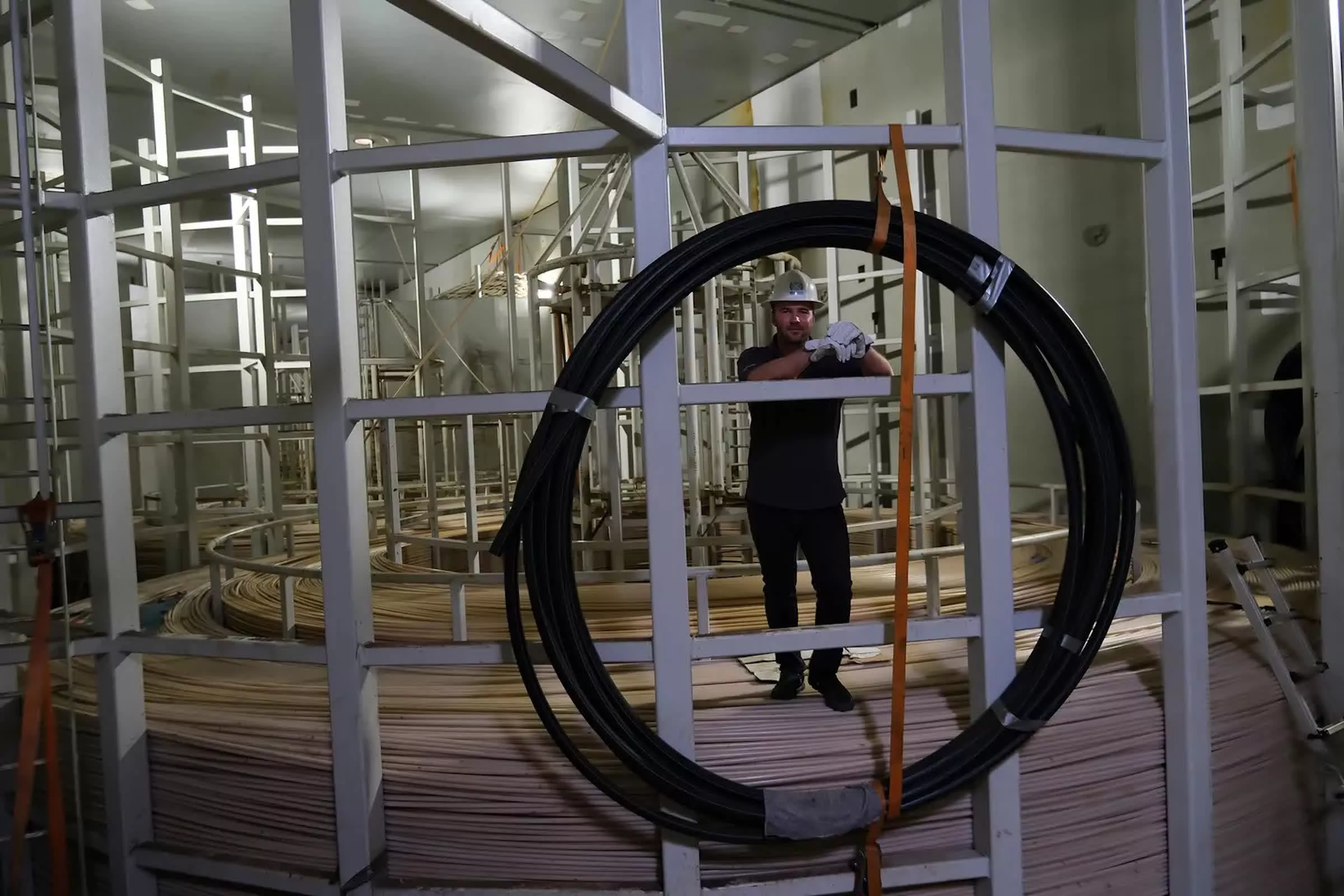
The end-of-life phase for this hardware now feeds into a different type of infrastructure: industrial recycling focused on high-purity metals and polymers. Subsea Environmental Services ships send recovered TAT-8 material to Mertech Marine, a South African company that operates a vertically integrated facility for dismantling retired submarine cables.
Mertech’s plants mechanically strip and separate armor wires, copper conductors, polymer insulation jackets, and repeater housings, returning copper, steel, polyethylene, and other metals to the industrial supply chain.
Copper recovered from these systems is particularly valuable. The material is high-grade, already drawn and stranded, and available in very long continuous lengths. In a market where analysts warn of tightening copper supply within the next decade, such volumes are strategically significant.
Polyethylene jackets are shredded, washed, and converted into pellets for non-food-grade plastic manufacturing, while cleaned repeater components are processed under specialized permits due to the potential presence of hazardous materials.

From a technological perspective, the contrast between fiber and satellite communications remains sharp despite recurring speculation that low-Earth-orbit satellite constellations could eventually replace terrestrial cables.
Fiber networks continue to dominate in capacity, latency, and lifecycle economics. Satellites complement terrestrial and undersea infrastructure in underserved or remote regions and provide redundancy, but they must be replaced every few years and are more vulnerable to weather effects and orbital debris than buried fiber systems.
Submarine cable systems have continued to scale through wavelength-division multiplexing and coherent optical transmission, but they are still built on the fundamental design principles established by TAT-8: single-mode glass optimized for specific optical transmission windows, submerged repeaters spaced tens of kilometers apart, and detailed physical route mapping that enables maintenance – and now, systematic recovery.
Stay ahead with the latest updates!
Join The Podium Media on WhatsApp for real-time news alerts, breaking stories, and exclusive content delivered straight to your phone. Don’t miss a headline — subscribe now!
Chat with Us on WhatsApp