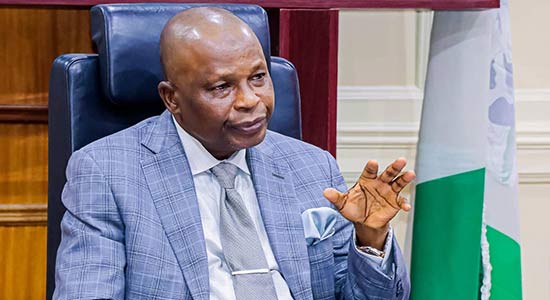
Attorney General of the Federation and Minister of Justice, Lateef Fagbemi, has said that resolving the 15 year-old dispute over OPL 245 will reposition the economy and strengthen the country’s fiscal muscle.
He also praised President Bola Tinubu’s visionary leadership, which enabled the breakthrough. Fagbemi, who spoke at the weekend after the signing of the legal agreement that brought the dispute to an end in Abuja, described the development as a milestone in repositioning Nigeria’s economic landscape.
He said: “The agreement marks a turning point for Nigeria’s oil and gas sector after more than two decades of legal battles and international arbitration”.
The federal government reached the settlement with Eni and Nigerian Agip Exploration Limited (NAEL), effectively ending the protracted dispute over OPL 245.
Fagbemi emphasised that resolving the dispute over OPL 245 will recalibrate the national economy and bolster the federal government’s fiscal position. According to him, early in the administration, Tinubu directed that all disputes over the oil block be resolved amicably in the best interests of the Nigerian people.
“The clear vision and deep commitment of President Tinubu provided the political will required to bring closure to this protracted dispute. The agreement demonstrates Nigeria’s commitment to transparency, accountability, and the rule of law,” he emphasised.
The Justice Minister explained that the settlement, which will culminate in a Consent Arbitral Award, not only resolves a complex international dispute but also restores Nigeria’s credibility as a responsible partner in global business.

He further highlighted several strategic economic benefits expected from the resolution, including the removal of legal and fiscal uncertainties that previously hindered the development of the oil block.
“This development will pave the way for large-scale investments, stimulate job creation, and reinforce Nigeria’s position as a leading energy producer in Africa,” he said.
Fagbemi also noted that projected revenues from the asset could now be included in the country’s medium-term fiscal framework, thereby supporting budget stability, long-term economic planning, and debt sustainability.
He added that resolving the dispute through negotiated settlement rather than prolonged arbitration underscores Nigeria’s commitment to alternative dispute resolution and enhances the country’s credibility in international commercial and arbitration circles.
“This settlement sends a clear signal to the global community that Nigeria is open for business and committed to fairness and respect for contractual obligations,” he said.
The Attorney General also commended key institutions and stakeholders that contributed to the successful resolution, including the Ministry of Petroleum Resources, the Nigerian Upstream Petroleum Regulatory Commission (NUPRC), the Nigerian National Petroleum Company Limited (NNPC), the Economic and Financial Crimes Commission (EFCC), and international partners such as Eni and Shell.
He emphasised that the settlement represents the triumph of dialogue over conflict and national interest over narrow considerations. “With this agreement, Nigeria can now move forward with confidence, ensuring that the development of OPL 245 becomes a source of prosperity for the nation and future generations,” Fagbemi further said.
Meanwhile, the Minister of Solid Minerals Development, Dele Alake, has credited the rapid growth of Nigeria’s solid minerals sector to Tinubu’s reforms.
According to Alake, the gains include an increase in the sector’s contribution to the Gross Domestic Product (GDP), more foreign direct investment and the country’s rising profile as the best destination for mining.
Speaking through the Director-General, Mining Cadastre Office, Obadiah Nkom, at the just concluded Prospectors and Development Association of Canada (PDAC) conference held in Toronto, Canada, the minister emphasised Nigeria’s readiness to partner with credible investors committed to responsible and sustainable mining in the country.
Addressing participants at the 27th Annual African Mining Breakfast, a high-level platform convening African ministers, industry leaders, and global investors for sustained dialogue on unlocking the continent’s mineral wealth, he spoke on the need for synergy among African countries to unlock the vast potential in the sector.
The ministry’s delegation also participated at the International Mines Ministers Summit that had in attendance representatives from France, Chile, Saudi Arabia, DRC, Cameroon, Sierra Leone, Canada, Egypt, Australia, IGF, World Economic Forum (WEF), amongst others.
Alake expressed the commitment of the federal government to promoting value addition within the solid minerals sector, stressing that Nigeria has moved beyond merely exporting raw minerals to emphasising local processing in order to ensure maximum beneficiation for citizens and the nation’s economy.
He also underscored the importance of stronger cross-border integration within the mining industry, adding that establishing structured agreements and coordinated policies would help unlock greater opportunities for trade, investment and shared infrastructure development across borders.
“Integration does not fail because Africa lacks frameworks. It fails because projects stall between borders. A mine may be viable in one country, but the rail link, the power line, or the processing facility sits across the border. And no one institution takes responsibility for stitching these pieces together,” he said.
“I want to charge development finance institutions and strategic investors to go beyond funding local investments in isolation and start funding regional linking systems”, Alake said, assuring that Nigeria was ready to anchor such corridors. “We have the data, the reforms and the political backing and all we need right now is capital that is structured for integration,” the minister explained.
Also on the sidelines of PDAC, the Nigerian team held a meeting with Ms. Paula Caldwell, Chairperson of the Canada–Africa Chamber of Business, to discuss opportunities for strengthening Canada–Nigeria business engagement in the mining sector.
The meeting was facilitated by the Canadian High Commissioner to Nigeria, Pasquale Salvaggio, who underscored the importance of expanding commercial and investment partnerships between Canadian companies and Nigeria’s solid minerals sector.
The discussion centered on an upcoming Canada–Africa business engagement initiative, particularly the proposed African Partnership Business Conference scheduled to take place in May. Caldwell explained that the conference is designed as a high-level platform to connect Canadian companies with African investment opportunities and government stakeholders.
“The conference aims to bring together Canadian companies seeking to expand their presence in Africa, including firms already operating on the continent but looking to enter or grow within the Nigerian market”, she added

The four-day conference also featured high-level engagements with international mining executives, development partners and prospective investors to highlight Nigeria’s vast mineral potential and ongoing reforms aimed at improving transparency, strengthening geological data, formalising artisanal mining activities, and creating a more competitive investment climate.
Stay ahead with the latest updates!
Join The Podium Media on WhatsApp for real-time news alerts, breaking stories, and exclusive content delivered straight to your phone. Don’t miss a headline — subscribe now!
Chat with Us on WhatsApp