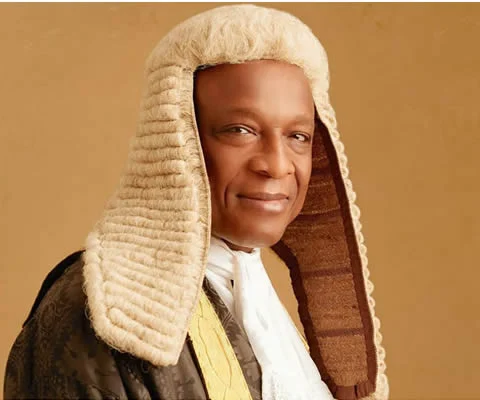
A Senior Advocate of Nigeria, Kemi Pinheiro (SAN), has said the President is empowered to make amendments to existing laws to bring them in conformity with constitutional powers.
Pinheiro spoke against the backdrop of the controversy over President Bola Tinubu’s Executive Order halting revenue deductions by the Nigerian National Petroleum Company Limited and other agencies.
The Petroleum and Natural Gas Senior Staff Association of Nigeria had opposed the presidential fiat, accusing the President of violating the Petroleum Industrial Act with his revenue retention order, but the Special Adviser to the President on Information and Strategy, Bayo Onanuga, said critics were misinterpreting the constitutional hierarchy of laws.

Quoting Section 315 of the Constitution, Pinheiro, in a statement on Tuesday, argued that the transitional provisions of the 1999 Constitution confer modification powers on the President as the “appropriate authority.”
Section 315 stipulates: (1) Subject to the provisions of this Constitution, an existing law shall have effect with such modifications as may be necessary to bring it into conformity with the provisions of this Constitution and shall be deemed to be – 315(1)(a) an Act of the National Assembly to the extent that it is a law with respect to any matter on which the National Assembly is empowered by this Constitution to make laws; and… 315 (2) The appropriate authority may at any time by order make such modifications in the text of any existing law as the appropriate authority considers necessary or expedient to bring that law into conformity with the provisions of this Constitution.
“315(4) In this section, the following expressions have the meanings assigned to them, respectively – (a) ‘appropriate authority’ means – (i) the President, in relation to the provisions of any law of the Federation.”
However, Pinheiro pointed out that executive orders could not override Acts of Parliament.
He said, “An executive order cannot override an Act of Parliament (Act of the National Assembly) under the Constitution of the Federal Republic of Nigeria 1999 (as amended),” he said.
He argued that such an order is usually issued to Ministries, Departments and Agencies to either implement or enforce certain policies.
He said: “I understand Executive Order to be a binding order or directive issued by the President of FRN or a Governor of a State in Nigeria.
“The order is usually issued to the executive arm of government, the MDAs, to implement policies and enforce the existing laws.
“Executive orders are not expressly stated in the CFRN, 1999. However, they carry the force of law and are often used for administrative efficiency.”
Pinheiro added, “An Act of the National Assembly is a law passed by both the Senate and House of Representatives, and the same is assented to by the President.
“It is, therefore, imperative to note that the National Assembly is saddled with the responsibility to make law (Section 4 of the CFRN 1999 is apposite).
“This, therefore, means that an executive order, which is not even a law, cannot outplay an Act of Parliament.”
He also anchored his position on constitutional supremacy, noting, “The above could find its stand on the supremacy of our constitution, particularly Section 1(3) of the CFRN 1999.

“Finally, even if an Act of the National Assembly violates the provision of Section 1(3) of the CFRN, it ought to be declared null and void, as in the case of some provision of the Petroleum Act.”
Meanwhile, the Arewa Think Tank has called on Tinubu to include the Revenue Mobilisation, Allocation and Fiscal Commission in the implementation framework of his newly signed executive order on oil and gas revenue remittance.
The group made the appeal in a statement issued on Tuesday by its Convener, Muhammad Yakubu.
Yakubu described the executive order as a bold and timely intervention.

“We commend President Bola Tinubu for this courageous and patriotic executive order aimed at restoring transparency and accountability in the oil and gas sector.
“This is a step in the right direction for strengthening the federation account and ensuring that revenues due to all tiers of government are protected,” he said.
However, the group noted that the RMAFC, a constitutionally empowered body responsible for monitoring accruals into and disbursement of revenue from the Federation Account, was not listed as a member of the implementation committee constituted by the President.
“It may have been an oversight, but we respectfully appeal to Mr President to include the Revenue Mobilisation, Allocation and Fiscal Commission in the Executive Order’s implementation committee he has just established,” Yakubu said.
According to him, the commission’s statutory mandate makes it a critical stakeholder in any reform that directly affects the Federation Account.
“The inclusion of RMAFC will strengthen the credibility, transparency and institutional balance of the implementation process.

“As the body is constitutionally saddled with monitoring revenue accruals and disbursement, its participation is indispensable,” he added.
Yakubu stressed that broad-based institutional collaboration would ensure that the objectives of the executive order are fully realised.
He said eliminating leakages, curbing excessive deductions and repositioning key institutions strictly along commercial lines would require the involvement of all relevant constitutional bodies.
Stay ahead with the latest updates!
Join The Podium Media on WhatsApp for real-time news alerts, breaking stories, and exclusive content delivered straight to your phone. Don’t miss a headline — subscribe now!
Chat with Us on WhatsApp