


Nearly eight decades after World War II, the global order that emerged is starting to fracture. The United States, once its stabilising force, now appears to be driving much of that disruption.
After the war, the US provided massive economic aid and security guarantees to war-torn Western Europe, fostering institutions that promoted recovery, integration, and collective defence against Soviet influence.
With US leadership, institutions like the International Monetary Fund (IMF) and the World Bank sprang up, pegging currencies to the dollar for stable global finance and aiding Europe’s reconstruction.

Then came the North Atlantic Treaty Organisation (NATO). NATO was formed as an alliance in 1949 with 12 founding members — the US, Canada, and 10 European states — committing to collective defence against threats. Today, the intergovernmental military alliance has grown to include 30 European countries and two in North America, deepening links between both continents.
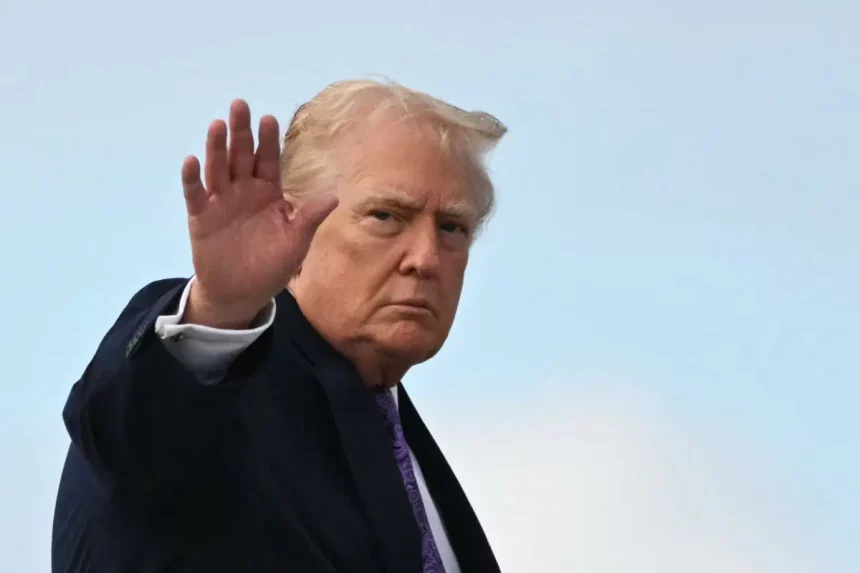
But much of the trust that has grown between Europe and the US has begun to chip away after months of threats, tariff impositions, and repeated signals that American security guarantees could be made conditional rather than assumed. It all became glaring when President Donald Trump returned to the White House in January 2025.
AMERICA FIRST

“Every dollar we spend, every program we fund, every policy we pursue must be justified by the answer to one of three questions: Does it make America safer? Does it make America stronger? Or does it make America more prosperous?” Mark Rubio, secretary of state, said.
Rubio made the comments as a guiding principle for state agencies to implement the country’s ‘America First’ foreign policy agenda.
Foreign policy guides a government’s strategies and actions toward other nations and international actors to advance its national interests.
Ensuring “fair” economic and trade relationships is one of the key pillars of the “America First” foreign policy, according to the state department.
Advancing national interests is the bedrock of any country’s foreign policy, but in practice, this overarching approach turns long-standing allies into transactional partners by assessing partnerships through a narrow cost-benefit lens. This has been the recent case in relations between the US and Europe, a sharp reversal from the decades-long sentimental relationship that bonded both parties.
Johannes Thimm, head of the research division of the Americas, German Institute for International and Security Affairs, described the change in US foreign policy as a “dramatic shift”.
“One issue is that Donald Trump, in his foreign policy and in his trade policy, does not distinguish between traditional allies of the United States and other countries, or opponents or adversaries. He treats everybody the same, and sometimes he treats former adversaries better than allies,” Thimm told TheCable.
“So, when it comes to tariffs, some tariffs on Russia and China were lower than tariffs imposed on partners in Asia or in Europe, which have formal alliances with the United States.”
Thimm said the recent policy modifications, strained by actions taken by Trump in his first term towards Europe, have made the continent very skeptical towards the US, even though most European leaders would not make public admissions.
‘HOSTILE’ ACTIONS TAKEN TOWARDS EUROPE SINCE TRUMP’S SECOND TERM

Since his January 2025 inauguration, Trump has pursued a pay-to-play approach toward Europe, marked by tariff threats and impositions, public criticisms, and demands for greater defence contributions. The turn in the relationship came amid a cosying up to Russia, a stark departure from traditional US foreign policy, which, alongside European allies, viewed the Kremlin as an aggressor. It was this view that had led to the creation of NATO — to shield allies from Soviet threats.
Trump’s new leadership soon began to strain transatlantic ties, particularly as much of Europe remains closely anchored to US security and economic frameworks.
“European security is still very much dependent on the United States in terms of military hardware, especially reconnaissance, intelligence gathering, and transport capabilities, but also weapon systems. Getting Ukraine the weapons that it needs to defend itself is a challenge, and we need the US to at least sell Europe weapons for that purpose,” Thimm explained.
“I mean, it’s already shifted from the US giving weapons directly to Ukraine to the US selling weapons that Europeans are buying and paying for and then giving to Ukraine. It’s already the big dramatic shift. But the whole public discourse from government officials, vis-à-vis the US, and the fact that it’s still so accommodating and not very critical, has to be understood against that backdrop.”
In March 2025, the US president threatened a 200 percent retaliatory tariff on alcohol from EU countries after the region slammed the US with a 50 percent tariff on whisky.
The taxes from the region were in response to Trump’s global blitz of tariffs on top trading partners, which affected all EU members.
Later in April, the US president imposed a 20 percent tariff that was briefly in place in April before he swiftly paused those tariffs to allow for further negotiations.
In May, he recommended a 50 percent tariff on the European bloc.
Soon, the threats took on a different form. The US national security strategy accused Europe of having a “civilizational erasure” and questioned the continent’s capability of remaining an economic and military ally. The document mandated that the EU assume primary responsibility for its region and contribute “far more” to NATO.
The increased spending demand was listed as an accomplishment on the state department’s website under its foreign policy.

Criticisms against the military alliance became louder from the US when Trump’s ambition to acquire Greenland, an autonomous territory of Denmark, a NATO ally, began to grow.
Despite a rebuttal from Denmark and other European countries, insisting on Greenland’s sovereignty, Trump persisted in his efforts.
As the matter dragged on, the US president announced plans to impose an additional 10 percent tariff on goods exported to the US from eight European countries, including the UK, citing their refusal to support his intentions.
The threat was later curbed after Trump and Mark Rutte, NATO secretary-general, “formed the framework of a future deal with respect to Greenland”. The details of the deal were not made public.
Edward Adie, a lecturer of international relations and diplomacy at Baze University, Abuja, noted that while Trump’s actions towards Europe may be seen as hostile, it is not unusual for states to take protective measures of their resources.
“The US is bitter about the European society not pushing the way it’s supposed to and then leaving the burden on the US, that’s why it’s crying out. And if the European society adjusts itself and also sits up. I think they will continue well in their relationship,” Adie said.
Adie, whose expertise covers the EU and diplomacy of regional powers, likened Europe and the US to siblings within the same family. He noted that while tensions currently mark their relationship, they remain the regions with the deepest shared ideological foundations. Those common values, he said, could yet help restore harmony between them in the future.
SEEKING NEW PARTNERS
Europe’s stance towards the US has grown increasingly publicly wary.
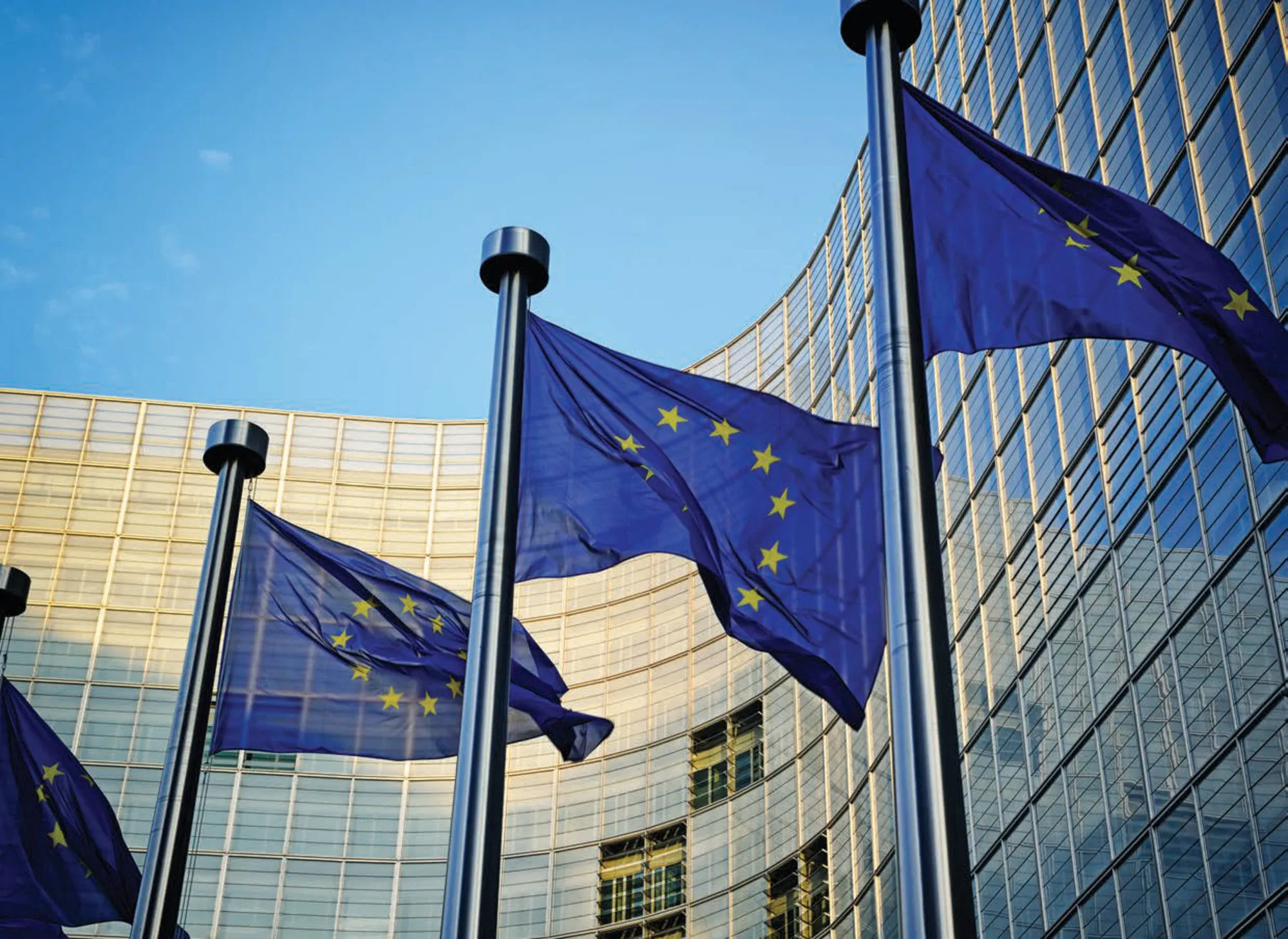
In a 2025 draft annual report on the common security and defence policy (CSDP), European members of parliament expressed their dismay at what they called a “current ambiguity of the EU-US defence and security relationship” and “short-sighted isolationism and self-centredness in US foreign policy”.
To address the situation, the European Parliament called for the development of contingency plans “in case of rapid US troop withdrawal to ensure European deterrence and capacity for autonomous action against aggression”.
Thimm told TheCable that while European leaders are still making efforts to maintain good relations with the US, developing their own capabilities to become less dependent is a double strategy aimed at ensuring self-sustainability.
“Europe is trying to figure it out, and a big part of it is to try to become more self-sustaining, to be more independent, to protect its interests better, to become more powerful in some way and less subject to blackmail from China or the US,” the German security researcher said.
“And part of that is, I think, forming new partnerships with other countries that share the same interests in Europe and beyond Europe. So I think either democratic middle powers are natural allies from Canada to New Zealand, with Korea and Japan in between, Brazil, South Africa, and possibly Nigeria.
“My opinion is that the countries that want to defend the rule of the world-based orders have to get together and form coalitions.”
Adie agreed that new partnerships for Europe could help the continent become less dependent on the US.
Last month, Trump ordered the US’ withdrawal from 66 global organisations which the White House said operated contrary to America’s national interests.
Of the 66 organisations, 31 were United Nations (UN) entities, while 35 were non-UN affiliated.
Adie said America’s pullout from the institutions presented opportunities for Europe to step up as a world leader.
“That can also endear them to people, and they’ll begin to look at them as an alternative to the US, and it will help them position themselves, benefit them, get the interests of other countries, and build rapport,” Adie said.
He added that new partnerships with countries should also be strategic and targeted at nations with large populations, especially in Asia and Africa.
Adie, however, cautioned against the urge to meddle in states’ domestic affairs with this new tactic.
“They should not interfere in domestic affairs like the US was doing with their form of aid, but should act like China, go there, do business with free hands, and see the areas you can partner and gain profitably and genuinely. That’s how you get into the heart of the world,” he said.
Stay ahead with the latest updates!
Join The Podium Media on WhatsApp for real-time news alerts, breaking stories, and exclusive content delivered straight to your phone. Don’t miss a headline — subscribe now!
Chat with Us on WhatsApp