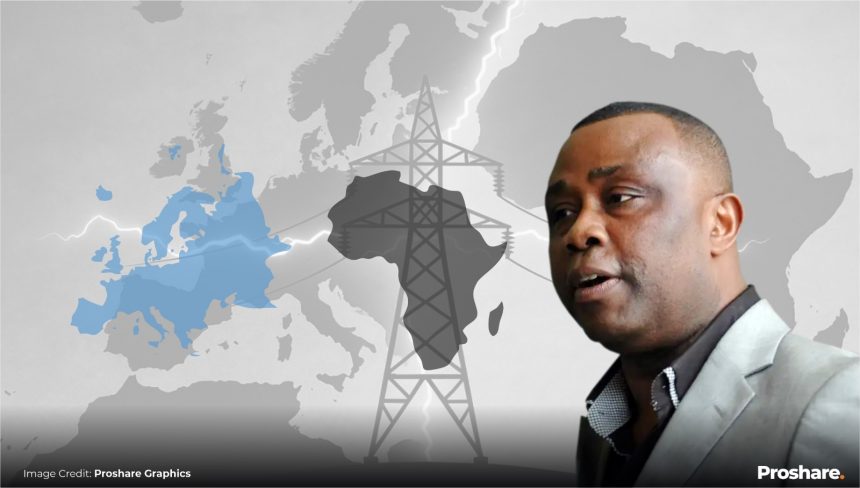
As geopolitical shocks expose the fragility of global energy supply chains, the search for resilient and diversified energy systems is becoming an urgent strategic priority. Yet one of the most consequential opportunities for strengthening global energy security remains underexamined: the potential for deeper cooperation between Africa and Europe. Africa possesses some of the world’s most abundant renewable resources, including vast solar irradiation zones and emerging wind corridors, while Europe brings advanced energy technologies, mature capital markets, and strong regulatory frameworks.
The strategic alignment between these complementary strengths presents a pathway toward a more balanced and resilient energy architecture. At a time when policymakers are rethinking globalisation through the lens of resilience rather than efficiency alone, a structured Africa–Europe energy partnership could simultaneously address energy security, economic development, and climate transition objectives.
In this OpEd, Collins Nweke examines whether the political and institutional leadership required to mobilise such a partnership will emerge quickly enough to shape the next phase of the global energy order.

When geopolitical crises erupt in the Middle East, global energy markets react almost instantly. Oil prices surge, shipping routes become vulnerable, and policymakers scramble to assess economic fallout.
Yet in many global analyses, from financial forecasts to geopolitical commentary, one region remains strikingly absent from the conversation: Africa.
That omission is not only analytically incomplete; it is strategically shortsighted. A durable pathway to global energy resilience lies in a symbiotic partnership between Africa and Europe, built around diversified renewable energy systems, cross-continental infrastructure, and mutually beneficial investment frameworks.
In an era defined by geopolitical shocks, from Russia’s invasion of Ukraine to renewed instability in the Persian Gulf, energy security can no longer depend on a handful of maritime corridors such as the Strait of Hormuz or politically volatile suppliers. Africa and Europe together can help build a more resilient global energy architecture.
Africa’s Untapped Energy Potential
Africa’s energy landscape is marked by a profound paradox. According to the Africa Energy Outlook published by the International Energy Agency, the continent holds around 60 percent of the world’s best solar resources, yet accounts for only a small share of installed solar capacity globally.
Similarly, a recent analysis by the United Nations Economic Commission for Africa shows that Africa attracts less than three percent of global energy investment, despite possessing vast renewable potential in solar, wind, geothermal, and hydropower.
At the same time, roughly 600 million Africans still lack access to electricity, making energy poverty one of the continent’s most pressing development challenges.
A joint assessment by the World Bank and the International Renewable Energy Agency further estimates that Africa will require more than $200 billion in annual energy investment by 2030 to meet growing demand and achieve universal electricity access.
The opportunity is enormous. According to the International Renewable Energy Agency, Africa possesses some of the highest solar irradiation levels anywhere on the planet, capable of producing several thousand gigawatts of solar electricity. This exceeds the continent’s current energy demand by far.
Yet installed solar capacity across Africa remains only a fraction of this potential. This mismatch, namely, vast resources but limited infrastructure and capital, represents not merely a development gap but a global opportunity waiting to be unlocked.
Europe’s Urgent Need for Energy Diversification
For Europe, the strategic case for diversifying energy sources has become increasingly compelling. The geopolitical shock triggered by Russia’s invasion of Ukraine forced the European Union to rethink its heavy dependence on Russian gas. A report published by Reuters on 21 January 2026, citing research from the energy think-tank Ember, noted that wind and solar now generate a record share of electricity in the European Union’s power mix, signalling a structural shift toward cleaner energy systems.

However, Europe’s energy transition faces its own constraints. These include limited land availability for large-scale renewable infrastructure, intermittency challenges in wind and solar generation, and rapidly rising demand for new energy carriers such as green hydrogen. In this context, cross-continental energy partnerships are becoming less a policy option than a strategic necessity.
Rethinking Globalisation Through Energy Resilience
Recent debates about globalisation increasingly emphasise resilience rather than pure efficiency. Entrepreneur and global commentator Jack Ma has argued that the next phase of globalisation must be built not merely on trade expansion but on more balanced and resilient economic networks capable of absorbing geopolitical shocks.
Energy systems are central to that argument. A global economy dependent on a narrow set of energy corridors or suppliers will inevitably remain vulnerable to geopolitical disruption.

Diversifying energy production geographically, while strengthening regional partnerships, is therefore not simply an environmental objective. It is a strategic imperative for economic stability.
In that sense, a deeper Africa–Europe energy partnership would represent precisely the kind of resilient globalisation architecture that many analysts now call for.
A Natural Alignment of Strengths
The strategic alignment between Africa and Europe is almost self-evident.
Africa possesses:
- some of the world’s richest solar irradiance zones
- vast wind corridors along coastal regions
- large reserves of critical minerals essential for energy technologies
- extensive land availability for renewable infrastructure development
- advanced energy technologies
- deep capital markets
- established electricity grids and transmission expertise
- stable regulatory frameworks for energy trade
Together they form the basis of a complementary energy ecosystem. The concept of Africa–Europe energy cooperation is not entirely new.

In 2008, the African Union and the European Union launched the Africa–EU Energy Partnership, designed to expand access to sustainable energy and strengthen intercontinental cooperation through renewable energy development and regional power pools. Progress has been uneven, but the initiative demonstrated that energy cooperation can serve as a cornerstone of Africa–Europe relations.
More recently, initiatives under the Africa–EU partnership framework aim to deploy 50 gigawatts of renewable energy capacity and expand electricity access to millions of Africans by 2030, according to programme documentation referenced in the policy journal The European Files.
Meanwhile, reporting by Associated Press in March 2025 highlighted proposals for undersea electricity interconnectors linking North Africa with Southern Europe, projects that would allow renewable electricity to flow across the Mediterranean. These developments suggest that the technological and institutional foundations for deeper cooperation already exist.
Beyond Energy: Strategic Benefits for Both Continents
An Africa–Europe energy alliance would deliver benefits far beyond electricity generation.
- Energy security: Diversifying supply sources reduces dependence on geopolitical chokepoints and volatile suppliers.
- Economic development in Africa: Renewable investment could accelerate industrialisation, job creation, and technology transfer.
- Climate transition: Both continents would strengthen their capacity to meet net-zero commitments.
- Migration stability: Energy-driven economic growth in Africa could help address structural drivers of irregular migration.
- Strategic autonomy: Europe would reduce reliance on volatile energy regions while Africa would gain greater leverage in global energy markets.
Time for Diplomatic Leadership
For this vision to move beyond policy papers and conference declarations, it must be anchored in active diplomatic coordination between Africa and Europe.
Brussels, home to the institutions of the European Union, should become the epicentre of this effort. The African Union Mission to the European Union in Brussels is uniquely positioned to convene such a process.
Working with the European Commission and the European External Action Service, the mission could take the initiative to organise the table for a structured Africa–Europe energy dialogue focused on diversification, renewable investment, and infrastructure connectivity.
Such an initiative would benefit from the leadership of prominent African diplomatic voices in Brussels. One example is Nigeria’s Ambassador to Belgium and Head of Mission to the European Union, Ambassador Dr. Adebayo Adeyemi, whose position places him at the intersection of African diplomacy and European policymaking.
Together with other African ambassadors and EU institutions, the AU mission could catalyse a new Africa–Europe Energy Partnership Forum, bringing together:
- policymakers
- financial institutions
- energy companies
- research institutions
- development partners.
At a moment when global energy systems are under strain, diplomacy must move with urgency. Brussels is the logical place to begin.
A Partnership for the Energy Order of the 21st Century
Energy transitions are rarely just technological transformations. They are geopolitical ones.
In the twentieth century, the global energy order was shaped by oil fields and maritime chokepoints. In the twenty-first century, it will increasingly be shaped by sunlight, wind corridors, and interconnected electricity grids.
Africa and Europe sit at the center of this emerging geography. If both continents seize the moment, they can build not only a new energy partnership but also a pillar of stability for the global economy in an increasingly uncertain world. They could do this through investment, infrastructure, and purposeful diplomacy.
About the AUTHOR
Collins NWEKE is an International Trade Consultant & Economic Diplomacy researcher. He was a former Green Councillor at Ostend City Council, Belgium, where he served three consecutive terms until December 2024. A first-generation migrant who transitioned from civil society activism into elected office, he writes frequently on democracy, governance, and Africa–Europe relations. He is the author of the forthcoming book ‘Economic Diplomacy of the Diaspora’. He is also a Distinguished Fellow of the International Association of Research Scholars and Administrators, serving on its Governing Council. A columnist for The Brussels Times, Proshare, and Global Affairs Analyst with a host of media houses, Collins writes from Brussels, Belgium. X: @collinsnweke E: admin@collinsnweke.eu W: www.collinsnweke.eu
Stay ahead with the latest updates!
Join The Podium Media on WhatsApp for real-time news alerts, breaking stories, and exclusive content delivered straight to your phone. Don’t miss a headline — subscribe now!
Chat with Us on WhatsApp