



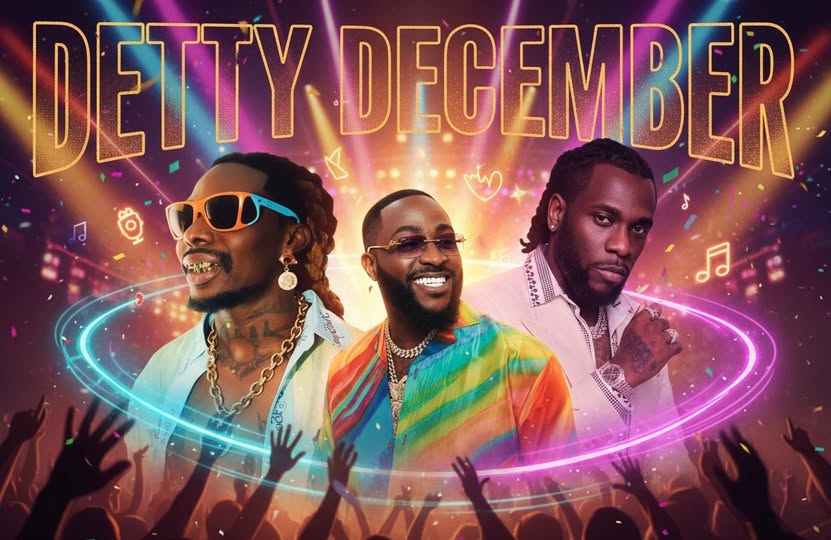
Somehow Christmas 2025 got me thinking and I have to confess, I agree with those who think the best way to deal with persistent but erroneous narrative is not a counter-argument, but a parallel reality. If that questionable narrative has to do Nigeria as a failed state, then the parallel narrative is even better with a global soundtrack, quantifiable digital footprints, and a tangible economic pulse. While international media focuses on Nigeria’s challenges, I am seeing a deliberate – if uncoordinated attempt at telling a different story beginning to emerge to a distinct, commanding beat. This story is “Detty December,” and before you roll your eyes in disdain, just calm down first.
Forcing its way into the psyche of urban Nigerian dwellers last December, Detty December is beyond just the clubbing and partying even if that appears to be the most visible part of it. It should be understood as a crowd-sourced West African project in “phygital” nation-branding, with the cultural awareness and spending power of The Diaspora at its core. Check this: Spotify is reporting a 55% surge in local streams and a 15% rise globally for Nigerian music during the season – a significant proof of an ecosystem that also drives a significant seasonal uplift in tourism, hospitality, and event revenue.
It is too early to call but we have to wait to see whether this vibrant weeks of festivities, finely mixed with the rhythm of Afrobeats, represents a genuine reclamation of narrative sovereignty or a spectacular distraction engineered by the attention economy. Just consider this: is it just possible that Nigeria can become a destination of choice for tourists and like Morocco and Mauritius begin to maximise the untapped potential of its music, beaches and waterfalls.

The transformation from the traditional chaotic “December rush” to the emerging brand of “Detty December” cannot be separated from the global ascent of Afrobeats. The genre’s conquest of international charts and sold-out arenas have provided the cultural currency and aspirational framework for a season like this – when there is a cultural attraction for the fun-seeking urban youths and The Diaspora. Is there a chance that Afrobeats is not merely the soundtrack but the economic base and thematic core, driving a lucrative calendar of concerts and experiences that stimulate local commerce. If this were to be the case, then Detty December will most likely move beyond just a diaspora homecoming to become a triumphant, performative return to the source. As Spotify’s data highlights, this is an “ecosystem” where physical return can drive digital consumption and spending: “when people return home, they bring their listening with them.” Concerts by A-list artists become the season’s pilgrimage sites, transforming them from mere events into cultural vindications and major economic nodes.
To understand Detty December is to dissect the ecosystem that sustains it – an ecosystem where digital culture and physical experience exist in a seamless, reinforcing loop. This is not merely an event season; it is a digital culture engine. The season seems to be creating new archetypes: the “unpaid storyteller” whose authority is built on live coverage from the front row of a sold-out Afrobeats concert, and the micro-entrepreneur whose fashion or service is marketed through the aesthetic of the genre’s glamour. This digital hustle fuels a real-world economic circuit of vendors, stylists, and promoters. Platform-specific rituals govern participation: Instagram archives the visual capital of designer outfits and packed venues; Twitter/X hosts the live, communal narration and post-event critique; WhatsApp forms the logistical backbone. In this economy, documentation is not secondary to participation; it is a core component of it. The pressure to produce a flawless “Detty December highlight reel” becomes a form of digital labour, where social capital is accrued through likes and shares, training global algorithms to recognise Nigerian aesthetics as a dominant, desirable trend. This is the hustle economy aestheticised, a period where visibility converts directly to cultural and often material currency.
Ultimately, Detty December is more than a party. It is Nigeria’s most compelling experiment in phygital identity.
This engineered reality stands in stark, deliberate contrast to the enduring “single story” of a troubled Nigeria long propagated by much of Western media. The dominant external frame, especially with America going after terrorists on Nigerian soil remains one of crisis – a locus of instability and need. Detty December, with the phygital display of adventure, creativity and purchasing power already resembles a narrative resistance. The limitless power of digital self-publishing, is enabling it to bypass traditional media gatekeepers, allowing participants to unwittingly assert what can be best described as narrative sovereignty. Nigerians, both at home and in The Diaspora, supported by tourists are creating a new, and lively counter-narrative of undiluted fun from live events and tastefully-furnished short let apartments. The visitor, enamoured by this digital allure, is both participant and amplifier, sharing content that further undermines the Western narrative of a troubled Nigeria. This is not activism in the traditional sense, but it is a potent political act: the reclamation of image and imagination.
Regardless, as with phenomena of this type, we have to take a closer look to make sense of it. Does this powerful act of self-representation mask deeper fissures? The logic of the “spectacle” suggests that social relations can become mediated by images of consumption. The performative, consumerist heart of Detty December can inadvertently reinforce class divides, equating cultural participation with the ability to spend. The “Detty December, Broke January” meme is not just a joke; it is a tacit acknowledgment of the economic strain this curated joy can impose. Furthermore, the very digital economy that empowers this narrative – the monetisation of attention and engagement – creates its own perverse incentives. It risks privileging the aesthetics of prosperity over the harder, slower work of addressing the systemic issues that the Western media fixates upon, however reductively. The danger is a public sphere where the performance of well-being crowds out substantive discourse on its foundations.
The contestation, therefore, lies in whether Detty December is a destination or a pathway. Are we seeing a temporary, phygital simulation of a Nigeria where things work? Or is it a timely reminder of the huge cultural, entrepreneurial, and organisational capital that could be channelled into broader national branding? From experience, online campaigns do not produce real change on their own. Usually, there has to be more in sustained strategy and commitment by those in authority. If nothing, Detty December at least showcases a Nigeria capable of world-class logistics, creative genius, and powerful soft power projection. The haunting question is whether this energy can be harnessed beyond the calendar of revelry.
Ultimately, Detty December is more than a party. It is Nigeria’s most compelling experiment in phygital identity. It demonstrates an unparalleled ability to engineer a seasonal digital economy, wage narrative warfare with the weapon of joy, and develop indigenous rituals native to the social media age. It forces a recalibration of perspective, compelling the world to engage with the country on its own festive, complex terms. However, its true legacy will be determined not by the brilliance of any single December, but by what its architects – the content creators, event planners, diaspora returnees, and ordinary citizens performing their pride – choose to build with the confidence and capability it proves they possess. The spectacle has been mastered. The next act awaits its script.
*Dr. Olaniyan, the Convener, Centre for Social Media Research, Nigeria writes about digital culture
Stay ahead with the latest updates!
Join The Podium Media on WhatsApp for real-time news alerts, breaking stories, and exclusive content delivered straight to your phone. Don’t miss a headline — subscribe now!
Chat with Us on WhatsApp