
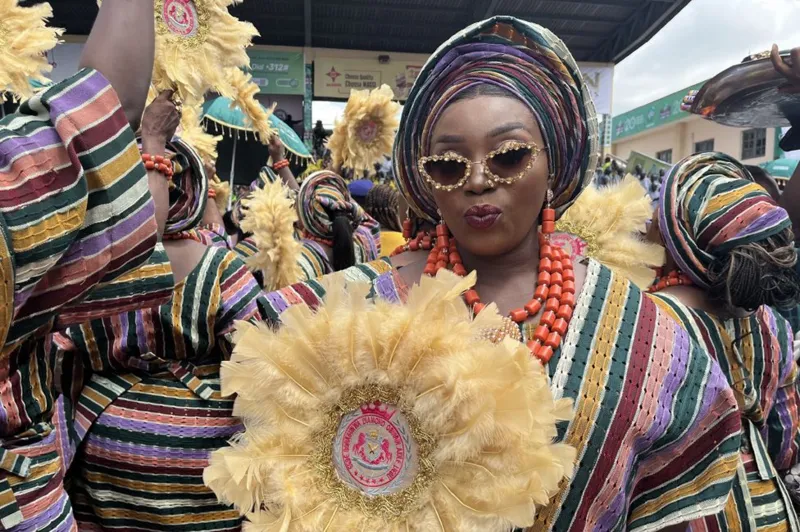
Thousands gathered on Sunday in an ancient town in south-west Nigeria for a spectacular display of culture, colour and tradition.
The Ojude Oba festival in Ijebu-Ode, brought together locals and visitors to pay homage to the Awujale – the traditional ruler of the Ijebu people.
This union of drummers, musicians and dancers coupled with a fashion parade told a tale of people deeply connected to their roots.

Ojude Oba – a Yoruba phrase meaning “the kings forecourt” – began over two centuries ago.
Earmarked for the third day after Eid, this was originally a modest gathering of the Muslim faithful, thanking the king for allowing them to practise their religion freely.
But it has grown to symbolise pride, unity and identity among all the Ijebu people regardless of religion.
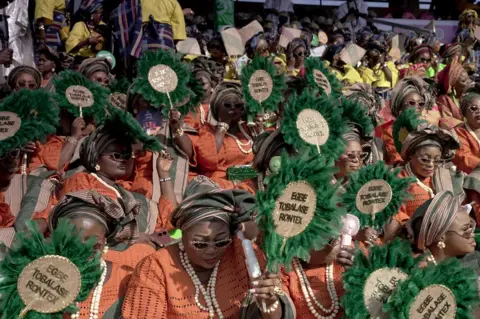
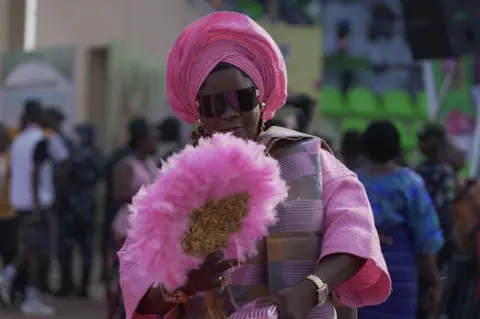
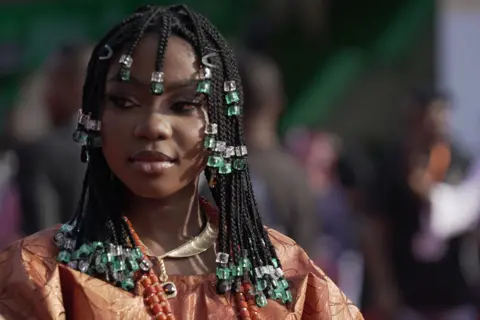
The women were elegantly turned-out in colourful traditional dresses, known here as iro and buba, along with the gele, or head wrap.
Their outfits were made from lace or aso-oke, a locally sourced fabric woven by the Yoruba people.
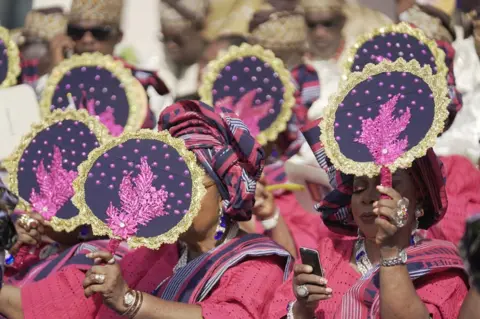
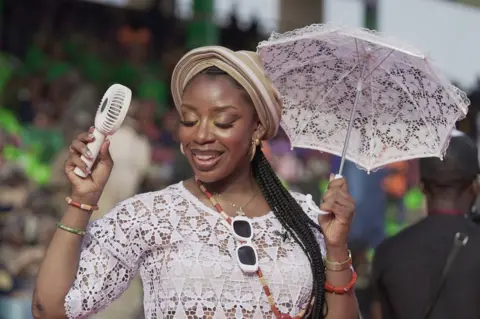
The sunglasses and hand fans meant to provide respite for the blistering sun were must-have accessories, complementing the looks.
 Ayo Bello / BBC
 Ayo Bello / BBC
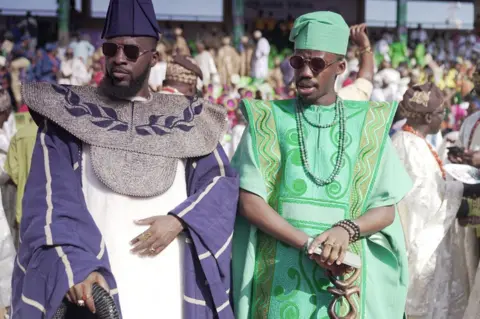
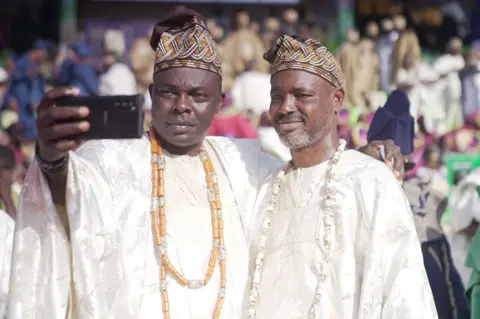
Dressed in traditional Yoruba agbada, the men agree months ahead on what outfits, colour and accessories to use for the festival.
Each year, they tweak the style and colour and display. Accessories include matching caps, beads and shoes.
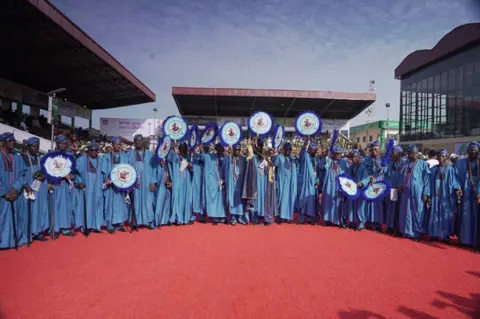
Regardless of social status, the people are classified into age groups known as regbe-regbe, with hundreds belonging to each one. They are aimed at fostering unity among the locals.
 Kyla Herrmannsen / BBC
 Kyla Herrmannsen / BBC
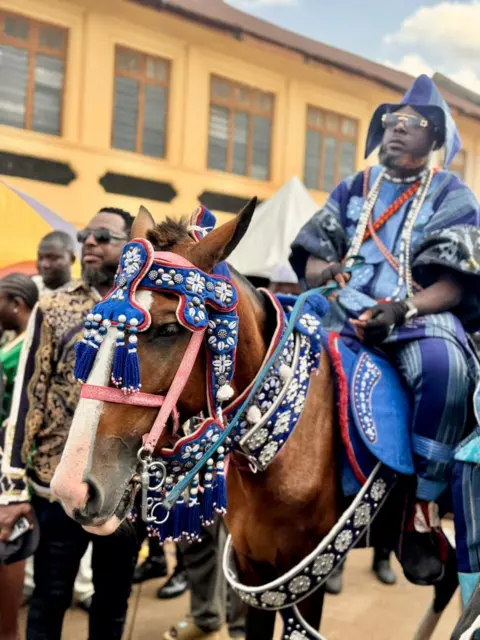
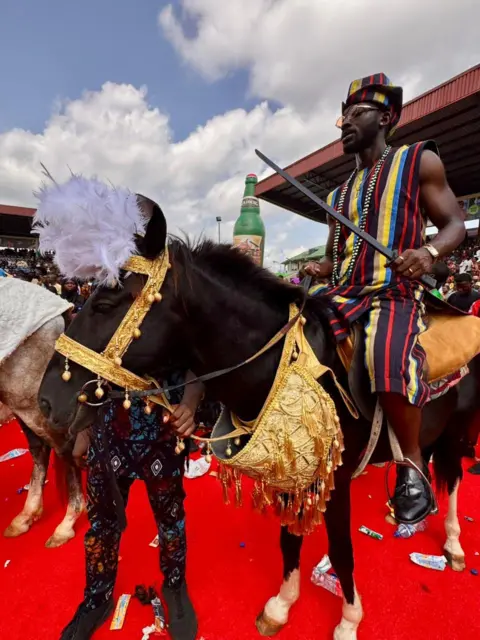
The horses were adorned in colourful ornaments of gold and silver. Their riders displayed their prowess and the strength of their horses circling the arena to thunderous applause from spectators.
Shots from locally made guns sent white smoke into the air, signalling the arrival of each of the traditional warrior family, known as Balogun or Eleshin.
They protected the Ijebu kingdom from external aggression at one time.
 Ayo Bello / BBC
 Ayo Bello / BBC
The flamboyant parade of culture provides an economic boost to the area as dress makers, weavers, shoe makers, jewellers and others are contracted to make the desired outfits and matching accessories.
Stay ahead with the latest updates!
Join The Podium Media on WhatsApp for real-time news alerts, breaking stories, and exclusive content delivered straight to your phone. Don’t miss a headline — subscribe now!
Chat with Us on WhatsApp