


Under Nigeria’s Code of Conduct regime, public officers are required to fully disclose all assets, including bank accounts and the funds held in them.
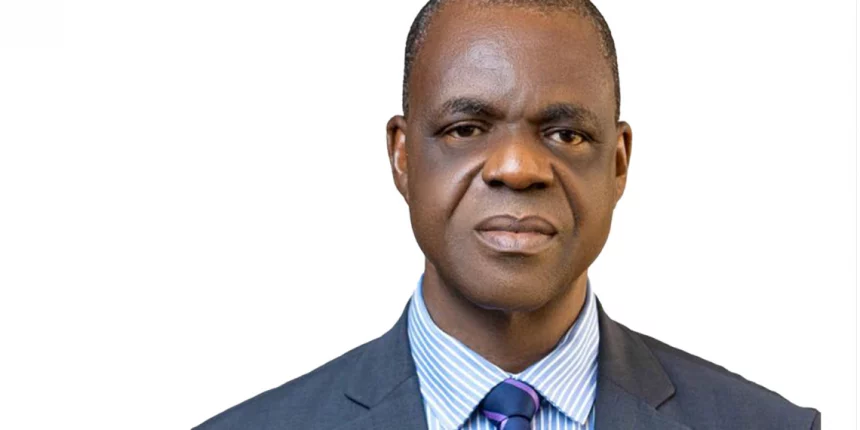
Nigeria’s Code of Conduct Bureau (CCB) has summoned the Chief Judge of the Federal High Court, John Tsoho, following a PREMIUM TIMES investigation that revealed he failed to declare several bank accounts in his asset declaration form, in violation of the country’s Code of Conduct law.
Multiple sources within the CCB told PREMIUM TIMES that the bureau has summoned Justice Tsoho to appear before it and respond to questions regarding the undeclared accounts.
The CCB had expected him on Friday, but he did not appear. Officials said they expect him on Monday.

Documents reviewed and interviews conducted by this newspaper show that in the asset declaration form he completed and submitted to the Code of Conduct Bureau on 29 April 2024, Mr Tsoho did not disclose several bank accounts (naira and domiciliary) as required by law.
Our findings indicate that he failed to declare three separate accounts domiciled with United Bank for Africa, namely 3000087154, 3000201901, and 3000075689.
He also did not disclose his ownership of account number 1756816871, domiciled with Access Bank.
The CCB is the federal agency responsible for addressing conflicts of interest and abuse of office by public servants. Under Nigeria’s Code of Conduct regime, public officers are required to fully disclose all assets, including bank accounts and the funds held in them. Non-disclosure or false declaration constitutes a breach of the law and may attract severe sanctions, including removal from office.
Abdullahi Usman, the chairman of CCB, could not be reached to comment on this report when contacted by PREMIUM TIMES. He also did not respond to a message informing him of our findings and requesting clarification.
However, insider sources told PREMIUM TIMES that if the allegations against Mr Tsoho are substantiated, the bureau will refer the matter to the Code of Conduct Tribunal (CCT).
What the law says
Section 15 of the Code of Conduct Bureau and Tribunal Act mandates every public officer to declare all properties, assets and liabilities immediately after taking office and thereafter at specified intervals. The provision also states that any statement in a declaration found to be false shall be deemed a breach of the Act.
The law further provides that any asset acquired after a declaration and not reasonably attributable to legitimate income, gifts, or approved loans shall be presumed to have been unlawfully acquired unless the contrary is proved.
If found guilty by the Code of Conduct Tribunal, Mr Tsoho could face removal from office, disqualification from holding public office for up to 10 years, and forfeiture of improperly declared assets.
The Tribunal’s powers include ordering the vacation of office and the seizure of property acquired in the abuse or corruption of office. Its decisions are appealable to the Court of Appeal.
A conviction for false asset declaration would draw parallels with the case of Walter Onnoghen, the former Chief Justice of Nigeria, who was controversially convicted and removed from office by the Code of Conduct Tribunal on 18 April 2019 for failing to declare some of his bank accounts.
The tribunal had ordered the forfeiture of five bank accounts belonging to Mr Onnoghen. However, on 4 November 2024, the Court of Appeal reversed his conviction following a settlement agreement between the former CJN and the federal government.
Past controversies
Justice Tsoho is not without controversy, although past allegations against him remain unproven. In November last year, critics alleging underhand dealings attacked him after he suddenly reassigned a receivership case between FBNQuest Merchant Bank/First Trustees and the Nestoil Group.

Earlier in June 2023, some Nigerian anti-corruption activists said they suspected foul play after Mr Tsoho declined to grant an order detaining Godwin Emefiele, the then-governor of the Central Bank of Nigeria, who was then under investigation.
On his publicly available profiles, Mr Tsoho’s birth year is given as 1959. But some critics are accusing him of age falsification, claiming he was born in 1955. There are no indications that this unproven allegation is being investigated by any agency.
Our findings on Mr Tsoho come amid heightened scrutiny within the judiciary. As recently reported by PREMIUM TIMES, the National Judicial Council, chaired by the Chief Justice of Nigeria, Kudirat Kekere-Ekun, has commenced a discreet but extensive probe into allegations involving some senior judges, including false asset declarations.
Sources said the ongoing investigations were triggered by “damning and disturbing petitions” against unnamed judicial officers.

Justice Kekere-Ekun had pledged sweeping reforms to restore transparency, integrity and public confidence in the judiciary. Since assuming office, the NJC has compulsorily retired and sanctioned several judges for misconduct.
Stay ahead with the latest updates!
Join The Podium Media on WhatsApp for real-time news alerts, breaking stories, and exclusive content delivered straight to your phone. Don’t miss a headline — subscribe now!
Chat with Us on WhatsApp