

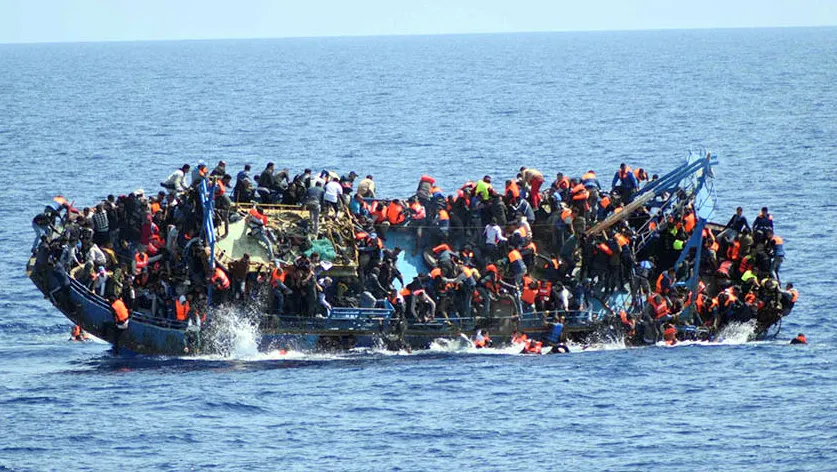
European leaders distance themselves from Trump’s hardline immigration tactics, but how different are their approaches?
Since the 2015 ‘migration crisis’, Europe has pressured African countries into tightening their border security and accepting returned migrants, irrespective of whether these policies are in Africa’s best interest.
And although many European leaders distance themselves from President Donald Trump’s recent immigration tactics, they are parroting some United States’ methods and pursuing previously failed measures through increasingly heavy-handed diplomacy.
Such measures won’t slow migration in the medium and long term. Instead, they could deepen instability in African countries, undermine democracy and transparency and contribute to migration drivers.

On 2 February, United Kingdom (UK) Foreign Secretary Yvette Cooper visited Ethiopia to ‘set out new cooperation on illegal migration from the Horn of Africa.’ The Foreign, Commonwealth and Development Office (FCDO) said around 30 per cent of people crossing the English Channel on small boats in the past two years were from Ethiopia, Eritrea, Somalia and Sudan. In 2024/25, the Home Office granted 99 per cent of Sudanese and 87 per cent of Eritrean asylum seekers protection at first instance.
The visit sought to reduce illegal migration by deepening partnerships with source and transit countries, cooperating to tackle smuggling gangs that organise illegal migration, and speeding up the return of Ethiopians from the UK. The measures came with an undisclosed funding amount and agreements for the two countries’ law enforcement agencies to work more closely together.

To ‘tackle the economic drivers of illegal migration,’ Ms Cooper signed a $400 million Joint Development Agreement to advance two electricity transmission projects, and a job-creation memorandum of understanding with Ethiopia’s Finance Ministry. She announced £17 million in humanitarian funding.
The UK did not publicly mention the Ethiopian government’s role in the 2020-22 Tigray blockade and subsequent humanitarian crisis, which it had previously criticised. Nor did it address the conflict, persecution and humanitarian crises driving migration from Ethiopia, Eritrea, Somalia and Sudan.
Net migration into the UK has fallen from its post-Brexit/COVID-19 peak (908,000 from June 2022-23) to 204 000 (June 2024-25), consistent with levels during the 2010s. In the year ending June 2025, 670,000 non-EU citizens arrived; only 43,309 (6%) by small boat. Most (69%) arrivals were for work and study; 96,000 claimed asylum.
Despite the UK’s relatively manageable migration numbers, regular arrivals and rising labour needs, migration is highly politicised and disproportionately focused on the asylum system. Leaders are under electoral pressure to demonstrate control over arrivals and removals. An active parliamentary petition calling for offshore detention and mass deportation has almost 700,000 signatures, and immigration has overtaken the economy as voters’ top concern.
In November 2025, Home Secretary Shabana Mahmood said the immigration system was ‘not working’ and announced sweeping reforms to curb small boat arrivals, ramp up deportations and end government support of asylum hotels.
Reforms include proposals to repeal asylum seeker benefits, make refugee status temporary, and mandate 30-month reviews of whether conditions are safe to return home. Proposals include extending citizenship eligibility from five years to 20, speeding up deportations of failed asylum seekers, and making it harder to use the European Convention on Human Rights to stop deportations.
In December, the interior ministry imposed visa restrictions on the Democratic Republic of the Congo. It threatened penalties against Namibians and Angolans, saying their governments were refusing to cooperate on deportations of undocumented migrants and criminals. The threats succeeded. In February, the ministry secured cooperation from all three countries and issued warnings to other uncooperative states.
In 2024, only 32 per cent of the UK’s forced removals and 25 per cent of voluntary removals were asylum-related. The highest number of returns in the year ending September 2025 was to Albania, followed by Brazil and India.
The focus on externalising asylum and enforcing returns to Africa is not new. In 2022, the UK brokered a deal to give Rwanda financial assistance in exchange for Rwanda’s acceptance of ‘tens of thousands’ of asylum seekers for processing.
Only four volunteer asylum seekers arrived in Rwanda before the Labour government cancelled the agreement soon after the 2024 elections. On 28 January this year, Rwanda filed a £100 million international arbitration case against the UK, arguing (among other things) that two payments of £50 million remain outstanding.
The EU is similarly pushing through its most restrictive migration rules yet, including detention centres outside the EU and simpler, faster deportations. They also include harsher penalties for those not complying with return orders, a list of ‘safe countries’ that can be fast-tracked through asylum systems, using ‘assertive migration diplomacy’ and downgrading relations with uncooperative countries.

Amnesty International has criticised the EU reforms, saying they mirror the ‘harrowing dehumanising and unlawful mass arrests, detention and deportations to the US.’
Spain, in contrast, announced a regularisation scheme for all irregular migrants who have been in the country for over five months and have no criminal record. Between 500,000 and 800,000 migrants are expected to benefit; nearly 90 per cent of whom are from Latin America.
Since the 1990s, European countries have conducted over 40 migrant regularisation schemes. These enable migrants to work and live legally, contribute to the labour force and tax base, and return home when needed. They are also easier for law enforcement and immigration to track. But these schemes have largely been abandoned.
Africa is affected by multiple conflicts and crises that are driving people from their homes. Wilfully conflating asylum and migration, and coercing African cooperation on detention and forced deportation to appease anti-migrant sentiments in Europe, worsens migration drivers.

European leaders should consider what they are willing to sacrifice to achieve short-term ‘gains’ – and African countries should resist the latest tactics.
Aimée-Noël Mbiyozo, Senior Research Consultant, Migration, Institute for Security Studies (ISS) Pretoria
(This article was first published by ISS Today, a Premium Times syndication partner. We have their permission to republish).
Stay ahead with the latest updates!
Join The Podium Media on WhatsApp for real-time news alerts, breaking stories, and exclusive content delivered straight to your phone. Don’t miss a headline — subscribe now!
Chat with Us on WhatsApp