



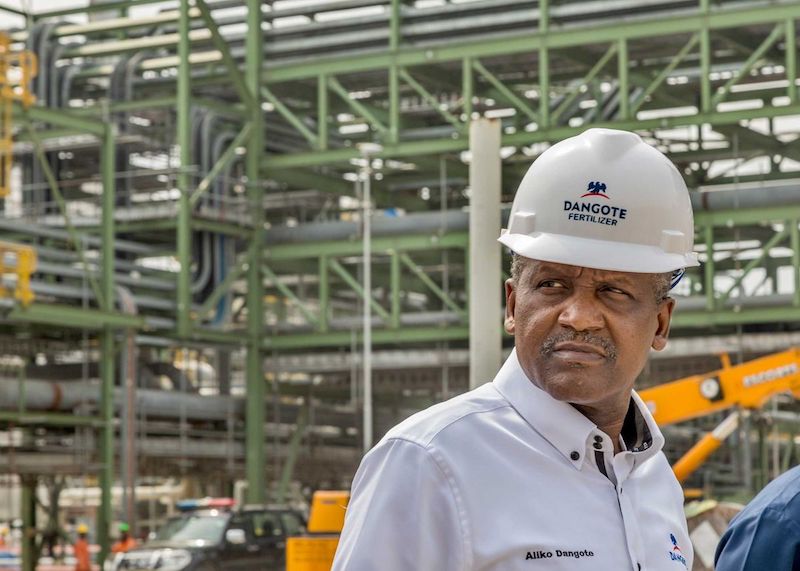
African countries are scrambling for alternative fuel sources as the ongoing United States and Israel conflict with Iran disrupts global energy supply chains, with Nigeria’s Dangote Refinery emerging as a critical fallback for the continent.
A report by Al Jazeera’s Ahmed Idris highlights how countries such as Ghana, South Africa and Kenya are increasingly looking towards Nigeria to cushion the impact of tightening fuel supplies.
However, concerns are growing that a single refinery, even one as large as Dangote’s, may struggle to meet surging continental demand.

The disruption stems largely from instability in the Middle East, particularly around key shipping routes such as the Strait of Hormuz, a vital artery for global oil flows.
The conflict has reduced the availability of refined petroleum products and driven up shipping and insurance costs, creating a ripple effect across fuel-import-dependent economies.
For many African countries, the impact has been immediate. Pump prices have risen sharply, transport costs have increased, and inflationary pressures are intensifying.
In Nigeria, fuel prices have climbed significantly in recent weeks, reflecting the country’s exposure to global market shocks despite being a major oil producer.
Against this backdrop, the Dangote Refinery has taken on new strategic importance. The facility, with a refining capacity of about 650,000 barrels per day, is the largest single-train refinery in the world.
Since reaching full operational capacity earlier in 2026, the refinery has begun exporting refined petroleum products across Africa, supplying countries including Ghana, Cameroon, Tanzania and Togo.
The shift marks a significant turning point for a region that has long depended on fuel imports from Europe and the Middle East. With those traditional supply routes now under pressure, African governments are increasingly turning to regional solutions.
However, experts caution that the refinery’s capacity, though substantial, may not be sufficient to satisfy rising demand across the continent.
Africa’s fuel consumption remains high, and decades of underinvestment in refining infrastructure mean that many countries lack domestic alternatives.
Industry analysts note that while Dangote can meet a portion of the demand, sustained supply will depend on steady crude availability, logistics, and potential expansion of refining capacity.
For Nigeria, analysts say the situation presents both an opportunity and a test. The Dangote Refinery is positioned to reshape regional fuel markets and reduce dependence on imports, but it must now prove it can operate consistently at scale while meeting both domestic and export needs.
Stay ahead with the latest updates!
Join The Podium Media on WhatsApp for real-time news alerts, breaking stories, and exclusive content delivered straight to your phone. Don’t miss a headline — subscribe now!
Chat with Us on WhatsApp