



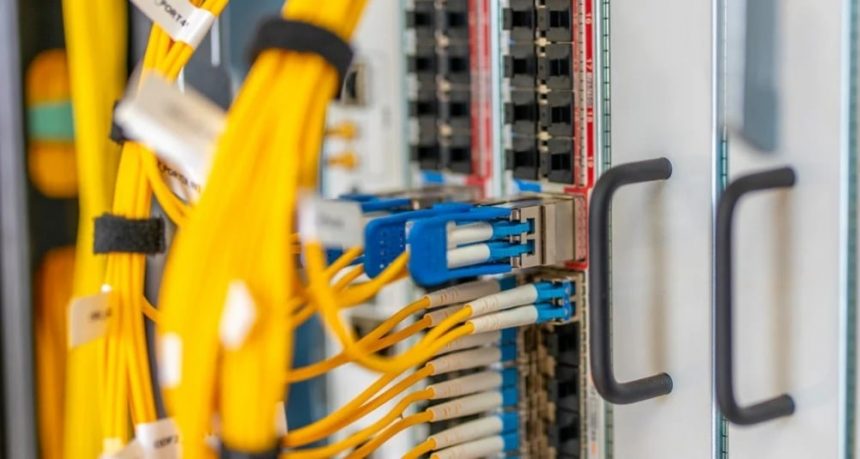
The African Development Bank (AfDB) Group says it has approved a $200 million loan to Nigeria to support a nationwide fibre-optic expansion and digital skills project aimed at boosting job creation.
The project, known as the digital value chain infrastructure for boosting employment (D-VIBE), seeks to deploy 90,000 kilometres of open-access fibre across the country, expanding Nigeria’s backbone network from 30,000 km to 120,000 km.
In a statement on Friday, the bank said the initiative will connect all 774 local government areas, including schools, health facilities, rural communities, and commercial hubs, to high-speed broadband, while also establishing cross-border links with neighbouring countries.

“The African Development Bank Group is providing a $200 million loan as part of an $800 million sovereign financing package for the project, alongside $500 million from the World Bank and $100 million from the European Bank for Reconstruction and Development (EBRD),” the statement reads.
“Total project financing is estimated at $2 billion, and includes an EU grant of €22 million, a $2.6 million Multilateral Cooperation Center for Development Finance (MCDF) project preparation grant, and at least $1.2 billion of investment from the private sector.”
The bank said the project will be implemented as a public-private partnership (PPP) through a special purpose vehicle, with private investors holding a majority stake.
The institution added that the project’s structure is designed to address key constraints to fibre rollout, including high construction and right-of-way costs.
Speaking on the project, Abdul Kamara, the director-general at the AfDB Nigeria, said Nigeria’s growth potential has been constrained by limited digital infrastructure.
“Nigeria has the talent, the market, and the ambition; what it has lacked is the backbone infrastructure to connect that potential to opportunity,” he said.
According to the AfDB, the initiative is also expected to address barriers to digital adoption through skills development programmes, affordable devices, and support for digital platforms in priority sectors.
The AfDB also said the project could create up to 2.8 million jobs over its lifecycle and increase broadband penetration from 45 percent to about 70 percent by 2030.
Stay ahead with the latest updates!
Join The Podium Media on WhatsApp for real-time news alerts, breaking stories, and exclusive content delivered straight to your phone. Don’t miss a headline — subscribe now!
Chat with Us on WhatsApp