Nigeria’s democratic challenges are often framed as failure. Yet a recent intervention in Brussels shows they are better understood as early warnings, offering lessons Europe itself is beginning to confront.
Since stepping away from active party politics in Belgium a little over a year ago, I have found renewed purpose in acting as a translator of democratic experience between Africa and Europe. It is a role shaped by contrast, by seeing how similar democratic failures wear different institutional clothing across continents.
That perspective proved invaluable when I was asked to facilitate a Nigerian parliamentarian, Hon. Jesse Okey-Joe Onuakalusi, on a visit to Brussels. He was attending the VII Transatlantic Summit under the theme “Free Speech vs. Regulated Speech: Strengthening the Pillars of Democracy,” and in specific terms addressing European lawmakers on truth, dialogue, and the erosion of democratic trust. For many Africans, the symbolism alone mattered. Nigeria was not being summoned for correction but invited for reflection.

Watching a Nigerian parliamentarian take the floor inevitably brought to mind conversations back home where citizens ask, often bitterly, whether their votes still matter. In that moment, Nigeria was not being discussed as a problem to be solved, but as a democracy with lessons to offer. While many Nigerians doubt the value of democratic participation, European lawmakers listened intently to a Nigerian voice explain what happens when truth disappears from public debate. It was both affirming and unsettling. It was affirming because Nigeria’s experience mattered, unsettling because it came at such a cost.
The timing of that Brussels intervention was, however, impossible to ignore. The very week a Nigerian parliamentarian was addressing European lawmakers on truth, dialogue, and democratic trust, Nigeria’s Senate was voting on amendments to the Electoral Act that reignited deep public controversy at home, particularly around the credibility of electronic transmission of election results. While Nigerian democracy was being articulated abroad as a cautionary tale and a source of insight, it was simultaneously being contested domestically as citizens once again questioned whether the rules of the game were shifting away from them. The coincidence was unsettling, but instructive.
Nigeria’s democratic struggles are too often reduced to failure narratives. These are low voter turnout, misinformation, institutional paralysis. Yet this framing misses the point. Nigeria is not failing democracy in isolation. It is experiencing, in concentrated form, the stresses now confronting democracies everywhere. Voter disengagement in Nigeria is not apathy. It is protest by withdrawal. When citizens no longer believe that public debate is truthful or that elections produce accountability, participation becomes optional. This did not emerge overnight, nor is it uniquely Nigerian. Europe is beginning to confront the same phenomenon, only more quietly and with greater institutional cushioning.
Misinformation has played a central role in this erosion of trust. Identity politics, toxic rhetoric, and deliberate falsehoods have crowded out reasoned debate. Once truth becomes negotiable, democracy loses its moral anchor. What follows is not freedom, but fatigue. Extremism thrives where trust disappears.
Importantly, the Brussels intervention by Honourable Onuakalusi did not romanticise unregulated speech. Nigeria’s experience demonstrates that laws alone cannot rescue democracy. Electoral laws, cybercrime statutes, and freedom-of-information frameworks already exist. What is missing is public confidence that regulation serves citizens rather than elites. Regulation without legitimacy deepens suspicion instead of restoring trust.
The deeper lesson for Africa is this: democracy does not collapse because institutions fail first. Democracy collapses because dialogue fails. When political actors stop explaining, listening, and persuading, citizens stop believing. Elections then become rituals devoid of meaning.
Africa’s relationship with Europe is often framed as one of instruction and imitation. Yet moments like the Onuakalusi Brussles outing suggest something more equal and more useful. Africa brings lived experience of democratic fragility, forged not in theory but in consequence. It offers not perfection, but warning.
Nigeria’s challenges should not be a source of embarrassment. They should be a source of clarity. They remind us that democracy is not sustained by constitutions alone, but by trust, dialogue, and a shared commitment to truth in public life. If Europe is now listening, it is not out of charity. It is out of recognition. Africa’s democratic struggles are not warnings from the margins. They are signals from the future.
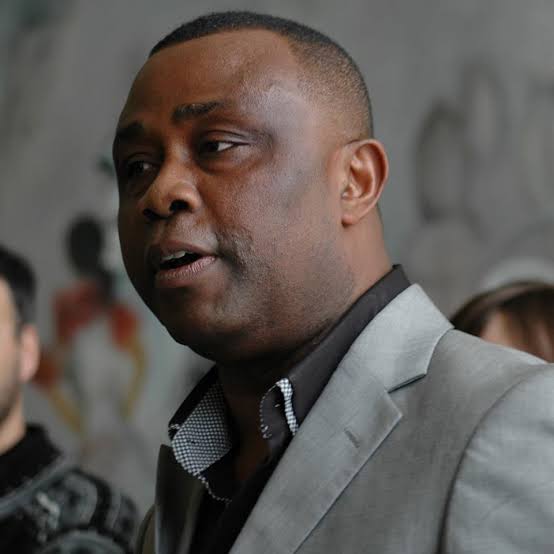
The author, Collins Nweke is an International Trade Consultant & Economic Diplomacy researcher. He was a former Green Councillor at Ostend City Council, Belgium, where he served three consecutive terms until December 2024. A first-generation migrant who transitioned from civil society activism into elected office, he writes frequently on democracy, governance, and Africa–Europe relations. He is the author of the forthcoming book ‘Economic Diplomacy of the Diaspora’. He is also a Distinguished Fellow of the International Association of Research Scholars and Administrators, serving on its Governing Council. A columnist for The Brussels Times, Proshare, and Global Affairs Analyst with a host of media houses, Collins writes from Brussels, Belgium. Contact: admin@collinsnweke.eu
Stay ahead with the latest updates!
Join The Podium Media on WhatsApp for real-time news alerts, breaking stories, and exclusive content delivered straight to your phone. Don’t miss a headline — subscribe now!
Chat with Us on WhatsApp