



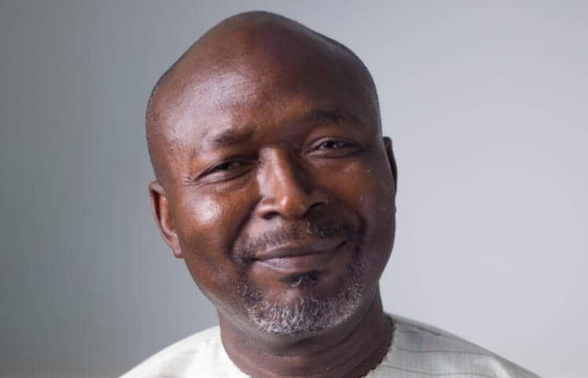
Last weekend, I attended a surprise 60th birthday celebration in Lagos organised in honour of Dr Agbo Abayomi Adegbamigbe by his beautiful wife, Olufunmilayo, and their children. It was a gathering of family members, friends, colleagues, theatre practitioners and academics. Some were physically present, while others sent their goodwill messages and birthday wishes. As expected of a Lagos celebration, there was plenty of food, exotic wine, music and the usual social excitement that accompanies such occasions. There were also praise songs, prayers and thanksgiving. It was a fitting celebration for a man who has spent a considerable part of his life in education and the theatre.
But beyond the excitement, the photographs, the speeches and the birthday tributes was the man himself. Who exactly is Agbo Abayomi Adegbamigbe, and what has his journey contributed to Nigerian theatre? I have known Yomi as a friendly, quiet and unassuming person. He carries himself without unnecessary airs, even with the experience and achievements he has accumulated over the years. Yet, behind that modest disposition is a man whose life has been closely connected with the development of theatre practice, performance and scholarship in Nigeria.
Born on November 17, 1966, into the family of Chief Adedurotimi Abayomi Adegbamigbe and Mrs Eunice Waleade, he was originally christened Agboade Abayomi Adefolarin. His journey began in Ile-Oluji, Ondo State, where he attended St Peter’s Primary School in 1971. He later proceeded to Gboluji Anglican Grammar School, also in Ile-Oluji. His interest in the performing arts would eventually take him to the University of Ilorin in 1983, where he studied Performing Arts and graduated with a Bachelor of Arts degree in 1987.

It was at Ilorin that Yomi began to establish himself as an actor. He was not just a student interested in the theory of theatre. He was actively involved in stage performances and television productions at NTA Ilorin. Like many young people trying to find their feet, he took on different engagements to support himself, using the little money he earned from television and other performances to supplement the support he received from his mother and his late elder sister, Mrs Febisola Kalu.
After his National Youth Service at the Federal University of Technology, Owerri, in Imo State, he returned to Lagos and worked as an educator while continuing to pursue acting opportunities. In 1989, he joined the Ondo State Teaching Service Commission and was posted to Igbotako Community Grammar School to teach English Language and Literature. However, his interest in theatre remained strong. He subsequently worked with the late Professor Ade Obayemi at the Okun Cultural Centre in Iffe-Ijumu, Kogi State. At the time Professor Ade Obayemi was the Director General of the National Commission for Museums and Monuments, Lagos.
His professional journey would bring him into contact with some of the most influential figures in Nigerian theatre. One of these was the late Professor Ola Rotimi, whose contribution to Nigerian drama remains significant. At the end of 1990, encouraged by his friend, Wunmi Raji, now a Professor of Drama at Obafemi Awolowo University, Ile-Ife, Adegbamigbe enrolled for a master’s programme in Literature in English at the Department of Modern European Languages, University of Ilorin. This was an important intervention in his academic journey, as the encouragement helped set him on a path that would eventually combine theatre practice with scholarship.
After completing the first semester of the master’s programme, Adegbamigbe joined Rotimi’s African Cradle Theatre as an actor. He participated in the NIB-sponsored production of Ovonramwen Nogbaisi. Rotimi subsequently offered him an appointment as a resident artiste with the theatre company based at Eleweran, Ile-Ife.
He was also involved in another NIB-sponsored production of Rotimi’s Kurunmi. These experiences placed him within the professional theatre environment at a time when Nigerian stage productions were still attracting considerable attention and providing opportunities for young actors to learn from established practitioners. However, the political crisis that followed the annulment of the June 12, 1993 presidential election disrupted several institutions and professional activities. African Cradle Theatre was eventually disbanded, and its members were released. Adegbamigbe subsequently went through administrative procedures to return to the University of Ilorin and complete his master’s programme. He eventually did.
His journey was not a straight line from acting to academic success. In 1994, he joined Abacus Computer Services Limited in Ikeja, his elder brother’s computer firm, as Operations Manager. But even while pursuing other professional interests, theatre remained part of his life. In 1996, while freelancing as an actor in another NIB-sponsored production of Rotimi’s Kurunmi, he received the painful news of his elder sister’s death.
By 2010, he had found his way into full-time academia at Adekunle Ajasin University, Akungba-Akoko, Ondo State. This marked an important phase in his career. Working alongside Professor Tayo Oloruntoba-Oju and Professor Femi Mimiko, who was then the university’s vice-chancellor, he contributed to efforts to establish the Ajasin Varsity Theatre and the Department of Performing Arts.
He eventually obtained his doctorate in Performing Arts from the University of Ilorin in 2019. His doctoral research examined production processes and the effectiveness of applied theatre, particularly through the experiences of the Nigerian Popular Theatre Alliance and Ahmadu Bello University’s Samaru Project. The research explored an important question: how can theatre become more than entertainment and help communities understand and address their problems? This question has remained central to much of his subsequent work.
Adegbamigbe’s theatre practice has extended beyond the university stage. Through Forepage Productions, he managed a theatre outfit that developed a production known as Value Drama, which was performed in major Nigerian cities during the 2008 Stanbic-IBTC merger. He also consulted for Dansol High School, where he introduced applied theatre workshops for teachers. His interest in community theatre is particularly noteworthy. He believes that theatre should engage with the everyday experiences of ordinary people rather than remain confined to university lecture rooms and conventional performance spaces.
One example is All for Peace, a community theatre production developed with students of the Department of Performing Arts at Adekunle Ajasin University. The production addressed environmental sustainability through the story of students living in a poorly maintained building beside a canal. The conditions around the building, including inadequate sanitation and the dangers posed by flooding, provided the basis for a dramatic exploration of environmental responsibility. The production was staged not only on the university campus but also at the palace of the traditional ruler and in the town’s market square. This was a deliberate return to the communal tradition of African theatre, where performances were taken to the people rather than waiting for audiences to come into conventional theatre spaces.
His interest in this approach is also reflected in his academic publications. In a 2026 journal article co-authored with Taiwo Afolabi, titled Content, Methodology and Context in the Applied Theatre Intervention of All for Peace in Akungba Community, he examined how theatre could encourage community participation, environmental awareness and collective action.
He has also published Museum, Museum Theatre and the African Perspectives of Living Museum in the KIU Interdisciplinary Journal of Humanities and Social Sciences in 2025. The paper challenges the tendency to view museums and museum theatre mainly through Western historical experiences. It draws attention to African traditions of preserving and presenting cultural objects, history and collective memory through festivals, palaces, shrines and community spaces. His creative work also includes Justice to the Swine, a play selected for a reading programme at the National Theatre, Lagos, in 2021. It was an indication that his engagement with theatre is not limited to research and teaching but includes the creation of dramatic works.
Beyond the university, he has also been involved in efforts to revive interest in drama among secondary school students. In 2022, he served as programme director of the maiden Ile-Oluji School Drama Contest, organised by Culture Creed Nigeria. The initiative brought secondary school students together to perform works by established Nigerian playwrights, including Ola Rotimi, Wole Soyinka, Femi Osofisan and Zulu Sofola.

For Adegbamigbe, drama is not simply about the glitz of performance. It is a tool for education, cultural preservation and self-discovery. That philosophy explains why he has continued to invest in projects that expose younger generations to the possibilities of theatre. His research interests cover African drama, community theatre and museum theatre. He draws considerably on the ideas of Brazilian educator and philosopher Paulo Freire, particularly the belief that education should encourage people to question their circumstances and participate in changing them.
He has also been associated with the Centre for Socially Engaged Theatre, where his profile identifies his research interests and community theatre projects. This connection further reflects the wider relevance of his work beyond the immediate university environment. Today, Adegbamigbe is a senior academic and the immediate past Head of the Department of Performing Arts at Adekunle Ajasin University. His journey from a young actor at the University of Ilorin to working with Ola Rotimi, and eventually becoming a university teacher, researcher, playwright and theatre practitioner, is worth celebrating.
There is something particularly admirable about people who do not abandon their passions even when life takes them through different professional experiences. Yomi’s story is one of persistence, reinvention and commitment to a chosen field. But perhaps the most important lesson from his 60th birthday celebration is the value of recognising people while they are still here to receive the appreciation. Too often, we wait until people are no longer around before we begin to celebrate their contributions.
The gathering in Lagos was therefore more than a birthday party. It was an opportunity to acknowledge a man whose life has been spent teaching, performing, researching and helping others discover the possibilities of theatre. As the birthday songs faded and the guests departed, what remained was the story of a man who has quietly made his contribution to Nigerian theatre and academia. Happy 60th birthday, Dr Agbo Abayomi Adegbamigbe. May the years ahead bring you more opportunities to teach, create, mentor and contribute to the development of theatre in Nigeria.

Olupohunda can be contacted via X @BayoOlupohunda
Views expressed by contributors are strictly personal and not of TheCable.
Credit: The Cable
Stay ahead with the latest updates!
Join The Podium Media on WhatsApp for real-time news alerts, breaking stories, and exclusive content delivered straight to your phone. Don’t miss a headline — subscribe now!
Chat with Us on WhatsApp