



Leaders push multinational force, military support and winter energy, Black Sea ceasefires as peace talks gather momentum
BERLIN – The leaders of Germany, France and the United Kingdom have reaffirmed a sweeping commitment to Ukraine’s military defence, economic survival and post-war security, backing €90 billion in European Union assistance, tougher sanctions against Russia and the possible deployment of a European-led multinational force once a ceasefire is reached.
The commitments, contained in a joint statement issued after a meeting of the Coalition of the Willing, Ukraine and the United States in Berlin on Thursday, underscored European determination to prevent Ukraine from being left vulnerable to renewed Russian aggression in any eventual peace settlement.

The leaders said Ukraine must have robust and legally binding security guarantees once a ceasefire takes effect, outlining possible arrangements involving sustained military assistance, ceasefire monitoring and a multinational force supported by the United States.
They also reaffirmed their commitment to providing Ukraine with long-term political, diplomatic, military, financial and civilian assistance, insisting that Russia would not outlast the resolve of its international supporters or Ukraine’s resistance.
*€90bn EU loan, €70bn NATO military aid*
Under the European Union’s Ukraine Support Loan, €90 billion is expected to be provided for military and financial assistance by the end of 2027, covering Ukraine’s financial requirements well into that year.
The leaders said they would continue working with Ukraine and international partners, including the Group of Seven, to address its financing needs beyond 2027 while pressing Kyiv to implement agreed reforms, particularly in strengthening the rule of law and combating corruption.
They also reaffirmed a NATO commitment to provide €70 billion in military equipment, assistance and training to Ukraine in 2026, with at least equivalent levels of support expected in 2027.
As winter approaches, the leaders said strengthening Ukraine’s air defence capabilities, particularly systems capable of intercepting ballistic missiles, remained a priority, pledging additional efforts with third countries to provide missile defence equipment to protect civilians and critical infrastructure.
*Tougher sanctions on Moscow*
The statement also signalled a tougher economic offensive against Moscow, with the leaders committing to expand sanctions, clamp down on sanctions evasion, target Russian oil and gas revenues, cryptocurrency and illicit financial flows, and disrupt the country’s military-industrial complex.
They further pledged to intensify efforts against Russia’s shadow fleet, which they said facilitates sanctions circumvention, while protecting maritime security and international shipping rules.
*Security guarantees and multinational force*
On security guarantees, the leaders proposed a framework that could include sustained military, financial and technical assistance to maintain Ukraine’s armed forces, participation in a United States-led ceasefire monitoring and verification mechanism, and a European-led Multinational Force Ukraine comprising willing countries with American support.
The proposed force would provide reassurance measures in the air, at sea and on land, while supporting the rebuilding of Ukraine’s military capacity.

The framework could also include a legally binding commitment, subject to national procedures, to take measures to restore peace and security if Russia launches another armed attack against Ukraine.
The leaders welcomed the ongoing Koalicja-2026 multinational force exercise, held mainly in Poland, describing it as evidence of the proposed force’s credibility, preparedness and capacity to deploy.
*Push for peace, winter ceasefires*
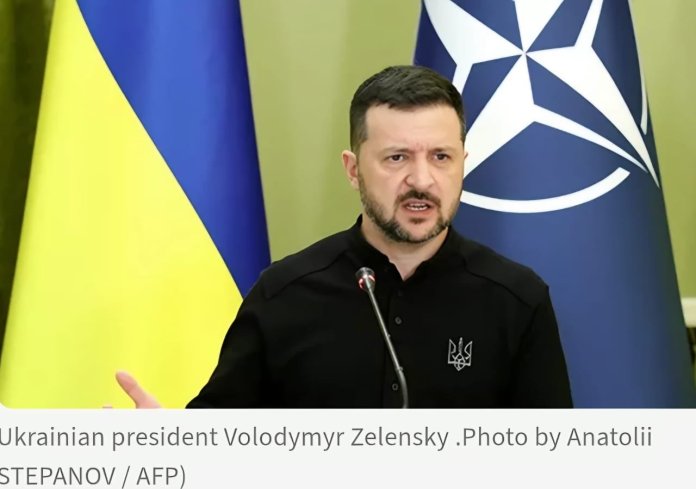
On diplomatic efforts, the European leaders reiterated support for a comprehensive, just and lasting peace, commending Ukrainian President Volodymyr Zelenskyy’s willingness to accept an immediate ceasefire and engage in meaningful negotiations.

They backed direct dialogue between Ukraine and Russia with the participation of the United States and Europe, insisting that the immediate priority should be ending hostilities.
However, they stressed that any settlement must respect Ukraine’s sovereignty, territorial integrity and right to choose its own security arrangements and alliances, warning that international borders must not be altered by force.
The leaders also maintained that Russian sovereign assets would remain frozen until Moscow ended its war and compensated Ukraine for the damage caused.
They said broader European security negotiations would not be possible while Russia continued its aggression, adding that discussions involving the European Union and NATO would require the consent of their respective members.
In a push for immediate measures to reduce the impact of the conflict, the leaders called on Russia to agree to an energy ceasefire for the duration of the winter and a separate ceasefire to facilitate food exports through the Black Sea, citing the importance of safe navigation to global food security.
The statement condemned Russia’s continued missile and drone attacks on Ukrainian civilians and infrastructure, as well as alleged sabotage, cyberattacks and information operations across Europe aimed at weakening support for Kyiv.

The leaders insisted that such intimidation would not diminish their backing for Ukraine but would strengthen their resolve to reinforce the defence of Ukraine, Europe and NATO.
Stay ahead with the latest updates!
Join The Podium Media on WhatsApp for real-time news alerts, breaking stories, and exclusive content delivered straight to your phone. Don’t miss a headline — subscribe now!
Chat with Us on WhatsApp