




ABUJA – The Independent National Electoral Commission (INEC) has proposed a Democratic Freedoms Compact to safeguard fundamental human rights, protect civic space and strengthen public confidence ahead of the 2027 general elections.
The compact is designed to guarantee freedom of expression, association and political participation, promote inclusiveness, ensure electoral transparency and accountability, and prevent violence, intimidation and other human rights violations during the electoral process.
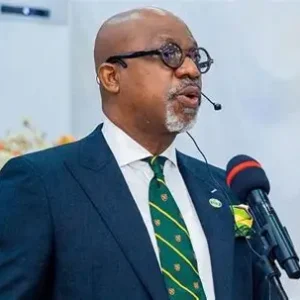
INEC Chairman, Prof. Joash Amupitan, SAN, unveiled the proposal in a keynote address delivered on his behalf by Dr Hassan Umar at the 2026 Civil Society and Human Rights Defenders Forum on the State of Human Rights in Abuja on Wednesday.


The forum, organised by the National Human Rights Commission (NHRC) in collaboration with the European Union (EU), was themed “Protecting Human Rights in Civic and Political Spaces in the 2027 Elections.”
Amupitan said the credibility of the 2027 elections would be determined not only by voting and collation of results but by the extent to which Nigerians can freely express opinions, associate, campaign and participate without fear, discrimination or violence.
He warned that regular elections alone cannot sustain democracy if citizens are denied freedom to express dissenting views, organise, criticise government policies and hold public institutions accountable.
To address this, he said the proposed compact would be built around six commitments: protection of fundamental freedoms, inclusive participation, transparent elections, accountability for human rights violations, peaceful political competition and constructive engagement among stakeholders.
He called for stronger collaboration among INEC, NHRC, security agencies, civil society and the media to monitor, document and respond to violations before, during and after the elections.
He reaffirmed INEC’s commitment to credible elections, equal treatment of parties and candidates, transparency and inclusive participation.
On electronic transmission of results, he said the Electoral Act 2026 provides for electronic transmission, while INEC has developed guidelines to address technical and communication challenges. He urged parties and stakeholders to familiarise themselves with the guidelines to avoid misinterpretation.
He also tasked security agencies to protect voters, candidates, officials, observers and journalists, insisting they must operate professionally and impartially, and that their presence should reassure citizens, not intimidate them.
Earlier, Executive Secretary of the NHRC, Chief Anthony Ojukwu, warned that Nigeria’s democratic space faces mounting challenges as the 2027 elections approach.
He listed political intimidation, arbitrary arrests, harassment of journalists and defenders, hate speech, restrictions on civic participation and exclusion of vulnerable groups as threats to credibility.
He said the forum came at a defining moment, with presidential and National Assembly elections scheduled for January 16, 2027, and governorship and State Houses of Assembly polls for February 6.
He stressed that democracy is not sustained by elections alone but by freedoms enjoyed between elections — to speak without fear, assemble peacefully, associate freely and choose leaders without intimidation.
Citing Sections 14, 39 and 40 of the 1999 Constitution and the African Charter on Human and Peoples’ Rights, he said sovereignty belongs to the people and the law guarantees participation and fundamental freedoms.

Ojukwu expressed concern that civil society, journalists and defenders operate in an increasingly difficult environment marked by harassment, arbitrary arrests and potential misuse of laws, including provisions of the Cybercrimes Act.
He also flagged voter intimidation, exclusionary nomination fees that could shut out women, youths and persons with disabilities, hate speech, incitement and absence of accountability for electoral offences. Failure to prosecute offenders, he warned, encourages impunity.
He disclosed that NHRC has established a comprehensive monitoring architecture, including a Human Rights Situation Dashboard, a human rights advisory and an Election Situation Room to track intimidation, suppression of participation, harassment of journalists and violations of fundamental freedoms.
The Commission is finalising an advisory on protecting political space and the right to participation — a flagship contribution ahead of 2027 — following its February 2025 advisory on freedom of expression and the Cybercrimes Act.

He said NHRC is documenting violations, preparing cases for investigation and engaging INEC, security agencies, the National Peace Committee and others. Its Situation Room will remain operational, with dashboards and bulletins published regularly, monitors deployed to hotspots and legal aid partnerships activated.
He announced the forum will become a structured platform for sustained engagement with CSOs, with quarterly meetings, early-warning information sharing and rapid-response mechanisms, plus coordination between the NHRC Situation Room and the Civil Society Election Situation Room.
The forum will also adopt an outcome statement with recommendations and a roadmap.
“When elections go without violence, it is because of the work done long before polling day. Work that is sometimes invisible to the public,” Ojukwu said.
Also speaking, EU Ambassador to Nigeria and ECOWAS, Gautier Mignot, reaffirmed EU commitment to supporting Nigeria’s democratic institutions and protecting civic and political freedoms.
He described the theme as timely against reports of election-related violence, hate speech, intimidation and restrictions on rights, warning such incidents erode trust and discourage participation.

Free civic and political spaces — independent media, peaceful assemblies, public forums and CSOs — are essential for credible, transparent and inclusive elections, he said, enabling citizens to access information, debate, scrutinise candidates and hold leaders accountable.
Weakening these safeguards, he said, could undermine political participation and allow suppression of opposition and manipulation of democratic rules.
He urged all stakeholders to ensure a free, fair and credible process, noting the EU’s partnership with NHRC since 2024 and disclosing a new project with additional funding is in preparation.
The EU will examine the forum’s recommendations and share them with its authorities and member states, he pledged.
In a goodwill message on behalf of IPAC Chairman, Alhaji Yusuf Dantale, Prince Chinedu Obi urged parties to embrace issue-based campaigns, tolerance and responsible communication, cautioning against violence, hate speech, voter suppression and intimidation, and advocating inclusion of women, youths and persons with disabilities.
Dantale said public confidence will depend on whether institutions guarantee that votes count and rights are freely exercised.
The forum brought together government institutions, diplomatic missions, political parties, civil society, the media and human rights groups to assess human rights and develop strategies for protecting civic and political freedoms ahead of 2027.
Stay ahead with the latest updates!
Join The Podium Media on WhatsApp for real-time news alerts, breaking stories, and exclusive content delivered straight to your phone. Don’t miss a headline — subscribe now!
Chat with Us on WhatsApp