




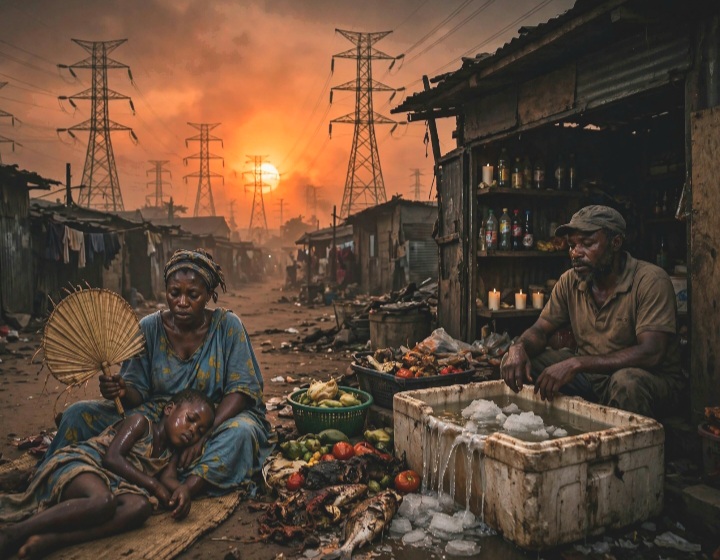
For many Nigerians, this is no longer just discomfort — it is a fight to stay safe, healthy and sane. The government may still be arguing over gas, water and who is to blame, but your safety cannot wait for their 72-hour promises
The heat is punishing, the power is gone, and for many Nigerians, this is no longer just discomfort — it is a fight to stay safe, healthy and sane. While government agencies trade blames. As a part of our solution journalists series, Platforms Africa presents five practical ways poor and middle-class families can survive the El Niño heatwave and blackout:
1. Stay Hydrated, Stay Cool Without Power
Drink water regularly, even before you feel thirsty. Avoid sugary drinks, excess alcohol and very hot meals in the afternoon. Soak a wrapper or towel in cool water and place it on your neck, wrists or feet. Sleep on a mat on the floor where it is cooler, open windows on opposite sides for cross-ventilation, and fan children and the elderly often. If you have a rechargeable fan, charge it whenever power returns, even for a few minutes.

2. Protect Your Food, Water And Medicine
Heat spoils food fast. Cook only what you can finish in one sitting. Keep drinking water in covered, clean containers in the coolest part of the house. Buy ice in small quantities and use a cooler or insulated flask.
For medicines that need cold storage, like insulin, ask your pharmacist or nearest health centre for safe storage options during outages. Throw away food that smells off — food poisoning is more dangerous in this heat.
3. Save Your Phone, Torch And Power Bank
Your phone is your lifeline for news, emergency calls and mobile money. Put it on battery saver, reduce brightness and switch off data when not in use. Keep a power bank fully charged and a solar lamp or torch with extra batteries. Avoid using candles near curtains, mattresses or fuel — one fire in a dark, crowded house can destroy everything.
4. Protect Children, The Elderly And The Sick
They suffer first in a heatwave. Watch for signs of heat exhaustion: heavy sweating, weakness, dizziness, headache, nausea and fast heartbeat. Move the person to a cooler place, give them water in small sips, and cool their body with a wet cloth. Do not leave children or elderly people alone in hot, locked rooms.
Check on neighbours, especially those living alone.
5. Cut Generator Risk And Cut Costs
If you must use a generator, never run it inside the house, kitchen or corridor — carbon monoxide kills silently. Keep it outside, far from windows and doors. Share fuel costs with neighbours where possible, or agree on joint charging hours. Use the generator only for essentials: charging phones, fans and preserving food, not for running every appliance at once.
Bottom line: The government may still be arguing over gas, water and who is to blame, but your safety cannot wait for their 72-hour promises. Drink water, stay cool, protect your food and look out for your neighbours. In this heat and darkness, community is the real power supply.
Source: Platforms Africa
Stay ahead with the latest updates!
Join The Podium Media on WhatsApp for real-time news alerts, breaking stories, and exclusive content delivered straight to your phone. Don’t miss a headline — subscribe now!
Chat with Us on WhatsApp