




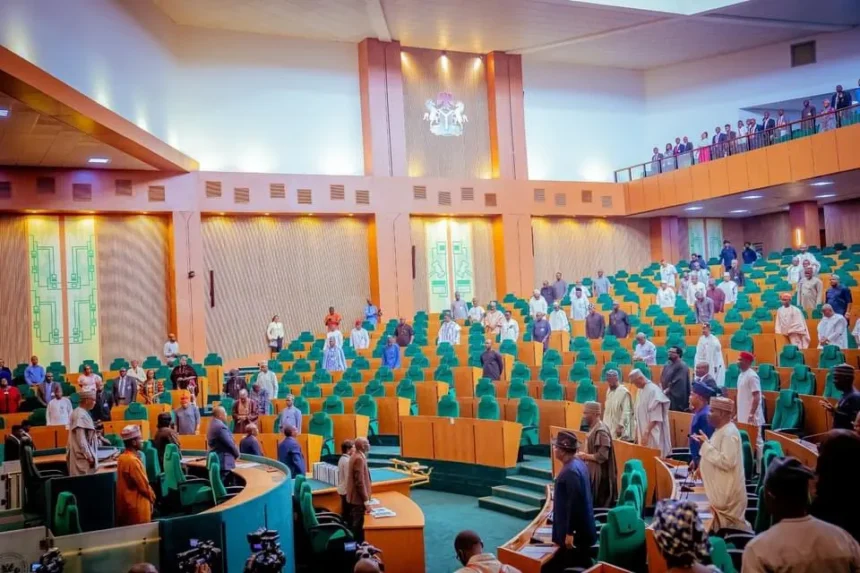
The House of Representatives has called for a comprehensive regulatory framework for Nigeria’s real estate sector to curb fraudulent practices, protect homebuyers and unlock investment in the country’s housing market.
The Chairman of the House Committee on Housing and Habitat, Abdulmumini Jibrin, said the proposed National Real Estate Regulatory Authority would address longstanding institutional gaps, overlapping responsibilities and weak consumer protection that had hindered the sector’s growth.
Jibrin made the call on Monday in Abuja at a stakeholder conference on the proposed National Real Estate Regulatory Authority, with the theme, “One vision, one ecosystem, one National Housing and Real Estate Plan.”

He said an assessment of the sector since he assumed office had shown that Nigeria was yet to harness its enormous housing and real estate potential, largely because of inadequate regulation and the absence of a coordinated national framework.
The lawmaker said although the Minister of Housing and Urban Development was responsible for driving government policies in the sector, several agencies and institutions operating within the housing ecosystem fell outside the ministry’s direct jurisdiction, resulting in institutional gaps and duplication of functions.
“There are enormous challenges. We have a wonderful Minister of Housing. But as the Minister of Housing of the Federal Republic of Nigeria, he does not have jurisdiction over all the agencies and institutions that have to do with housing. There is a link; there is a gap. So, there is duplication of functions,” he said.
Jibrin said the challenges extended beyond the activities of property developers, noting that consumers also required adequate protection, information and financial awareness before committing to property transactions.
He observed that some prospective homeowners entered into housing agreements they could not afford, while others failed to appreciate how inflation, economic realities and changes in government policies could affect developers’ ability to deliver projects as initially agreed.
He said a properly regulated sector must establish clear responsibilities for developers and consumers, provide effective dispute-resolution mechanisms and ensure that all stakeholders operated within defined standards.
The committee chairman described the real estate sector as a major contributor to Nigeria’s Gross Domestic Product, with the potential to expand its contribution if its opportunities were properly harnessed.
He said, unlike sectors such as oil and gas, power and telecommunications, real estate had continued to operate with significant regulatory loopholes, allowing individuals to engage in property development without adequate scrutiny or accountability.
Jibrin noted that some individuals could present property brochures to unsuspecting Nigerians and collect money without any effective institutional mechanism to verify their credentials, business operations or capacity to deliver.
He said the proposed legislation was intended to address the gap by establishing a national regulatory framework that would strengthen existing institutions without undermining their statutory responsibilities.
The lawmaker also dismissed concerns that the proposed authority would encroach on the constitutional powers of state governments or take over the functions of established professional bodies.
“The bill to create the National Housing Regulatory Authority is not going to take over the powers of any state government. We are not going to compete. We are only going to cooperate. And for professional bodies, nobody is taking away your responsibility. It will be protected.
“For government agencies, it will strengthen you and ensure that every government agency is empowered to perform its statutory role according to its Act,” he added.

Jibrin said the proposed authority should be seen as a strategic intervention to address institutional deficiencies and unlock the economic potential of the housing sector, rather than another regulatory agency.
In his remarks, the Minister of Housing and Urban Development, Muttaqha Darma, said the Federal Government was intensifying efforts to address the structural and institutional challenges confronting the sector.
Darma disclosed that the ministry had held a similar stakeholder engagement in July, during which issues surrounding Nigeria’s housing deficit were examined and validated, with estimates indicating a shortfall of more than 50 million housing units.
He said access to mortgage financing remained significantly low despite Nigeria’s estimated population of about 240 million, limiting the ability of many citizens to acquire decent and affordable homes.

“Our population, as of today, is estimated to be about 240m. But, as speakers after speakers mentioned, mortgage penetration is very low. It is less than 10 per cent, as against 38 per cent in Malaysia and 40 per cent in South Korea,” he said.
The minister observed that although Nigeria had the Federal Mortgage Bank and other mortgage institutions, the volume of mortgages accessed annually remained inadequate to meet the country’s housing needs.
He also recalled that the built environment and real estate sector had been identified as the third-largest contributor to the Nigerian economy, stressing the need for an enabling environment to improve its performance.
Darma expressed the ministry’s support for the proposed regulatory authority, saying it could provide a coordinated approach to housing development, real estate investment and mortgage financing.
He, however, urged stakeholders to consider placing the proposed authority within the Ministry of Housing and Urban Development to ensure effective coordination and alignment with existing government policies.
According to him, countries including Singapore, Dubai, Malaysia, the United Kingdom and Rwanda have established similar regulatory institutions within ministries responsible for housing and the built environment.

He also called for a coordinated relationship between the proposed authority, the National Housing Finance Authority and the mortgage policy being developed by the Federal Government and awaiting presidential consideration.
Also speaking, the Managing Director and Chief Executive Officer of the Ministry of Finance Incorporated, Dr Armstrong Takang, commended the House for sustaining collaboration with the Executive to address challenges in the housing and real estate sector.
Takang said the Presidency and the Federal Government were prepared to give the proposed legislation a fair and thorough consideration, particularly in addressing concerns about the country’s existing legal and institutional framework.
He identified the relationship between the proposed legislation and the Land Use Act as one of the issues requiring careful examination, alongside the regulation of professional practices and the need to avoid excessive regulation that could discourage private investment.
Takang also urged stakeholders to develop a regulatory structure that would complement existing government institutions without unnecessarily increasing recurrent expenditure.
“To what extent are we going to address the regulation of practice in this sector? To what extent are we also going to ensure that the sector is not overregulated? And how do we create this new agency and fit it into the existing structure of government in a way that we do not expand the recurrent expenditure framework of government?” he queried.
He assured participants of the government’s readiness to partner with stakeholders to develop a transparent and sustainable housing and real estate sector capable of attracting investment and delivering greater economic benefits.
In his keynote address, the Speaker of the House of Representatives, Tajudeen Abbas, called for a centralised and digitised real estate administrative system to simplify property transactions, strengthen public confidence and make Nigeria’s housing market more attractive to local and international investors.
Abbas said there was a need for a reliable digital linkage between property ownership records and the identities of property owners, as well as between buyers and sellers, to address fraud, multiple ownership claims and disputes associated with land and property transactions.
In his address titled, “Building a Trusted and Investable Nigerian Real Estate Market,” the Speaker said Nigeria’s housing challenge was not necessarily a shortage of properties but a lack of confidence in the real estate market.
“Nigeria does not lack property. Nigeria lacks enough trust in property,” he said.
Abbas maintained that effective regulation should not be viewed as an obstacle to legitimate businesses but as a safeguard against fraudulent practices, unfair competition and the exploitation of unsuspecting investors and homebuyers.
He said good regulation would protect responsible businesses, strengthen market confidence and provide the institutional credibility required to attract long-term investment into the housing sector.
The proposed National Real Estate Regulatory Authority is expected to provide a coordinated framework for regulating the sector, strengthening consumer protection, promoting professional standards and addressing institutional gaps that have continued to undermine the growth of Nigeria’s housing market.
Stay ahead with the latest updates!
Join The Podium Media on WhatsApp for real-time news alerts, breaking stories, and exclusive content delivered straight to your phone. Don’t miss a headline — subscribe now!
Chat with Us on WhatsApp