


The place of traditional rulers in preserving cultural heritage, the limits of royal authority and the changing interpretation of ancestral customs will take centre stage as the popular monthly interview discourse, Boiling Point Arena, holds its 49th edition on Sunday, November 8, 2026.
The discourse, scheduled for 8pm, is themed “Yoruba Obas, Cultural Desecration and the Crisis of Royal Authority: The Dividing Line Between Cultural Change and Cultural Disrespect.”
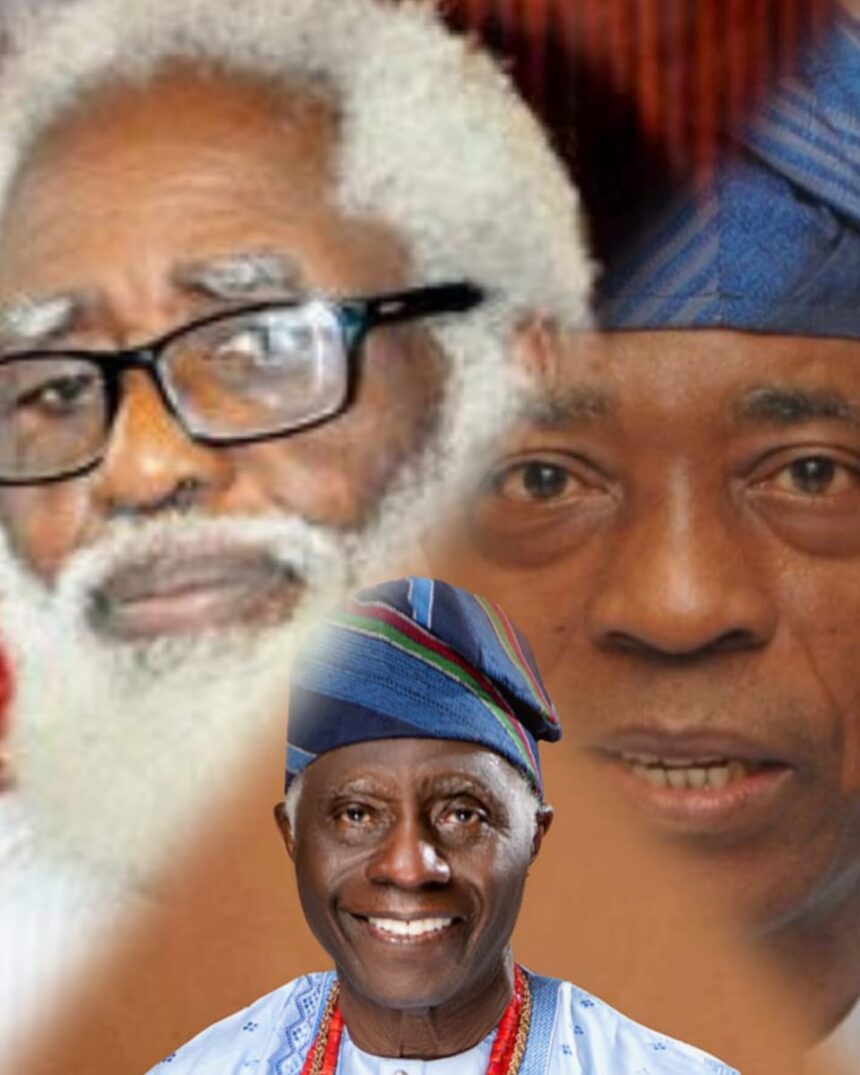
Three distinguished personalities — Ambassador Yemi Farounbi, a cultural icon; Chief Dare Babarinsa, a media icon; and Chief Bode Mustapha, an Egba high chief and businessman — are expected to bring their wealth of experience and perspectives to the conversation.

The programme comes against the backdrop of renewed public conversations about the conduct of some contemporary Yoruba monarchs and the implications of their actions for the preservation of traditional institutions, cultural values and the dignity of the throne.
To be transmitted via Zoom, the discourse, over a two-hour duration starting from 8pm, will be broadcast live on seven partner radio stations across Lagos, Ogun and Delta States.
Boiling Point Arena, the once-in-a-month current affairs programme which debuted four years ago, is hosted by a veteran journalist and communication strategy expert, Ayo Arowojolu.
Frontline traditional ruler, the Olowu of Owu Kingdom, Oba Prof Saka Matemilola will Chair the session and herald the discourse with a keynote address.
Among the partner radio stations are; WASH 94.9FM, Lagos, Sweet 107.1FM, Abeokuta, Roots 97.1FM, Abeokuta, Erimbe 94.7FM, Shagamu, Women Radio 91.7FM, Mowe, Opera Tune 106.3FM, Abeokuta, and Kruzz 92.9FM, Asaba, Delta State alongside a cable television station, NSTV, on GOtv Channel.
At the heart of the discussion is a fundamental question: Can a traditional ruler freely redefine established customs without undermining the cultural institution he is expected to protect?
For generations, Yoruba Obas have occupied positions of considerable cultural significance, serving not only as traditional authorities but also as custodians of history, customs, communal identity and ancestral heritage.
Royal regalia, ceremonial practices, palace protocols and customary restrictions have historically helped distinguish the institution of kingship from ordinary social life.
Such practices often carry meanings that extend beyond personal preferences, reflecting the collective history and identity of the communities over which monarchs preside.
However, the relationship between tradition and modernity is becoming increasingly complex.
Contemporary monarchs operate in a society shaped by changing social values, democratic expectations, digital communication and greater public scrutiny.
Actions that might once have remained within palace walls can now become subjects of intense public debate when photographs, videos and social media posts bring royal conduct to the attention of millions.
This development has raised questions about whether some monarchs are merely adapting traditional institutions to contemporary realities or crossing boundaries that communities regard as essential to the preservation of their cultural heritage.
The Boiling Point Arena discourse will interrogate this delicate distinction, examining whether cultural change necessarily amounts to cultural desecration and who possesses the authority to determine when an established tradition has been violated.
Ambassador Yemi Farounbi, Chief Dare Babarinsa and Chief Bode Mustapha are expected to bring different perspectives to an issue that touches on history, culture, public perception and the responsibilities associated with traditional authority.
Farounbi’s contribution is expected to enrich the cultural dimension of the conversation, particularly the importance of understanding the historical context and symbolic significance of Yoruba customs.
Babarinsa’s media background is expected to offer insights into the changing public image of traditional rulers, the influence of media coverage and the growing role of social media in shaping perceptions of royal conduct.
Mustapha, as an Egba high chief, the Osi of Egbaland and businessman, is expected to provide a traditional institutional perspective on the responsibilities of royal and chieftaincy authorities, the preservation of customary values and the relationship between established protocols and contemporary realities.
Together, the perspectives are expected to illuminate the tensions that arise when individual expression encounters collective cultural expectations.
Among the issues likely to engage the panel are whether Yoruba traditions are sufficiently uniform across different kingdoms to justify generalisations about royal conduct; whether monarchs have the authority to re-interpret inherited customs; and whether traditional councils, kingmakers and the communities themselves have effective mechanisms for addressing conduct considered inconsistent with established practices.
The discussion will also examine whether the growing visibility of monarchs in public life has strengthened their cultural relevance or exposed traditional institutions to controversies that could weaken public confidence in their authority.
The challenge, therefore, is to determine how traditional institutions can accommodate contemporary realities without losing the cultural essence that gives them legitimacy.
Beyond questions of royal attire, ceremonial practices and customary taboos, the discourse is expected to examine a broader issue of accountability within traditional institutions.

The discussion is expected to provide an opportunity to examine how traditional authority can remain relevant and respected in a changing society without losing its historical and cultural foundations.
The 49th edition will further extend Boiling Point Arena’s engagement with issues of public interest, governance, culture and national development.
Since its emergence in November 2022, the platform has built a reputation for convening conversations around contentious issues and bringing experienced voices into discussions that affect society.
Its hybrid format combines Zoom participation, YouTube streaming and broadcasts through partner radio stations, extending conversations beyond online audiences to listeners across its broadcast reach.
The November 8 edition is expected to attract the attention of traditional rulers, cultural historians, academics, journalists, community leaders and members of the public interested in the future of Yoruba cultural heritage.
Stay ahead with the latest updates!
Join The Podium Media on WhatsApp for real-time news alerts, breaking stories, and exclusive content delivered straight to your phone. Don’t miss a headline — subscribe now!
Chat with Us on WhatsApp