



There are stories in Nigeria’s educational history that are remarkable not only because of what was achieved, but because of the people behind them.
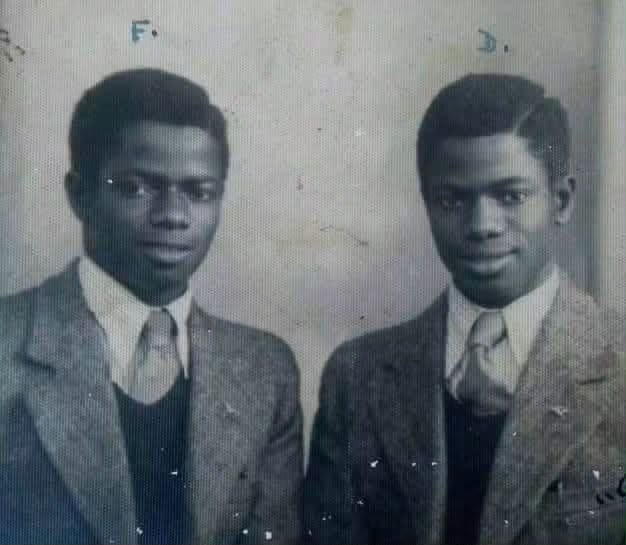
The story of Chief Dr Dotun Oyewole and Chief Dr Femi Oyewole is one of such stories.
Born on 5 June 1922 in Abeokuta, Ogun State, the identical twins grew up at a time when opportunities for advanced education in Nigeria were limited. Yet, through scholarship, teaching, writing and educational administration, the brothers went on to become two of Abeokuta’s best-known educationists.

For decades, their names were closely associated with science education, particularly in the old Western Region and later across Nigeria.
They studied together, taught together, wrote together and eventually established an institution dedicated to continuing education together.
Their careers eventually took them in slightly different directions: Dotun rose through the ranks of the West African Examinations Council (WAEC), while Femi became a senior administrator at the University of Lagos.
But their commitment to education remained remarkably similar.
From Abeokuta to Yaba
The twins began their education at St John’s School, Igbein, Abeokuta, before proceeding to Abeokuta Grammar School, where they studied from 1934 to 1940.
Their connection with the school did not end with graduation.
Both brothers returned to teaching there, becoming part of the generation of teachers who helped strengthen science education in the years before Nigeria’s independence. Dotun began teaching at the school in 1941, while Femi also began his teaching career around the same period.
In 1942, they proceeded to the Higher College, Yaba, an important institution in Nigeria’s pre-university educational system.
At the time, opportunities for university education within Nigeria were extremely limited. Yaba therefore occupied an important place in the development of Nigeria’s early professional and technical workforce.
The Oyewole brothers were among the young Nigerians who used the opportunity to acquire further scientific training.
Their journey to Britain
In 1947, the brothers received Nigerian Government scholarships to continue their education in Britain.

They attended Durham University, where Dotun studied Physics and Femi studied Chemistry. Dotun graduated with a Bachelor of Science degree in Physics in 1950 and subsequently obtained a Post-Graduate Certificate in Education from the University of London. Femi’s biographical record similarly places his Durham education in the same period and records his subsequent teacher-training qualification in London.
Their educational journey was extraordinary for two young Nigerians born in the early 1920s.
But the significance of their education was not merely that they travelled abroad and obtained degrees.
They returned home.

And they took their knowledge back into Nigerian classrooms.
Teachers who inspired generations
After returning to Nigeria in 1951, Dotun resumed teaching at Abeokuta Grammar School as a Senior Physics and Mathematics Master.
Femi also built a distinguished career as a science educator. He became Senior Chemistry Teacher, Vice-Principal and eventually Acting Principal of Abeokuta Grammar School.
Their reputation as science teachers grew.
Former students and later biographical accounts repeatedly remember the brothers for the high standards they demanded from students.

Their influence extended beyond Abeokuta.
A later generation of Nigerians who went on to become professionals in medicine, science, education and public administration passed through classrooms where the Oyewole twins had taught.
The late Owa Obokun of Ijesaland, Oba Adekunle Aromolaran, for example, was among those who studied at Abeokuta Grammar School and was taught by Femi and Dotun Oyewole.
Their influence was also remembered by medical doctor Anthonia Adesiyan Soboyejo, who received additional Physics and Chemistry preparation from the twins before studying medicine in the Soviet Union.
From the classroom to WAEC
Dotun’s career eventually moved from classroom teaching into educational administration.
In 1961, he joined the West African Examinations Council as an Assistant Registrar. He subsequently rose through several positions, becoming Senior Assistant Registrar, Deputy Registrar and eventually Senior Deputy Registrar and Head of the Nigeria National Office before retiring in 1976.
His work placed him at the centre of one of West Africa’s most important educational institutions.
WAEC examinations became a major pathway through which generations of students demonstrated their academic qualifications, and Dotun’s responsibilities brought him into the administration of that examination system.
His brother Femi also became involved in examination and science education. His biographical record identifies him as a Chief Examiner in Chemistry for WAEC, as well as a member of several education and science organisations.
The brothers were therefore not merely classroom teachers. Their work extended into the systems that shaped how science was taught, assessed and administered.
Femi at the University of Lagos
While Dotun’s later career was strongly associated with WAEC, Femi moved into university administration.
He joined the University of Lagos and served as its Academic Secretary from 1968 to 1971 before becoming Deputy Registrar from 1972 to 1975.
This represented another stage in the brothers’ educational careers.
One was helping administer a major West African examination system; the other was helping administer one of Nigeria’s young universities.
Yet their commitment to science education continued.
Femi was also involved in the production of science textbooks, including works such as An Introduction to Chemistry, Advanced Practical Chemistry for Tropical Schools, Elementary Organic Chemistry and New Chemistry for O’ Level Book I.
These publications reflected the brothers’ broader understanding of education: teaching did not end when a student left the classroom. Good textbooks, examinations, institutions and teachers were all part of the educational system.
Building a second chance through continuing education
After Dotun retired from WAEC in 1976, the brothers embarked on another important project.
Together, they co-founded the Abeokuta Continuing Education Centre.
The centre provided opportunities for people who needed further education outside the conventional school system. Its programmes included remedial courses in arts and sciences, commercial subjects and vocational areas such as computer studies, secretarial studies and aviation.
The institution became part of Abeokuta’s educational landscape.
Later accounts of education in Ogun State have also remembered the role played by the Oyewole twins in establishing continuing education opportunities. Iyalode Alaba Lawson, herself a major figure in Ogun State education, recalled becoming involved with the Continuing Education Centre founded by the twins.
The centre represented a philosophy that was central to the brothers’ lives: education should not be limited to those who followed the conventional route.
Two brothers, one extraordinary legacy
Dotun and Femi Oyewole became almost inseparable figures in Abeokuta’s educational history.
Contemporary tributes described them as famous identical twins whose similarities fascinated the Nigerian media, particularly during the 1970s and 1980s. They were known not only for their physical resemblance but also for their shared intellectual interests and commitment to education.
Yet their legacy was much bigger than their identity as twins.
They were teachers.
They were science educators.
They were authors.
They were educational administrators.
They were examination specialists.
And they helped create opportunities for people who came after them.
Dotun died on 28 February 2016, aged 93, shortly before what would have been his 94th birthday. His twin brother Femi had died about a decade earlier.
At Dotun’s funeral in Abeokuta, former President Olusegun Obasanjo described him as an example of what young people could achieve through hard work and the pursuit of excellence. Other tributes remembered the brothers’ service to education and their influence on generations of students.
The story of the Oyewole twins is therefore not simply a story about two identical brothers who happened to follow similar careers.
It is a story about two Nigerians who entered adulthood at a time when higher education was still a rare privilege, travelled abroad to acquire knowledge and deliberately returned to use that knowledge at home.
They taught in classrooms.
They helped administer examinations.
They wrote science books.
They served educational institutions.
And, through the Abeokuta Continuing Education Centre, they helped create another route for Nigerians seeking a second chance at education.
Their lives demonstrate how educational transformation is often built quietly: one teacher, one textbook, one examination, one institution and one student at a time.
Photo caption: Chief Dr Dotun Oyewole and Chief Dr Femi Oyewole, the renowned identical twin educationists of Abeokuta. Archival photograph.
Photo credit: Clara Dike Wall (Home of History).
Sources
- Biographical Legacy and Research Foundation, biographies of Chief Dr Dotun Oyewole and Chief Dr Femi Oyewole.
- The Punch, “Ex-WAEC registrar, Oyewole, dies at 94.”
- The Guardian Nigeria, “The last beat for Pa Oyewole, teacher extraordinaire.”
- The Guardian Nigeria, “Pa Oyewole, teacher extraordinaire, goes home in tribute blaze.”
- The Nation, profile of Owa Obokun Adekunle Aromolaran and his education under the Oyewole twins.
- City People, interview with Iyalode Alaba Lawson discussing the Abeokuta Continuing Education Centre founded by the Oyewole twins.
- National Library of Nigeria digital archive, listing the Abeokuta Continuing Education Centre among educational institutions in Abeokuta.
Stay ahead with the latest updates!
Join The Podium Media on WhatsApp for real-time news alerts, breaking stories, and exclusive content delivered straight to your phone. Don’t miss a headline — subscribe now!
Chat with Us on WhatsApp