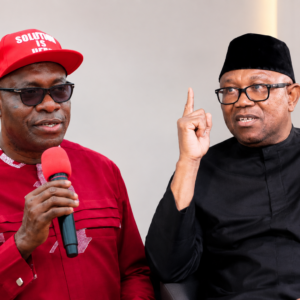





The Deputy Spokesperson for the House of Representatives, Philip Agbese, has said the Nigerian Armed Forces have moved beyond rhetoric in the fight against terrorism and banditry, describing recent military operations as evidence of growing pressure on terrorist networks across the country.
Agbese, a Labour Party lawmaker from Benue State, said the reported neutralisation of terrorists, rescue of kidnapped victims, recovery of weapons and arrest of suspects in some parts of the country showed that troops were increasingly taking the battle to criminal groups rather than merely responding to attacks.
In a statement issued in Abuja on Monday, Agbese said, “Nigeria’s Armed Forces have gone beyond rhetoric. We are now a nightmare to terrorists.”

He commended the Minister of State for Defence, Bello Matawalle; the Chief of Defence Staff, General Olufemi Oluyede; and the Chief of Army Staff, Lieutenant General Waidi Shaibu, for what he described as strategic and operational leadership in the campaign against terrorism, insurgency and banditry.
According to figures released by the Defence Headquarters, troops conducted a series of operations across the country in July and August, neutralising 1,487 terrorists and insurgents, rescuing 777 kidnapped victims and arresting 354 suspects.
The operations also resulted in the recovery of 91 firearms, 1,331 rounds of ammunition and 44 improvised explosive devices.
Agbese said the figures reflected increasing operational pressure on terrorist groups in the North-East and North-West, where the military has sustained offensive operations against insurgents and armed groups.
In the North-East, troops operating under Operation Hadin Kai have continued operations against Boko Haram and Islamic State West Africa Province elements. The Defence Headquarters said the operation in August resulted in the neutralisation of 114 terrorists, the arrest of 146 suspects and the rescue of 60 kidnapped victims.
In the North-West, troops under Operation Fansan Yamma have also intensified operations against terrorist groups and bandits operating across Kaduna, Katsina, Kebbi, Sokoto and Zamfara states.
Agbese said the character of the operations was changing, with intelligence gathering, air strikes, ground offensives and inter-agency coordination increasingly being deployed together to disrupt terrorist command structures, logistics and supply routes.
He particularly praised Matawalle for his role in coordinating the defence establishment and supporting closer cooperation among the military services.
According to him, the reported gains were not the result of battlefield operations alone but also reflected coordination between the political leadership and military commanders.
“The sacrifices being made by personnel on the front lines must be matched by effective leadership, coordination and the provision of the equipment and intelligence required to sustain operations,” he added.
He also commended Oluyede for strengthening cooperation among the Army, Navy, Air Force and other security agencies.
The CDS has repeatedly stressed the importance of collaboration among the armed forces, police, Department of State Services, local security groups and communities in confronting terrorism and other security threats.
The lawmaker similarly praised Shaibu for what he described as renewed operational focus within the Nigerian Army, particularly in the North-East.

The Chief of Army Staff recently reported that Operation Hadin Kai had neutralised 1,993 terrorists, arrested 2,645 suspects and rescued 1,778 civilians during the period covered by the Army’s operational assessment. He also reported the recovery of weapons and ammunition and said improved security had enabled some displaced communities, including Mallam Fatori, Kukawa and Ngoshe, to begin returning.
Agbese said the significance of the operations should not be measured solely by the number of terrorists killed or arrested, but also by the disruption of their logistics, command structures and ability to hold communities hostage.
“The rescue of hundreds of innocent Nigerians, many of them women and children who had spent months in captivity, speaks volumes about the commitment and professionalism of our troops.
“These brave men and women continue to risk their lives every day so that ordinary Nigerians can live in peace, and as a nation, we owe them our gratitude and unwavering support,” Agbese said.

He noted that the increasing surrender of insurgents was another important development, arguing that it reduced the manpower available to terrorist organisations while creating opportunities for security agencies to obtain intelligence about their networks and operations.
Agbese, however, cautioned against complacency, saying recent operational gains should be consolidated through sustained investment in military equipment, intelligence, surveillance, logistics and personnel welfare.
He also urged Nigerians to provide credible information to security agencies, stressing that community intelligence remained critical to identifying terrorist hideouts, logistics suppliers and collaborators.
According to him, stronger cooperation among security agencies and between federal, state and local authorities was equally necessary because terrorist and bandit networks often operate across administrative boundaries.
While acknowledging that significant security challenges remain, Agbese said the recent operational successes represented an important shift in the fight against terrorism. “We must sustain the momentum and deny terrorists the opportunity to regroup,” he said.
He expressed confidence that continued military pressure, improved intelligence, stronger inter-agency cooperation and adequate support for troops would further weaken terrorist networks and create conditions for the restoration of normal life in affected communities.

Stay ahead with the latest updates!
Join The Podium Media on WhatsApp for real-time news alerts, breaking stories, and exclusive content delivered straight to your phone. Don’t miss a headline — subscribe now!
Chat with Us on WhatsApp