


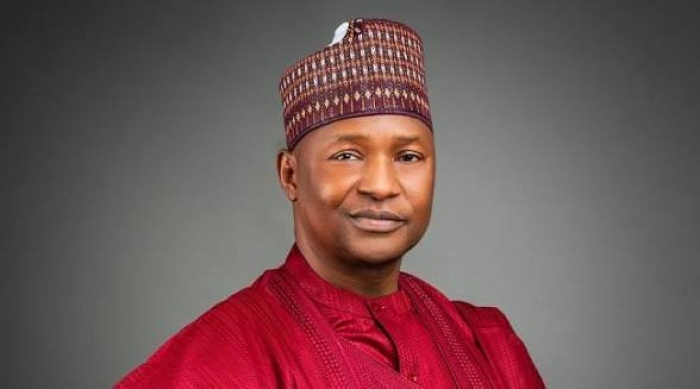
Abubakar Malami, former attorney-general of the federation and minister of justice, has come under renewed scrutiny over at least five controversial transactions undertaken during his eight years in office, according to an investigation by TheCable.
The transactions include the Federal Government’s $496 million settlement with Global Steel Holdings Limited over the Ajaokuta Steel concession, the disposal of assets forfeited to the Economic and Financial Crimes Commission, the disputed $418 million Paris Club consultants’ fees, a proposed $200 million settlement with Sunrise Power over the Mambilla hydropower project and $17 million paid to Nigerian lawyers in connection with the repatriation of $321 million in Abacha loot.
TheCable first reported in July 2023 that Malami was expected to be questioned over the five transactions, which had generated controversy during and after the administration of President Muhammadu Buhari.

One of the biggest issues involves the Ajaokuta Steel Company Limited and the National Iron Ore Mining Company, NIOMCO, Itakpe.
In September 2022, Malami announced that the Federal Government had reached a $496 million settlement with Global Steel Holdings Limited, saying Nigeria had succeeded in reducing the company’s original $5.258 billion claim by about 91 percent.
The settlement nevertheless raised questions because Global Steel had earlier reached arrangements with the government concerning the concessions.
In 2013, then Kogi senator Smart Adeyemi said the Goodluck Jonathan administration had recovered Ajaokuta “without any attendant financial obligation whatsoever”.
The Buhari administration subsequently approved a modified concession agreement with Global Steel in 2016, allowing the company to retain NIOMCO at Itakpe while Nigeria recovered Ajaokuta. In 2017, then minister of mines and steel development Kayode Fayemi announced that agreements had been concluded to return the steel assets to government control.
Global Steel, however, later returned to arbitration. By 2022, the government agreed to settle its dispute with the company for $496 million. Malami defended the agreement at the time, arguing that Nigeria faced claims running into billions of dollars and that the settlement significantly reduced the country’s potential exposure.
Another area of controversy involved the recovery and disposal of assets forfeited by politically exposed persons.
TheCable reported that Ladidi Mohammed, who headed the Asset Recovery and Management Unit of the justice ministry, was questioned by the EFCC in August 2022 over allegations relating to the sale of recovered assets.
Mohammed reportedly told investigators that some of her actions were based on Malami’s instructions, although she was said to have been unable to provide documentary evidence because the instructions were allegedly given verbally.
Malami’s office had also engaged private firms to assist in recovering properties believed to belong to the Federal Government in several states and Abuja. The contractors were to receive three percent of the value of assets successfully recovered.
The arrangement attracted criticism from Itse Sagay, then chairman of the Presidential Advisory Committee Against Corruption, who argued that agencies such as the EFCC and Independent Corrupt Practices and Other Related Offences Commission already possessed the statutory authority and expertise to recover public assets.
The disputed payment of consultants involved in the Paris Club refunds was another major controversy during Malami’s tenure.
Consultants who said they assisted states in calculating refunds arising from Nigeria’s settlement with the Paris Club of creditors sought payment for their services. Malami backed an arrangement under which about $418 million would be paid to the consultants through deductions from state allocations.

Nigeria Governors’ Forum strongly opposed the arrangement, arguing that there was no collective agreement obligating the states to pay the consultants and demanding proof of the work allegedly performed.
Among the prospective beneficiaries identified at the time were Ned Nwoko, Ted Isighohi Edwards, Riok Nigeria Limited, Orji Orizu, Olaitan Bello and Panic Alert Security Systems Limited.
Malami denied allegations of collusion and maintained that the consultants had legitimate claims. The dispute subsequently became the subject of litigation, with the governors obtaining a court order restraining deductions from state allocations.
The proposed settlement of the Mambilla hydropower dispute with Sunrise Power and Transmission Company Limited also attracted intense scrutiny.

TheCable reported that Malami and then power minister Saleh Mamman entered agreements in 2020 under which the Federal Government was to pay Sunrise $200 million to settle its dispute over the Mambilla project. The arrangement also included provisions concerning penalties for default and Sunrise’s participation in the project.
The proposed payment followed years of disagreement over Sunrise’s claim that it had been awarded a build, operate and transfer contract for the 3,050MW project.
Former power minister Babatunde Fashola had earlier disputed the company’s position, while Malami himself wrote in August 2017 that there was no valid contract between the Federal Government and Sunrise because the necessary Federal Executive Council approval had not been obtained.
Malami subsequently changed his position and sought presidential approval for a settlement.
The matter has since taken on greater significance. On September 16, 2026, an International Chamber of Commerce tribunal rejected Sunrise’s claims against Nigeria. According to TheCable, the tribunal found that Malami and Mamman lacked authority to bind the Federal Government without presidential approval and concluded that the settlement agreements were unenforceable.
The fifth transaction concerns the recovery of $321 million in funds linked to late military ruler Sani Abacha.

Swiss lawyer Enrico Monfrini had spent years tracing and recovering hundreds of millions of dollars linked to Abacha before the funds were eventually frozen pending repatriation to Nigeria.
Malami later engaged Nigerian lawyers Oladipo Okpeseyi and Temitope Adebayo in connection with the transfer of the $321 million to Nigeria.
The lawyers were reportedly paid about $17 million in professional fees, prompting questions over why additional lawyers were required after the assets had already been traced, recovered and frozen.
TheCable reported that Okpeseyi and Adebayo had been members of the Congress for Progressive Change, the political party founded by Buhari before the formation of the All Progressives Congress, while Malami had served as the CPC’s legal adviser.
The controversy has persisted because critics argued that the Nigerian lawyers’ principal role came after the difficult work of tracing and recovering the funds had already been completed by the Swiss legal team.
Malami has denied wrongdoing in relation to allegations surrounding his tenure and has, in subsequent statements, described some allegations against him as fabricated and politically motivated.
The five transactions nevertheless remain among the most contentious financial and legal decisions associated with his period as Nigeria’s chief law officer.
Stay ahead with the latest updates!
Join The Podium Media on WhatsApp for real-time news alerts, breaking stories, and exclusive content delivered straight to your phone. Don’t miss a headline — subscribe now!
Chat with Us on WhatsApp