



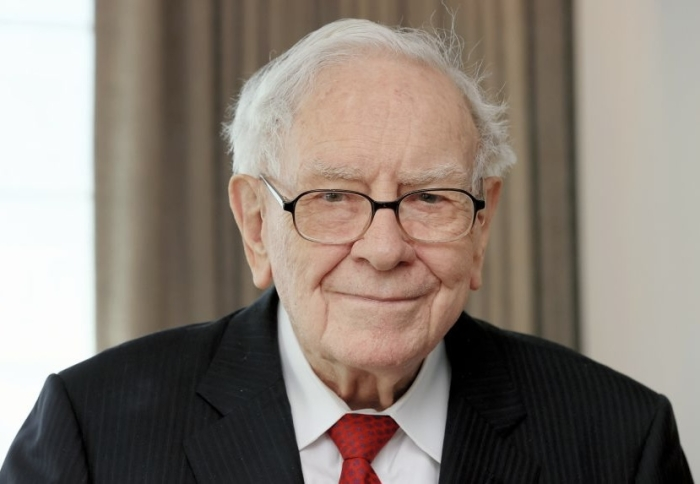
Warren Buffett has stepped down as chairman of Berkshire Hathaway, ending more than six decades at the top of the conglomerate he transformed from a struggling textile company into one of the world’s most valuable businesses.
Berkshire announced on Friday, that the 96-year-old investor had been named chairman emeritus and would remain a director, continuing to offer his judgment and perspective to the company. His eldest son, Howard Buffett, 71, who has served on the board since 1993, was elected non-executive chairman.
The move completes another stage of Berkshire’s long-planned leadership transition, coming nearly nine months after Buffett relinquished the chief executive role to longtime lieutenant Greg Abel.

Abel now controls Berkshire’s day-to-day operations and capital allocation, while Howard Buffett’s role is expected to focus primarily on preserving the corporate culture established by his father rather than managing the conglomerate’s businesses.
“The culture Warren built and the values he championed will remain at the heart of Berkshire, and Howard will be their guardian,” Abel said.
Buffett took control of Berkshire in the 1960s when it was primarily a failing New England textile operation and gradually turned it into a sprawling conglomerate valued at about $1.1 trillion.
Its businesses now range from GEICO insurance and BNSF Railway to energy, manufacturing, retail and consumer companies. Berkshire also owns a massive stock portfolio containing stakes in companies including Apple, American Express, Alphabet and Coca-Cola.
Buffett’s reputation was built on a disciplined value-investing philosophy centred on buying strong businesses at sensible prices, holding investments for long periods and avoiding excessive leverage and speculation.
That approach, reinforced through decades of shareholder letters and Berkshire’s annual meetings in Omaha, helped make the “Oracle of Omaha” one of the most influential investors in modern financial history.
Buffett said age had inevitably brought the transition closer but expressed confidence in Berkshire’s future.
“Father Time always wins,” he told shareholders, while describing more than 60 years at Berkshire as the “best job in the world.”
Howard Buffett will not have an operational management role. His principal responsibility will be maintaining Berkshire’s culture of decentralised management, straightforward communication and long-term decision-making.
Greg Abel, meanwhile, has begun putting his own imprint on the company. Since taking over as CEO, he has overseen major investments while inheriting a Berkshire balance sheet that held about $364.7 billion in cash at the end of June, giving the company enormous capacity for acquisitions and investments.
Other senior executives include Ajit Jain, who oversees Berkshire’s insurance operations, and President Adam Johnson, responsible for a number of consumer, services and retail businesses.
Buffett remains one of the world’s wealthiest individuals, with Forbes estimating his fortune at roughly $145 billion. His wealth would have been significantly larger had he not donated more than half of his Berkshire shares to charitable causes since 2006.
The market reaction was muted, with Berkshire shares gaining about 0.4% following the announcement, reflecting the fact that investors had been preparing for Buffett’s gradual withdrawal from management for years.

What to Know:
Buffett’s departure from the chairmanship completes a succession process Berkshire began preparing for long before he stepped down as CEO on January 1, 2026. Greg Abel had been publicly identified as Buffett’s eventual successor since 2021, while Howard Buffett was long expected to become non-executive chairman to help preserve Berkshire’s culture. The transition marks the end of one of corporate America’s longest and most influential leadership eras: since Buffett took control in 1965, Berkshire’s shareholder return has exceeded 6 million percent and the company became the first non-technology US corporation to reach a $1 trillion valuation. The central question now shifts from succession itself to whether Abel and Howard Buffett can preserve Berkshire’s investment discipline and decentralised culture while deploying one of the largest corporate cash reserves in the world.
Stay ahead with the latest updates!
Join The Podium Media on WhatsApp for real-time news alerts, breaking stories, and exclusive content delivered straight to your phone. Don’t miss a headline — subscribe now!
Chat with Us on WhatsApp