



For the second time in about 17 months, Mr. Peter Obi, has been prevented from completing a humanitarian visit to Benue State.
It is the repetition — and the curious similarities between both incidents — that makes yesterday’s episode considerably more politically significant than it might appear when viewed in isolation.
The first was on April 14, 2025. Obi was travelling from Plateau State to Benue for what he described as a humanitarian visit, during which he planned to visit internally displaced persons, a nursing school and some other facilities.

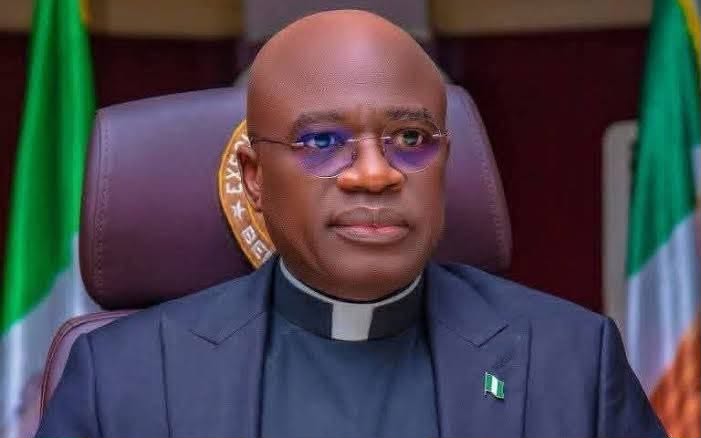
But the government of Governor Hyacinth Alia, a Reverend Father before his venture into partisan politics, issued a statement warning Obi against what it called an “unscheduled visit”.
The government said it could not guarantee the former Anambra State governor’s security and further maintained that access to IDP camps required prior approval from the relevant state emergency authorities.
Obi subsequently called off the visit. He, however, insisted that he had made repeated attempts to reach Governor Alia and had communicated his itinerary to the governor’s ADC and other security officials.
Fast-forward to yesterday. Obi arrived in Makurdi and was heading to Yelwata to sympathise with, and make donations to, victims of the June 2025 killings when his convoy was stopped along the Makurdi-Gboko Road by protesting youths who demanded that he turn back.
Some reports said a number of the protesters carried sticks and stones. Rather than attempt to force his way through and risk a confrontation, Obi returned to the airport.
There is an important distinction between the two episodes. In 2025, the restriction came directly through an official statement of the Benue State Government. Yesterday’s obstruction was carried out physically by protesters.
Obi alleged that an official linked to the state government participated in mobilising the protesters. The Alia administration denied any involvement and claimed it had no prior knowledge of Obi’s visit.
That denial, however, does not dispose of the larger issue. There is no known Nigerian law requiring a former governor, opposition politician or prominent citizen to obtain the permission of a state governor before entering another state.
Freedom of movement is constitutionally guaranteed. Informing a governor may be courteous or desirable for security coordination, especially where a prominent personality is concerned, but courtesy cannot suddenly metamorphose into a legal requirement.
More significantly, the Benue State Police Command reportedly confirmed that it had been notified of Obi’s visit and provided security for him and his entourage. So, who exactly needed to know?
Whatever explanation Governor Alia chooses to offer, two disrupted visits by the same politician to the same state within 17 months will inevitably raise questions about the governor’s disposition towards Obi.
And this is where the constant reference to Alia as a Reverend Father becomes uncomfortable. Not because he ceased to be one simply by becoming governor, but because public office inevitably invites people to compare conduct with calling.
If your public identity is inseparable from the priesthood, people will naturally expect some of the virtues traditionally associated with that vocation — accommodation, compassion, restraint, tolerance and concern for the vulnerable — to reflect in your political conduct. What happened yesterday does not sit comfortably with those expectations.

There is another irony. Whenever questions are raised about the persistent insecurity in Benue and the inability of the state to protect vulnerable communities from repeated attacks, Nigerians are quickly reminded that governors may be called chief security officers of their states but do not command the police, military or other federal security agencies.
Fair enough. Yet, suddenly, when Peter Obi wishes to visit Benue, enormous emphasis is placed on the authority of the governor and the supposed necessity of securing his knowledge or clearance.
Which is it? If the governor is sufficiently chief security officer to determine who may safely move around Benue, surely the same moral burden attaches when ordinary Benue citizens are crying for protection.
Alia’s administration already has enough serious governance issues demanding its attention without manufacturing additional political distractions.

Benue has suffered enormously from insecurity. Communities have been attacked, families displaced and livelihoods destroyed. Those ought to constitute the governor’s overriding preoccupation.
Instead, too much energy appears to have gone into political contests, including the prolonged struggle for supremacy between the governor and his erstwhile political benefactor, Secretary to the Government of the Federation, Senator George Akume.
Alia clearly wants to establish himself as the undisputed political leader of Benue State. That ambition is neither strange nor illegitimate for an incumbent governor.
But political consolidation cannot become the central project of government while citizens continue to contend with insecurity and displacement.
This is why yesterday’s incident was particularly unfortunate. Even if the state government had absolutely nothing to do with the protesters, the atmosphere that makes it conceivable for citizens to obstruct a former presidential candidate travelling to sympathise with victims of violence should worry the government.
There is also a wider lesson here about political mobilisation. Young people recruited today to confront perceived political adversaries do not always disappear conveniently when the immediate political objective has been achieved.

Political actors across Nigeria have repeatedly discovered that informal groups empowered for partisan purposes can eventually become security problems themselves. The chickens, as the saying goes, eventually come home to roost. But Peter Obi, too, needs to take something away from these episodes.
Politics is not merely a contest in decency. It is a contest of power, organisation, perception and leadership. There comes a point where excessive accommodation can begin to look less like maturity and more like political diffidence.
The Yoruba have an expression: “Gbogbo nkan kọ́ ni sùúrù ń tún ṣe” — patience does not repair everything. Sometimes leadership requires firmness. That does not mean violence. It does not mean trading stones with protesters or deploying thugs against thugs.
It means asserting legitimate political rights, demanding institutional protection, mobilising one’s political structures and refusing to allow opponents to establish the precedent that intimidation is sufficient to determine where one can or cannot go.
Nigeria’s political history is full of politicians who understood the psychology of strength, sometimes to disturbing extremes.
The late Muhammadu Buhari once issued the infamous warning about “dogs and baboons” being soaked in blood if elections were manipulated. The remark was rightly condemned, but it illustrated the combative political persona he cultivated after repeated electoral defeats.
President Bola Tinubu has built much of his political reputation around toughness and an unapologetic understanding of power. His language on the political field has often been confrontational, including his controversial comments about grabbing political power and, more recently, his observation that “all is fair in politics”.
Former President Goodluck Jonathan represented almost the opposite tradition. His famous declaration that his political ambition was not worth the blood of any Nigerian remains one of the most dignified statements ever made by a Nigerian political leader. That statement was rewarded with electoral defeat.
Nigerian politics has also repeatedly demonstrated that civility alone does not guarantee political survival.
Other political actors have gone much further, uttering reckless threats against election observers, electoral officials and opponents. Such behaviour is crude, dangerous and entirely unacceptable in any functioning democracy.
But stripped of the violence and irresponsibility, there is a lesson buried beneath the ugliness: Nigerian politics rewards organisation, courage, preparedness and the willingness to defend legitimate political space. It is not a playground for political innocence.
Peter Obi therefore does not need to become violent. He does not need to mimic the worst characters in Nigerian politics. Neither does he need to surrender the civility that has become an important part of his political identity. What he needs is steel.
If you notify the police of your movement and the police provide security, a band of protesters should not casually acquire the power to determine whether you can visit Nigerian citizens in another part of your country. There must be lawful, organised and politically intelligent ways of resisting that kind of intimidation.
Because if it succeeds once, it becomes a tactic. If it succeeds twice, it begins to look like a formula. And before long, political opponents will have discovered that all they need to restrict your movement is a handful of angry youths on a highway.
That cannot be allowed to become normal. So, ahead of 2027, Obi may have to reconsider the limits of political patience.
There is a Yoruba saying that captures the harder edge of the lesson: “Wèrè la fi ń wo wèrè.” Not madness for madness in the literal sense. Certainly not violence for violence.
But sometimes, in the unforgiving arena of Nigerian politics, a politician must demonstrate clearly that civility is a choice — not evidence of weakness.
Stay ahead with the latest updates!
Join The Podium Media on WhatsApp for real-time news alerts, breaking stories, and exclusive content delivered straight to your phone. Don’t miss a headline — subscribe now!
Chat with Us on WhatsApp