


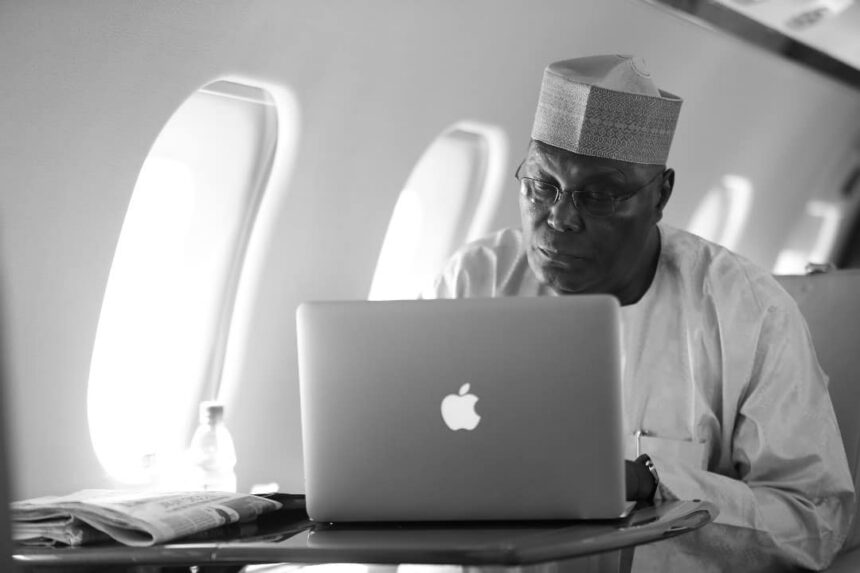
Every presidential election cycle, Vice President Atiku Abubakar gives Nigerians the same political puzzle: how can a man with so much experience repeatedly misread the moment? The Waziri is undoubtedly intelligent, experienced and politically accomplished. But intelligence is not political strategy. And experience does not automatically produce good judgment.
Atiku’s greatest weakness may be that he simply does not know when to wait. The pattern is becoming difficult to ignore. He positions himself for the presidential ticket, and when the political arithmetic turns against him, he moves to another platform. The ambition is obvious. What is less obvious is the political philosophy guiding it. At what point does persistence become political miscalculation?
Nigeria has an unwritten political bargain. Let us confront the uncomfortable issue of presidential rotation. Since the Obasanjo era, Nigeria has operated around an informal but powerful political understanding: the presidency rotates between the north and the south. It is not constitutional law, but it is part of the political architecture of a country where regional balance has always mattered.

When Goodluck Jonathan sought another term, prominent figures, including Olusegun Obasanjo and the late Vincent Ogbulafor, argued that it was the north’s turn. They defended the principle when it was politically inconvenient for the south. The Waziri knows this history. So why is he now seeking to displace a southern president after only one term? That is the contradiction Atiku has yet to convincingly explain.
If rotation mattered when the north was waiting, why should it cease to matter when the south is waiting? Politics cannot be a game in which conventions are sacred when they favour your side and disposable when they do not. If Nigeria is still operating under the logic of rotation, then the most politically coherent 2027 contest should be a contest among southern aspirants. Let the south fight its own battle. Let Tinubu defend his record. Let Obi make his case. Let the Nigerian electorate decide. The north can wait. And Atiku, of all people, should understand the power of waiting.
Sometimes, restraint is strategy. There is nothing weak about stepping aside from a contest that is strategically premature. In politics, timing is everything. A politician who contests every battle eventually loses the ability to distinguish between an opportunity and a trap. Atiku has come remarkably close to proving that point. He has had several opportunities to reposition himself, consolidate his influence and play the longer game. Instead, the desire to become president appears to have become the strategy itself. That is dangerous. Because wanting the presidency is not a political strategy.
The Waziri may need to ask himself a difficult question: is he pursuing the presidency because the moment is right, or because he simply cannot bring himself to stop pursuing it? There is always a time to fight. There is a time to negotiate. And there is a time to retreat, regroup and wait. The greatest politicians understand the difference.
Tinubu is playing a different game. Atiku is not confronting an ordinary political opponent. Whatever one thinks of Bola Tinubu, it would be a mistake to underestimate his political instincts. He understands organisation, alliances, patronage, timing and the architecture of Nigerian power. Atiku has experience. Tinubu has experience and a demonstrated instinct for political timing. That distinction matters.
The 2027 contest will not be decided by rhetoric alone. It will be decided by structures, alliances, regional calculations, voter mobilisation and the ability to manage competing interests. This is precisely why Atiku’s decision to enter the race is so difficult to understand. He may be fighting the wrong battle at the wrong time.
The more important question is: who really benefits from the emerging Obi-Kwankwaso equation? Peter Obi brings something the Nigerian political establishment cannot easily manufacture: popular enthusiasm, particularly among younger Nigerians and voters yearning for a break from the traditional political order. His appeal is real, significant and increasingly difficult to dismiss. But elections are not won on popularity alone. Popularity creates momentum; political machinery converts momentum into power. And this is where Rabiu Kwankwaso becomes particularly interesting.
Obi may bring the crowd, the energy and the narrative. Kwankwaso brings political structure, regional networks and a deeper understanding of the mechanics of electoral power. The real strategic question, therefore, is not simply whether Obi benefits from Kwankwaso, or Kwankwaso from Obi. It is who is better positioned to harvest the political dividends of the alliance when the moment finally arrives. My suspicion is that Kwankwaso may be playing the longer game.
My reading is that the presidency will remain in the south for another four years. The political winds currently appear favourable to the Jagaban, while the opposition’s emerging configuration may be laying the groundwork for a much larger northern contest beyond 2027. If that happens, Atiku may look back and realise that his greatest political opportunity was not another presidential campaign. It was restraint.
The Waziri is not lacking in intelligence. He is lacking in something far more valuable in politics: the discipline to recognise that not every moment is your moment. That may ultimately be the defining weakness of his political career. Atiku has spent decades trying to reach the presidency. Perhaps his most consequential political decision now is whether he can finally understand that sometimes the road to power begins with stepping away from it.
The Waziri knows how to run for president. The question is whether he knows when not to.
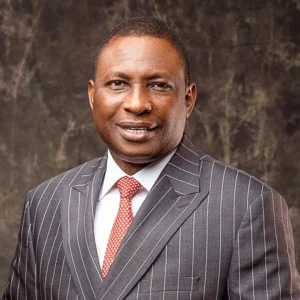
Dr Ogechi Okoro is a political and social analyst based in Hamilton, New Zealand.
Stay ahead with the latest updates!
Join The Podium Media on WhatsApp for real-time news alerts, breaking stories, and exclusive content delivered straight to your phone. Don’t miss a headline — subscribe now!
Chat with Us on WhatsApp