


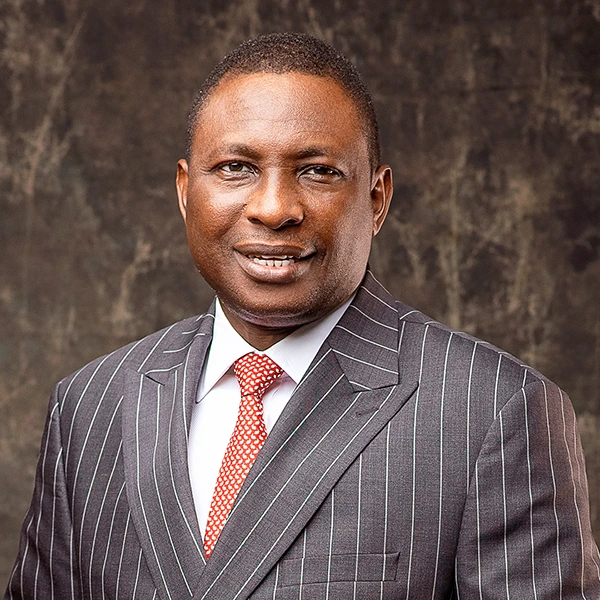
The Executive Chairman of the Economic and Financial Crimes Commission (EFCC), Ola Olukoyede, has disclosed that the residence built for the vice-chancellor of a recently forfeited private university is “probably bigger” than President Bola Ahmed Tinubu’s official residence at the Aso Rock Presidential Villa.
Olukoyede made the startling disclosure while highlighting the impact of the commission’s asset recovery drive and the Federal Government’s efforts to convert forfeited properties and institutions into productive public assets.
In a video posted on his official X account on Friday, September 4, 2026, the EFCC chairman said the recovery of assets linked to alleged criminal activities should not end with seizure or forfeiture, but should ultimately translate into tangible benefits for Nigerians.

He cited the transformation of NOK University in Kachia, Kaduna State, into the Federal University of Applied Sciences, Kachia (FUASK), as an example of how recovered assets could be repurposed for public benefit.
According to him, the university, which was seized from criminal proceeds and subsequently forfeited to the Federal Government, had been transformed into a federal institution capable of providing educational opportunities to young Nigerians who might otherwise have been unable to attend university.
“A university seized from crime is now a federal university. The recovered campus in Kaduna State became the Federal University of Applied Sciences, and in December 2025, 1,909 students matriculated there,” Olukoyede said.
He noted that the development was not only about recovering a property but also about creating an enduring public institution and stimulating economic activities in Southern Kaduna.
The EFCC chairman, however, drew attention to another high-value private university that he said had recently been finally forfeited to the Federal Government.
Although he did not initially disclose the name of the institution, details contained in EFCC filings point to Rayhaan University in Kebbi State.
Describing the scale of the property, Olukoyede said the university has both temporary and permanent sites, as well as an extraordinarily large residence constructed for its vice-chancellor.
“You need to get to that university. It has temporary site and permanent site. The house that was built for the vice-chancellor alone is probably bigger than the president’s house in the villa. The picture is all over the place. If you Google it now, you will see the pictures,” he said.
The final forfeiture order, according to the EFCC, was secured on July 15, 2026, and covered the university’s permanent site, temporary site, a third site, its radio station and the vice-chancellor’s residence.
The properties were linked by the commission to former Attorney-General of the Federation and Minister of Justice, Abubakar Malami, SAN.
Olukoyede used the development to underscore the broader philosophy behind the commission’s asset recovery strategy, stressing that anti-corruption enforcement should ultimately contribute to economic development rather than simply punish offenders.
He said recovered assets could restore physical infrastructure, strengthen government revenue, provide working capital to institutions and businesses, improve the integrity of the financial system and enhance Nigeria’s credibility internationally.
“Taken together, these outcomes tell a larger story. Anti-corruption enforcement can restore physical space, strengthen federal and sub-national revenue, return working capital to institutions, companies and citizens, support financial market integrity, protect the extractive and digital economies, and strengthen Nigeria’s international credibility,” he said.
He added that successful prosecutions and asset forfeitures also serve as a deterrent by making criminal enterprise less profitable.
“It also produces a deterrence dividend: every successful prosecution and every asset stripped from criminal enterprise reduces the cost of economic crime,” Olukoyede stated.
The EFCC chairman disclosed that between October 2023 and July 2026, the commission secured interim or final forfeiture orders covering 10,053 assets.
The recovered assets, he said, cut across a wide range of categories, including real estate, land, vehicles, electronics, schools, factories, hotels, oil rigs, barges, machinery and aircraft. The commission also recovered 102 tonnes of solid minerals.

According to Olukoyede, the proceeds from the disposal of assets already covered by final forfeiture orders have so far yielded ?12.07 billion for the Federal Government.
Beyond asset recovery, the EFCC chairman said the commission recovered ?1.233 trillion in naira between October 2023 and July 2026.
He further disclosed that the commission secured 10,872 convictions within the same period, describing the figures as evidence of the intensified efforts to tackle financial crimes and ensure that illicit wealth does not remain in private hands.
The latest disclosure places renewed focus on the enormous scale of some of the properties recovered by the anti-graft agency and the growing debate over how forfeited assets should be managed.

For the EFCC, the objective is increasingly to ensure that wealth allegedly accumulated through illicit means is not merely taken away from those who acquired it, but is converted into assets and resources capable of delivering lasting value to the Nigerian public.
Stay ahead with the latest updates!
Join The Podium Media on WhatsApp for real-time news alerts, breaking stories, and exclusive content delivered straight to your phone. Don’t miss a headline — subscribe now!
Chat with Us on WhatsApp