



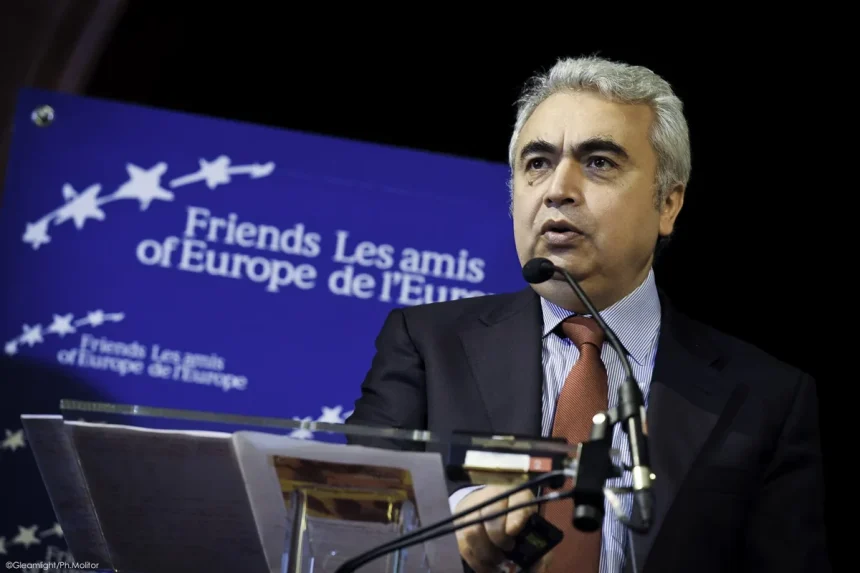
Nigeria’s energy investment could double within the next five years following the country’s admission as an associate member of the International Energy Agency, the IEA Executive Director, Fatih Birol, said on Thursday.
Birol, who spoke to Reuters during a visit to Abuja, said the country’s membership of the Paris-based energy watchdog would help attract investment, deepen technical cooperation and strengthen Nigeria’s voice in global energy policy discussions.
“My goal is, in a very short period of time, in five years, at least doubling the energy investments Nigeria is receiving today,” Birol said. He said Nigeria needed substantial capital to unlock opportunities across the oil, gas and renewable energy sectors, particularly solar power.

According to him, Nigeria’s large energy resource base, coupled with changes in global energy trade patterns, could position the country to attract capital from governments and private investors seeking reliable energy partners.
“The most scarce commodity is not oil, not gas, not uranium, not lithium. It is trust. Countries are looking for partners they can rely on,” he added.
Birol described Nigeria as a credible energy supplier, adding that exports from the Dangote Petroleum Refinery had helped ease fuel supply pressures in Europe in recent months.
The refinery, which processes about 700,000 barrels of crude oil per day, has increasingly supplied refined petroleum products to international markets.
Nigeria became an associate member of the IEA in July after member countries, including the United States, Germany, Italy and Japan, unanimously approved its application.
The IEA and the Federal Government are expected to sign a joint work programme in Abuja, outlining cooperation in natural gas, electrification, clean cooking, energy efficiency and energy data development.
Reuters reports that Nigeria will also work with the agency to improve its energy data collection and reporting systems, an area that investors and market participants have long identified as a weakness, particularly regarding oil production, exports and consumption statistics.
Meanwhile, Nigeria is targeting an increase in crude oil production to 3 million barrels per day by 2030, almost double its current output. The country is counting on ongoing reforms in the energy sector, infrastructure upgrades and improved security to curb oil theft and attract foreign capital after years of underinvestment.
Birol said the changing global energy landscape had also made reliable partnerships increasingly important, as countries reassessed supply chains following disruptions linked to Russia’s invasion of Ukraine and instability along major energy shipping routes.
He warned that prolonged disruption to the Strait of Hormuz could create supply challenges, particularly for refined products. “If the Strait of Hormuz is not going to open convincingly sometime soon, we may have some difficulties both in terms of crude oil, but especially on products such as diesel and jet fuel,” Birol said.
He added that the coming weeks and months would be critical for maintaining a healthy balance between global oil supply and demand.
Stay ahead with the latest updates!
Join The Podium Media on WhatsApp for real-time news alerts, breaking stories, and exclusive content delivered straight to your phone. Don’t miss a headline — subscribe now!
Chat with Us on WhatsApp