


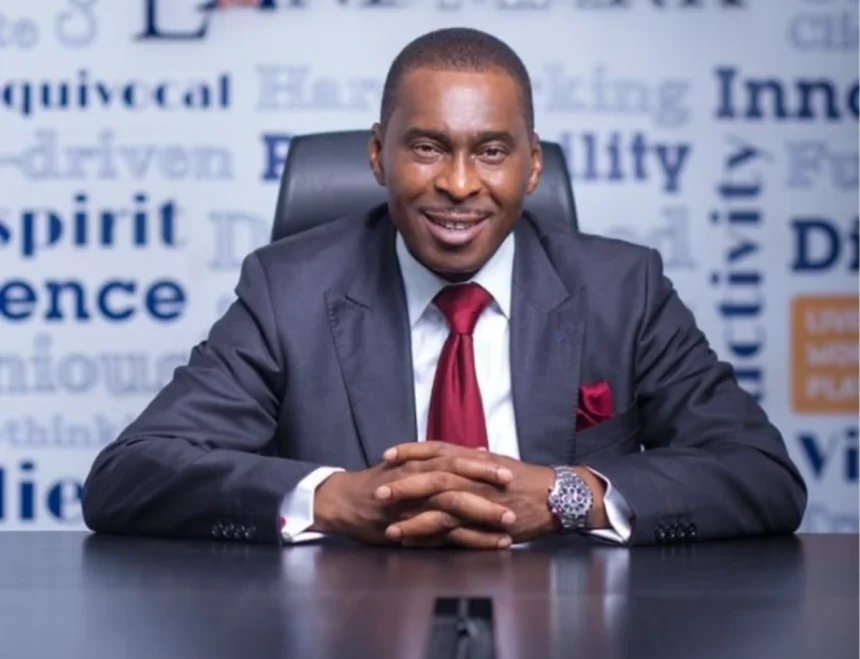
In an exclusive interview with Nairametrics, Landmark Africa CEO, Paul Onwuanibe, discussed the forces driving this transformation, the scale of Nigeria’s domestic tourism market and the opportunities emerging across the country’s real estate, hospitality and tourism sectors.
Nigeria’s tourism, real estate and hospitality industries are evolving as consumers increasingly seek experiences that extend beyond traditional property and accommodation. This changing demand is driving the growth of integrated destinations that combine residential, hospitality, leisure, retail, entertainment and technology in a single ecosystem.
For developers and investors, the shift is changing how destinations are conceived, financed and operated, while placing greater emphasis on domestic tourism and the ability to create experiences that attract visitors repeatedly.

In an exclusive interview with Nairametrics, Landmark Africa CEO, Paul Onwuanibe, discussed the forces driving this transformation, the scale of Nigeria’s domestic tourism market and the opportunities emerging across the country’s real estate, hospitality and tourism sectors.
Nairametrics: What changes in Nigeria’s consumer market and demand for experiences have driven Landmark’s evolution?
Paul Onwuanibe: The major change is that consumers increasingly value experiences alongside physical products. When we began, the focus was much more conventional: offices and property.
Over time, we saw that people did not want these in isolation. They wanted places where they could work, eat, meet, stay, exercise, attend an event, take their children out or simply spend time. That changed the economics of our real estate.
We began creating destinations where all of these uses come together in one location. Landmark Waterview is an extension of that thinking into residential real estate. It is not simply about providing apartments; it is about creating a residential product connected to lifestyle, hospitality, leisure and the wider Landmark ecosystem.
We are also extending that experience beyond the physical destination through technology. The Landmark Citizen App allows customers to discover, access and transact across different parts of the ecosystem from one platform, helping us build a more connected relationship with the people who use our destinations.
The other major opportunity is domestic tourism. According to estimates from the World Travel & Tourism Council (WTTC), Nigerians travelling within the country spent approximately N4.95 trillion in 2024, about ten times the N491.9 billion spent by international visitors.
This highlights the scale of the domestic tourism market and reinforces our view that the most immediate opportunity lies in serving Nigerians first, while also building for the wider African market.
International tourism remains important, but our destinations are being designed to encourage repeat local and regional visitation, creating experiences people want to return to rather than relying primarily on one-time international tourist arrivals.
Nairametrics: What are you seeing in consumer spending and demand despite pressure on household purchasing power?
Paul Onwuanibe: Consumers are undoubtedly more selective. When disposable income comes under pressure, people ask much harder questions about value. But we have also learned something interesting: the desire for experience does not disappear; consumers become more deliberate about where they spend.
That means our job is not simply to raise prices to compensate for costs. It is to continue giving customers compelling reasons to choose Landmark. The indicators within the ecosystem are encouraging.
The Landmark Upside Down House had received more than 50,000 visitors since launch, Event Centre bookings had doubled year-on-year since 2024, and POP Landmark had hosted more than 150 events in a year. That affects investment decisions because we track what customers actually use and where they go to. If an experience drives repeat footfall and strengthens surrounding businesses, it gives us evidence to scale it.
If consumer behaviour changes, we need to change with it. Our currency ultimately is people: if people keep coming and having reasons to return, the ecosystem has something valuable to monetise.
Nairametrics: What does the economics of developing integrated destinations in Nigeria look like today?
Paul Onwuanibe: It is challenging because these are capital-intensive, long-duration investments. Construction costs are exposed to inflation, foreign exchange and the imported content of building materials and equipment.

Financing costs are significant. And time itself is a cost: the longer a project takes before producing income, the greater the financing and execution risk. Nigerian real-estate projects can be described as investments that can take around five years to mature, while highlighting rising material costs, exchange-rate volatility, interest rates and labour costs as pressures on developers.
The advantage of an integrated destination is that you are not dependent on a single revenue stream. You can have residential sales, hospitality, events, food and beverage, retail, entertainment, leisure and commercial income supporting the same ecosystem. We also increasingly favour phased development.
Rather than waiting until every component is complete before creating activity, you can activate parts of the destination progressively, prove demand, generate cash flow and use market feedback to determine the next phase.
Ultimately, financing these projects requires a combination of equity, appropriate debt, partnerships and capital. Short-term money is a poor match for a twenty-year asset.

Nairametrics: What makes a public-private partnership commercially workable in Nigeria?
Paul Onwuanibe: A good PPP begins with alignment of interests.
The government needs to be clear about what it wants to achieve: jobs, tourism, infrastructure renewal, IGR, increased visitor numbers or community development. The private investor needs a commercially viable operating framework and enough tenure and certainty to justify investing substantial capital.
The second requirement is speed and clarity of decision-making. A project becomes very difficult when responsibilities are unclear or approvals move indefinitely between institutions.
The third is an appropriate allocation of risk. The government should manage the risks it controls, land, enabling regulation and certain public infrastructure, while the private partner should take responsibility for capital deployment, development, operations, service delivery and commercial performance within the agreed structure.
Landmark Nike Lake Resort is a good example of the potential model: Enugu State contributed the existing asset, while Landmark took responsibility for management, operations and investment in repositioning the destination.
The objective of a good PPP should not be for one party to defeat the other at the negotiating table. It should create an arrangement that remains commercially and politically sustainable long after the agreement is signed.

Nairametrics: What is the current status of Nike Lake, how much of the first-phase investment has been deployed, and is the two-million-visitor target achievable?
Paul Onwuanibe: We commenced operations at Landmark Nike Lake Resort in early March 2025, and what we inherited was an important legacy asset with enormous potential. Since then, the focus has been a phased transformation rather than attempting to close the property and rebuild everything at once.
Investment is going into accommodation upgrades, landscaping and environmental enhancement, food and beverage, recreation, wellness, activities, the overall experience and the broader repositioning of the resort.
We have also introduced the Landmark Upside Down House at the Landmark Nike Lake Resort, and it is now the first in the South East and second in West Africa, we have more unique experiences like this in the pipeline .
On the two-million-visitor ambition, we would describe it as a destination target. You don’t create that level of visitation with hotel rooms alone. You create reasons for families, schools, businesses, tourists, eventgoers and weekend travellers to return repeatedly.
Our job now is to build that ecosystem. And we remain very optimistic about the scale of Landmark Nike Lake’s long-term potential.
Nairametrics: Where does Port Harcourt Tourist Beach redevelopment currently stand, and what changed from the original timeline?
Paul Onwuanibe: The project is moving forward, but the timeline has evolved from our initial assumptions. Our early timeline was ambitious because we were keen to activate the destination quickly.
As we progressed, however, it became clear that revitalising a historic waterfront asset requires considerable site preparation, technical work, stakeholder coordination and infrastructure before the destination can achieve the standard we want.
We have therefore chosen to phase it properly rather than rush an incomplete product to market. And now the project is expected to commence development works in Q4 2026, in preparation for the yuletide season.
The important point is that our commitment to Port Harcourt has not changed. If anything, the project has become more strategically important because it demonstrates what Landmark 2.0 is intended to do: take our destination-management capability into another major Nigerian city and revive an existing tourism asset.
Nairametrics: What are the biggest commercial and infrastructure risks involved in waterfront and tourism developments?
Paul Onwuanibe: Waterfront developments are among the most attractive assets you can create, but they are also among the most technically and commercially demanding. You have coastal engineering and environmental risks, drainage and erosion considerations, infrastructure requirements, access and traffic management, security and significant ongoing maintenance requirements.
Then you layer Nigerian development risks on top: land administration, approvals, infrastructure deficits, financing costs, foreign-exchange exposure and policy changes. The lesson we have learned is that risk has to be identified before capital is committed rather than managed only after something goes wrong.
The second lesson is diversification. You should avoid having one attraction or one revenue source carry the entire economics of a destination.
And finally, stakeholder relationships matter. Waterfront developments sit within communities, cities and wider infrastructure plans. We are currently engaging with the key stakeholders like the governments, host communities and infrastructure agencies, regarding this asset.
For Landmark, the experience of 2024 reinforced that resilience must be designed into the business model, not introduced only after a crisis.
Nairametrics: What gives you confidence Lagos can support the 20,000-capacity Dream Theatre, and what is its status?
Paul Onwuanibe: Our confidence comes largely from our own experience. Lagos has a clear gap in the market for large, purpose-built multipurpose entertainment venues, particularly during periods like Detty December, when demand for concerts, festivals and major events are at an all timehigh.
When Landmark Beach was operational, we hosted major events featuring artists such as Wizkid, Davido and many others with attendance at these events averaging over 10,000 -13,000 people. That experience gave us clear evidence that the market exists.
Lagos is already a major hub for music, culture and entertainment; what is still lacking is sufficient infrastructure to serve that demand consistently and at scale. The Dream Theatre is intended to help close that gap while fitting into our broader model of creating destinations where entertainment, leisure, retail and hospitality reinforce one another.
The project is currently at the ideation and fundraising stage, and we are still sourcing for the right location before moving into development.
Nairametrics: What did the Landmark Beach experience change about long-term investment and managing development risk?
Paul Onwuanibe: It made diversification non-negotiable. The lesson is that you can build an exceptional asset and still face external risks that have nothing to do with the operational quality of the business. So today we think much more deliberately about geographic diversification, revenue and risk diversification, infrastructure interfaces, government engagement, and how much of the business is exposed to any individual location.
It has also taught us not to spend our future fighting the past.
I have said publicly that I was not happy about what happened, but we had a choice: concentrate our energy on a fight or concentrate it on rebuilding and growth. We chose growth.
That decision is why the Landmark story today is increasingly about Lagos, Enugu, Port Harcourt , Owerri and, eventually, more African markets.
The beach was an asset. The capability to build destinations is the business.
Nairametrics: Where are the biggest opportunities over the next five to ten years, and what constraints need to be addressed?
Paul Onwuanibe: I see enormous opportunity at the intersection of real estate, domestic tourism, hospitality, entertainment, lifestyle and technology.
Nigeria is still dramatically underserved relative to the size and aspirations of its population. There are major cities and entire regions where people have spending power and demand for experiences but not enough high-quality destinations.
That opportunity also extends to the way people live. Projects such as Landmark Waterview reflect our belief that residential real estate will increasingly be differentiated by the ecosystem around it. People are not only buying square metres; they are considering convenience, lifestyle, hospitality, entertainment, community and the overall quality of the environment they are buying into.
Technology will also play an increasingly important role in connecting these ecosystems. Through platforms such as the Landmark Citizen App, our objective is to make it easier for customers to discover experiences, make bookings and transactions, access services and engage with different Landmark offerings through a single relationship with the brand.
Over time, that gives us the opportunity to understand our customers better and create a more integrated experience across our destinations.
Domestic tourism is particularly compelling. Rather than thinking only about how to attract somebody from London or New York, we should also ask why a family in Lagos should not spend a weekend in Enugu, why people in Abuja shouldn’t have several world-class leisure destinations within reach, or why Africans should automatically travel outside the continent for entertainment and hospitality.
But private capital cannot scale that opportunity alone.
We need predictable land administration, long-term financing, infrastructure, better connectivity between Nigerian cities, security, stable regulation and more effective PPP structures. We also need tourism to be treated as an economic value chain rather than simply as hotels and sightseeing.
If those foundations improve, private investors will do what private investors do: identify demand, deploy capital, innovate and compete.
And that is really the thesis behind Landmark 2.0. Africa does not lack consumers or culture or destinations worth visiting. What we need is the infrastructure, investment and execution capacity to convert those advantages into a thriving tourism and experience economy. Our direction is to move beyond isolated properties towards connected physical and digital ecosystems and, ultimately, a portfolio of African experiences.
Stay ahead with the latest updates!
Join The Podium Media on WhatsApp for real-time news alerts, breaking stories, and exclusive content delivered straight to your phone. Don’t miss a headline — subscribe now!
Chat with Us on WhatsApp